Instead of coordinating a yacht, caterer, and guest list through separate messages, build one event brief and confirm the vessel and meal together before booking. For your 2026 Hamptons celebration, request a captained charter from Yachthampton, then obtain written approval for the catering arrangement before committing to either supplier.
- For hamptons event venue yacht catering, confirm vessel suitability and food-service permissions before booking suppliers.
- Yachthampton offers captained charters for Hamptons leisure travelers and event hosts; confirm catering arrangements separately.
- Match the guest count, meal format, and boarding plan before approving the event schedule.
- Keep the charter agreement, catering scope, and weather terms together in one event brief.
Why this matters
A yacht event brings the venue and transport together, but food service still needs its own plan. A dining arrangement must fit the vessel, the guest list, and the captain’s operating requirements—not just the occasion.
Yachthampton is best for Hamptons event hosts seeking a captained yacht charter. Its stated offering includes yacht and boat charters and captained excursions; do not treat that as confirmation that catering, service staff, or meal equipment comes with your booking.
The booking sequence below keeps those decisions connected. Choose the experience, verify the operating details, and approve a meal plan that works aboard the selected vessel.
Before you start
- Prepare 1 event brief. Include your preferred 2026 event date, guest count, occasion, departure-area preference, meal expectations, dietary requirements, and spending limit. Keep unconfirmed requests clearly marked.
- Identify 2 lead contacts. Name a charter-side coordinator and a catering-side coordinator, even if the same business ultimately handles both. Decide who gives final approval for changes.
- Check the hidden constraint: people and equipment. Ask how catering staff affect the permitted onboard headcount, and whether food preparation, delivery, storage, and service are permitted on the proposed vessel. A guest list alone does not describe the full event.
You do not need a finished menu to make the first inquiry. You do need enough detail for the charter provider to judge whether the event fits.
Event brief and meal format
Define the event
- Write a short description of the gathering: birthday lunch, anniversary celebration, client reception, or family reunion. State what guests should spend most of their time doing.
- Record your guest count separately from requested service personnel. Include children and any accessibility or boarding assistance requirements.
- List the moments that need coordination: boarding, welcome drinks, meal service, speeches, photography, and return. Mark which moments are essential and which are optional.
- Describe the meal you want without assuming equipment exists. Specify whether you expect food delivered ready to serve, assembled aboard, or prepared aboard.
Expected result: You have a brief that explains the event’s purpose and its practical requirements, without promising guests an unconfirmed experience.
Match the meal to the gathering
Choose the service format before choosing individual dishes. A reception centered on conversation has different needs from a seated celebration where the meal is the main event.
| Meal format | Best for | Advantage | Constraint to confirm |
|---|---|---|---|
| Passed bites | Social receptions | Guests can mingle rather than remain seated | Staff movement, tray handling, and clear walking routes |
| Shared platters | Informal celebrations | Food can be presented for guests to share | Serving space, dietary separation, and secure placement |
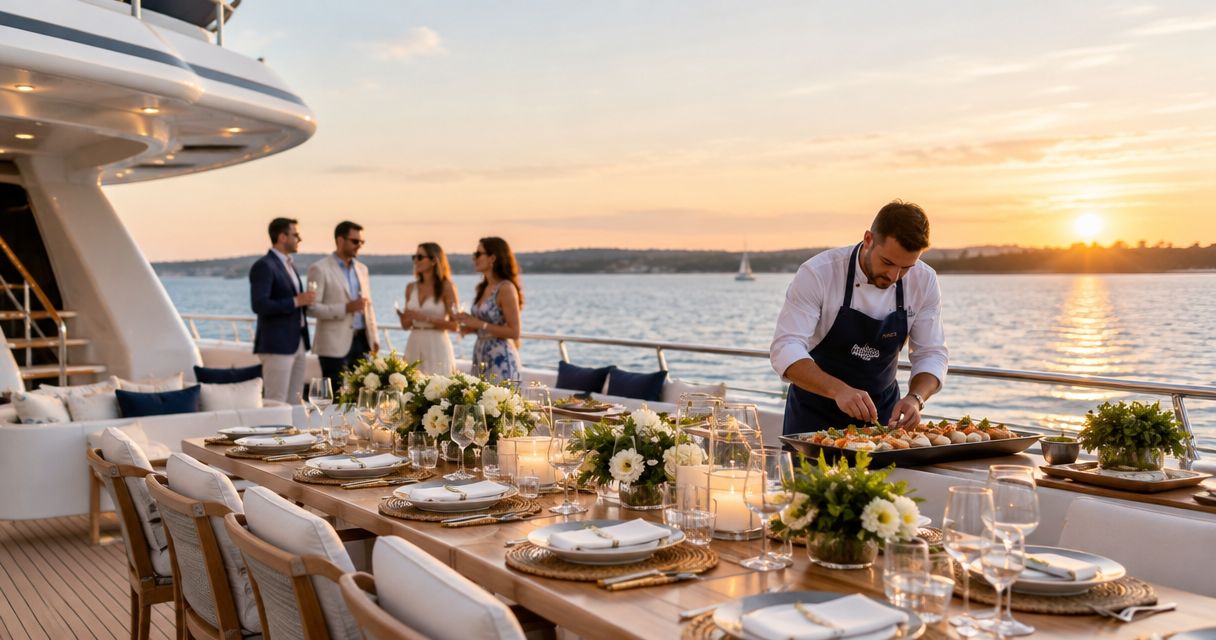
| Seated service | Meal-centered occasions | Creates a defined dining moment | Suitable seating, table space, staffing, and service access |
These are planning choices, not confirmed catering packages. Choose the format the vessel can support, not the format that looks best in a photograph.
For a 2026 event, ask for a current proposal tied to your actual date and vessel. A previous event’s menu or layout is not approval for yours.
Vessel and catering approval
Confirm the onboard fit
- Send the event brief to the charter coordinator. Request a vessel recommendation based on the full event, including dining and any additional personnel.
- Ask for the permitted passenger arrangement and how the proposed service team is accounted for. Do not assume published guest capacity also allows extra catering staff.
- Verify the spaces you need: dining seats, shaded areas, food staging, refrigeration, handwashing access, and guest circulation. Ask which facilities the caterer is permitted to use.
- Request the proposed departure location and delivery procedure. Establish who receives food, where suppliers can unload, and how equipment reaches the vessel.
- Ask what happens to meal service if conditions require a route or schedule change. Separate the captain’s operational decisions from the caterer’s service obligations.
Expected result: The charter coordinator confirms whether the proposed vessel supports the event, or identifies what must change before you proceed.
A larger-looking yacht is not a substitute for this check. Photographs do not establish dining capacity, food-handling permissions, or a suitable boarding arrangement.
Approve the catering scope
- Ask whether catering is arranged through the charter provider or requires a separate supplier. If you propose an outside caterer, request approval before committing.
- Send the caterer the confirmed vessel requirements. Include delivery access, permitted equipment, service areas, and restrictions supplied by the charter coordinator.
- Request a written scope covering menu, portions, dietary handling, drinks, ice, tableware, service staff, setup, and cleanup. Mark each item as included, excluded, or your responsibility.
- Ask the caterer to explain food storage and temperature control throughout delivery and service. Have the caterer and charter coordinator resolve any equipment mismatch directly.
- Confirm how allergies will be communicated and which accommodations the caterer accepts. Keep medically significant requirements distinct from general preferences.
Expected result: You have a catering proposal built around the selected vessel, with responsibilities stated rather than assumed.
Use the guide to adding Hamptons catering to a yacht charter booking when food service is the main unresolved part of your plan.
Booking confirmation and event handoff
Align the agreements
- Compare the charter agreement with the catering proposal. Check that both identify the same event date, service location, guest count, and planned timing.
- Read the payment, cancellation, rescheduling, weather, and supplier-access terms. Ask each provider to explain any conflict before you sign.
- Confirm whether your requested decorations, entertainment, drinks, and equipment need separate permission. Do not treat approval of the meal as approval of every event detail.
- Record the final responsibilities in the event brief. Identify who brings each item, who receives it, and who removes it afterward.
- Approve the booking only after the vessel and catering scopes agree. Retain the current agreements alongside the final brief.
Expected result: Your 2026 booking documents describe one coordinated event, not separate plans that happen to share a date.
Build the event handoff
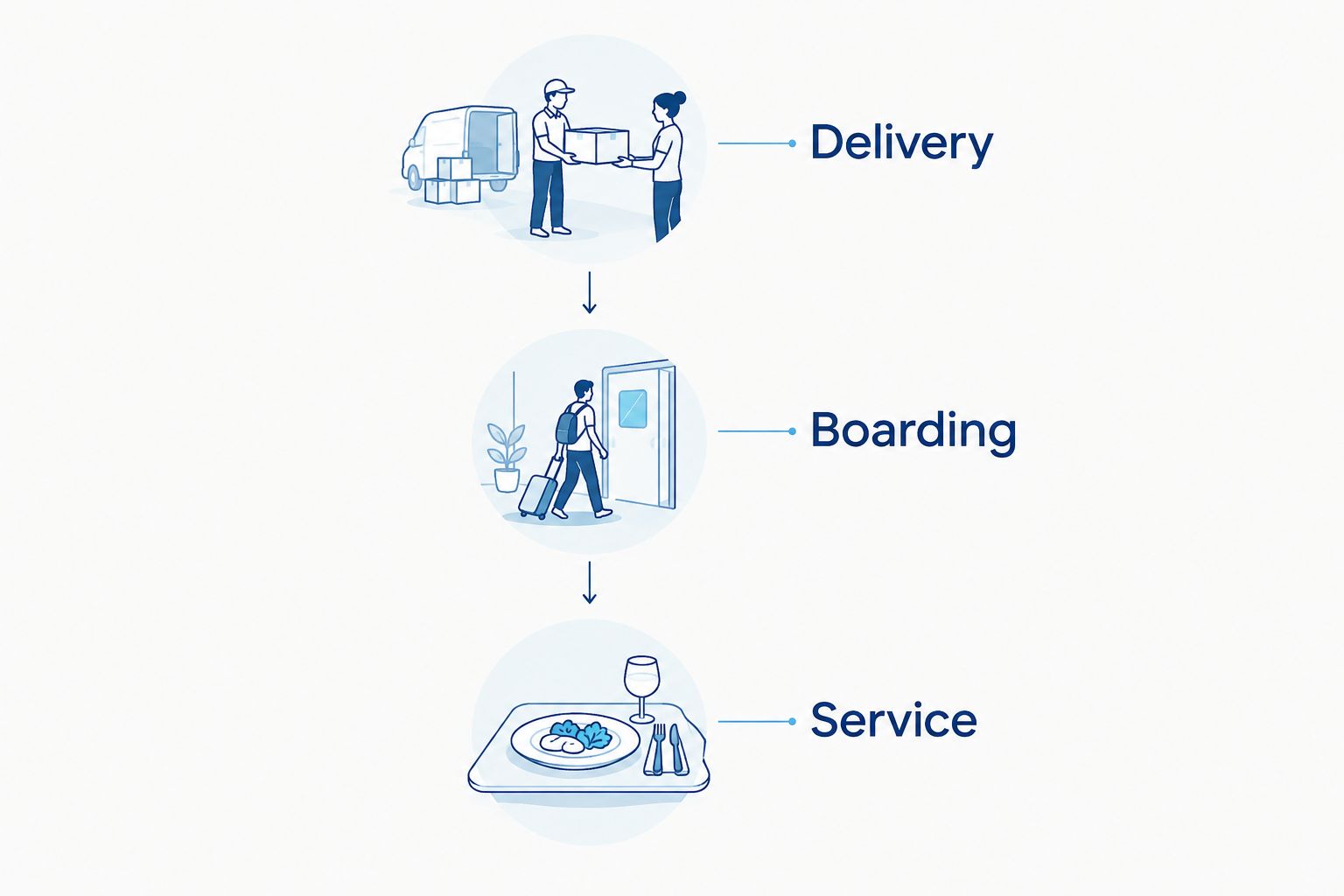
Use 3 milestones in your handoff: delivery, boarding, and service. Ask the providers to supply the actual times; do not set a generic buffer without checking access and preparation needs.
- Delivery: Record the supplier arrival point, receiving contact, food storage arrangement, and equipment handoff.
- Boarding: Give guests the confirmed meeting location, arrival instructions, and a contact for delays. Share only details approved for your booking.
- Service: Specify when food service starts, who authorizes adjustments, and how speeches or other activities fit around it.
Expected result: Suppliers and guests receive the instructions relevant to them, while you retain a single master schedule.
Keep operational decisions with the captain and food-service decisions with the catering lead. Your role is to make sure each receives changes that affect the other.
Start Your Charter Inquiry
Share your event brief, then confirm the vessel and catering requirements before booking.
Add catering to an existing yacht booking
An existing charter changes the order of work. Start with the vessel already contracted, then build a meal plan around its confirmed permissions and facilities.
- Send the charter coordinator your booking details and proposed catering requirements. Ask whether the existing agreement needs an amendment.
- Reconfirm the guest count and requested service personnel. A change from refreshments to staffed dining changes the event brief.
- Have the caterer review the vessel’s actual facilities and access arrangements before proposing a menu.
- Obtain written approval for the final supplier, equipment, delivery, and cleanup arrangements. Update the guest instructions only after those details are settled.
Expected result: Catering becomes an approved addition to the charter rather than an independent delivery the crew is expected to accommodate.
For Yachthampton yacht charters, ask about your specific booking rather than assuming a service described elsewhere applies. If the proposed meal does not fit, adjust the meal format or discuss a charter change before making further commitments.
Troubleshooting
The guest count increases after the proposal
Stop menu approval and send the revised count to both providers. Ask the charter coordinator to confirm the permitted onboard arrangement, then have the caterer revise portions, staffing, and service needs.
Do not solve a capacity issue by ordering more food. The vessel must be approved for the revised event first.
The caterer needs equipment the vessel does not support
Ask the caterer for a revised menu or preparation method that works with the confirmed facilities. Any proposed appliance or equipment addition needs charter-side approval before it reaches the dock.
Do not assume an electrical outlet establishes permission or suitability. Resolve preparation and storage requirements in writing.
Food delivery conflicts with boarding
Ask the charter coordinator to approve a revised supplier handoff. Then update both the delivery contact and the guest-facing instructions if necessary.
Keep the loading route clear and avoid giving the caterer an arrival time based solely on the invitation. Supplier access and guest boarding are different tasks.
Weather changes the operating plan
Ask the charter provider what the agreement permits and what the captain has decided. Have the caterer confirm how that decision affects delivery, service, and any rescheduling arrangements.
Do not promise guests that the event will proceed at the dock or on another date unless the relevant providers have confirmed it.
Dietary requests arrive after menu approval
Send the exact request to the caterer and wait for explicit acceptance. Ask whether ingredients, preparation, serving utensils, or labeling need to change.
Update the event brief with the caterer’s response. Never translate an unconfirmed request into a promise to a guest.
Customize your workflow
Tailor the same booking process to the occasion. For a birthday, identify when the cake will be presented and who handles it; for a client event, clarify whether introductions or speeches need a pause in service.
For a family gathering, collect boarding assistance and meal requirements alongside the guest list. Keep sensitive dietary information with the people who need it rather than circulating it in a group invitation.
Use one named decision-maker for changes. A guest, planner, or supplier should not independently alter the onboard plan without updating the charter and catering contacts.
For your 2026 event file, retain the approved version and label later changes clearly. This makes it easier to distinguish a request from a confirmed instruction.
FAQ
How do I book Hamptons event venue yacht catering?
Start with an event brief, confirm a suitable charter vessel, and obtain approval for the catering arrangement before booking suppliers. Align the charter agreement and catering scope around the same guest count, date, and service plan.
Does Yachthampton include onboard catering with a charter?
Do not assume catering is included in a Yachthampton charter. Request written confirmation of who arranges food service and what your specific booking includes.
Can I bring my own caterer on a Hamptons yacht?
An outside caterer requires approval from the charter provider for your specific vessel and event. Confirm supplier access, equipment permissions, staffing, storage, and cleanup before committing.
Is seated dining better than passed food for a yacht event?
Seated dining suits meal-centered events, while passed food suits gatherings centered on conversation. The right choice depends on confirmed seating, service space, staffing, and vessel permissions.
Do catering staff count toward the yacht’s capacity?
Ask the charter provider how catering personnel affect the permitted onboard headcount for your booking. Submit guests and service personnel separately so the full arrangement can be assessed.
What happens to yacht catering if the weather changes?
The charter and catering agreements determine the applicable cancellation or rescheduling terms, while the captain controls operational decisions. Confirm how a changed route, departure, or event date affects food delivery and service.
What should I confirm before signing for a catered yacht event in 2026?
Confirm the vessel, onboard headcount, catering permission, menu scope, supplier access, responsibilities, and applicable terms. Resolve differences between the charter agreement and catering proposal before signing.
One last thing
Have the charter coordinator and caterer acknowledge the same final event brief. Matching documents matter more than a polished invitation: they connect the meal you approved with the vessel, people, and delivery plan that will make it happen.