Brand launch yacht charter is a private, on-water event format designed to introduce a product or brand through hosted demonstrations, conversation, and content creation. This 2026 guide explains how to plan a yacht charter for brand launch events around guest access, presentation needs, and a workable departure schedule—not just the backdrop.
- A Hamptons yacht charter for brand launch events suits hosted conversations; choose another format when unrestricted guest access matters most.
- Confirm passenger limits, vendor access, presentation needs, and weather arrangements before sending invitations.
- Build the product reveal around guest comfort, clear sightlines, and a captain-approved schedule.
- Separate event attendance from business outcomes: track follow-up requests, qualified conversations, and approved content.
Why yacht charter matters for brand launch teams
A yacht launch puts your product, guests, and hosts in a shared setting. Unlike a drop-in reception, a departing charter requires guests to arrive together and remain aboard until the agreed return. Choose the format for focused hosting, not unrestricted attendance.
For your 2026 launch, start with the interaction you need. A founder-led demonstration requires different space and sound arrangements from a buyer reception or creator shoot. The relevant question is whether the vessel supports that interaction while people move, sit, and talk.
The broader guide to Hamptons corporate events on the water provides a related planning angle. A brand launch adds another requirement: the product must remain understandable without relying on a large stage, elaborate installation, or continuous internet access.
How to plan your brand launch charter
Define the launch outcome
Write a 1-page brief before requesting a vessel. State what guests should understand, experience, and do afterward. A launch designed to secure retail meetings should not use the same agenda as a press preview built around photography.
Choose a primary outcome, then identify the evidence that would demonstrate it. Attendance belongs in the event report, but it does not establish purchase intent. Make the brief useful enough that your host, photographer, and charter contact can make decisions without separate interpretations.
- Name the audience: buyers, journalists, creators, customers, or partners.
- State the product message in a sentence guests can repeat.
- Choose a primary action, such as requesting a demonstration or meeting.
- Assign an owner to invitations, production, guest hosting, and follow-up.
- Record the event date and decision deadlines in the 2026 brief.
Map the guest experience
Start with a spreadsheet and an invitation draft. Map the journey from arrival ashore to departure after the event, including transport, check-in, boarding, and the return journey. Do not treat the marina as an interchangeable venue entrance.
Ask guests about access requirements privately before selecting the vessel. Boarding arrangements, steps, seating, and restroom access need specific answers. Reserve a proposed 15-minute arrival buffer in your draft schedule, then confirm the actual boarding plan with the operator rather than presenting that buffer as an operating requirement.
- Separate invited guests from hosts, photographers, and other working attendees.
- Ask the operator how every attendee counts toward the permitted total.
- Confirm the exact boarding location before publishing invitations.
- Explain footwear, luggage, and clothing guidance using operator-approved wording.
- Give guests a contact for arrival questions and access needs.
Match the vessel to the event
Create a manual comparison sheet before looking at photographs. Compare usable gathering space, sheltered seating, boarding arrangements, and the proposed presentation location. A vessel that photographs well is not automatically suitable for a standing reception or product demonstration.
Yachthampton yacht charters are best for event hosts seeking a captained experience in the Hamptons or Palm Beaches. Yachthampton offers luxury yacht and boat charters and captained excursions; use your brief to ask which vessel and operating arrangements fit the event. Confirm event production requirements separately rather than treating a charter as a full production package.
- Request the permitted passenger count for the proposed charter arrangement.
- Ask where the entire group can gather for the reveal.
- Check sheltered space against your actual guest list.
- Describe every display, sample, and equipment item before approval.
- Compare the charter arrangement with your boarding and accessibility needs.
Design a presentation that works aboard
Sketch the reveal on paper first. Show where the presenter stands, where guests gather, and how the product moves into view. Keep boarding routes and crew access clear; the captain must approve any setup that affects vessel operations.
Plan a 10-minute rehearsal ashore for the core demonstration. This is a suggested production exercise, not a charter inclusion. Test the explanation without a screen so your presenter can deliver the central message if glare, wind, or equipment interrupts the planned format.
- Use a physical demonstration when it explains the product clearly.
- Prepare an offline copy of essential presentation material.
- Test sound requirements with the operator before hiring equipment.
- Secure samples and display materials using approved methods.
- Prepare a spoken version of the reveal that needs no screen.
Sequence the onboard experience
Build your 2026 running order in a shared document before moving it into an event platform. Arrange the launch around boarding, the captain's briefing, the reveal, conversation, and return. Do not make the safety briefing compete with speeches or photography.
A simple sequence gives each activity room to work. Guests should know when to listen and when to explore the product. Treat the route and any proposed stops as operating decisions requiring confirmation, not as fixed creative assets promised in advance.
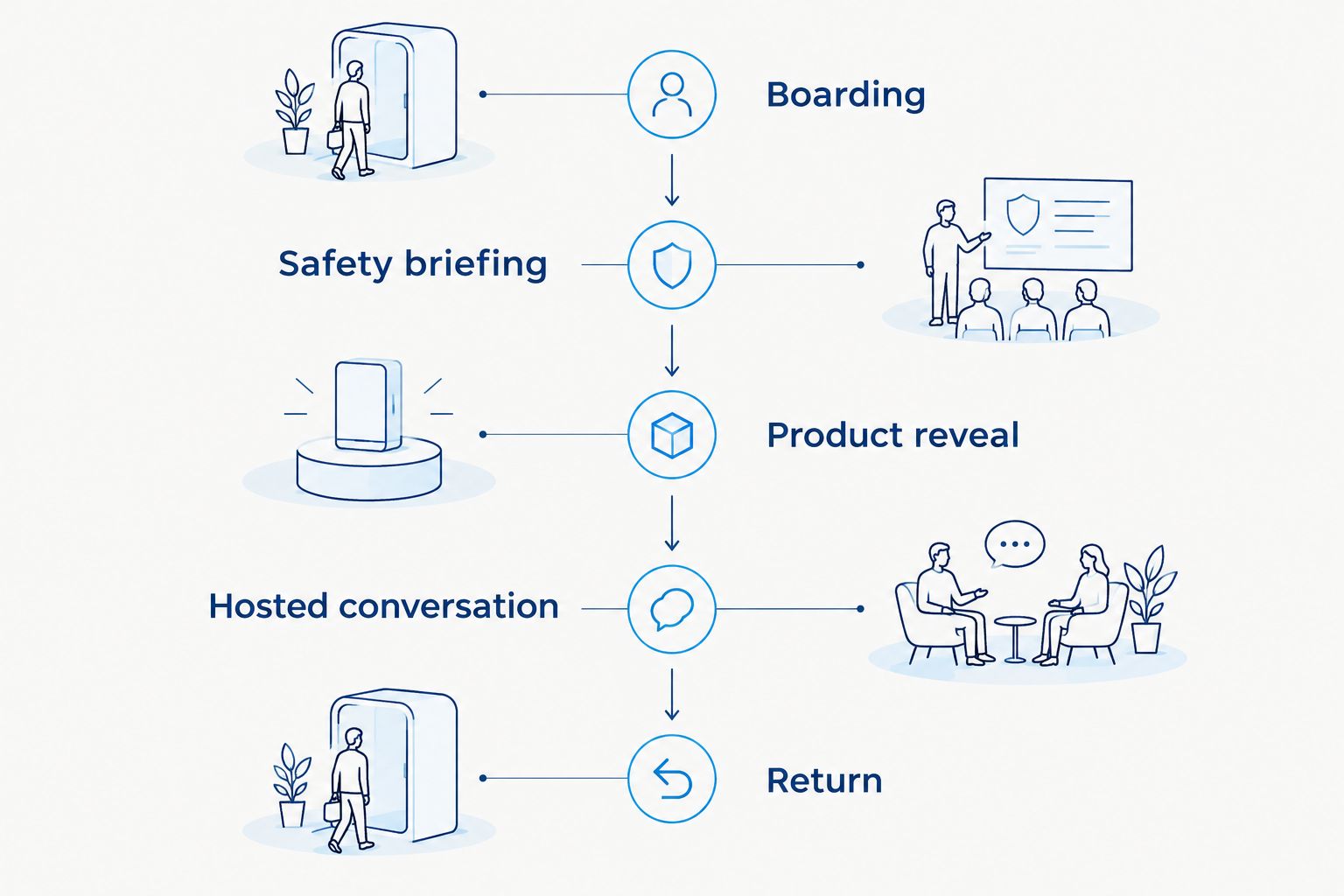
Use these phases as your draft running order, then agree on the timing with the charter operator. Add production cues only after the operating schedule is settled.
- Boarding: check guests in and direct equipment to its approved location.
- Safety briefing: pause brand activity and give the crew everyone's attention.
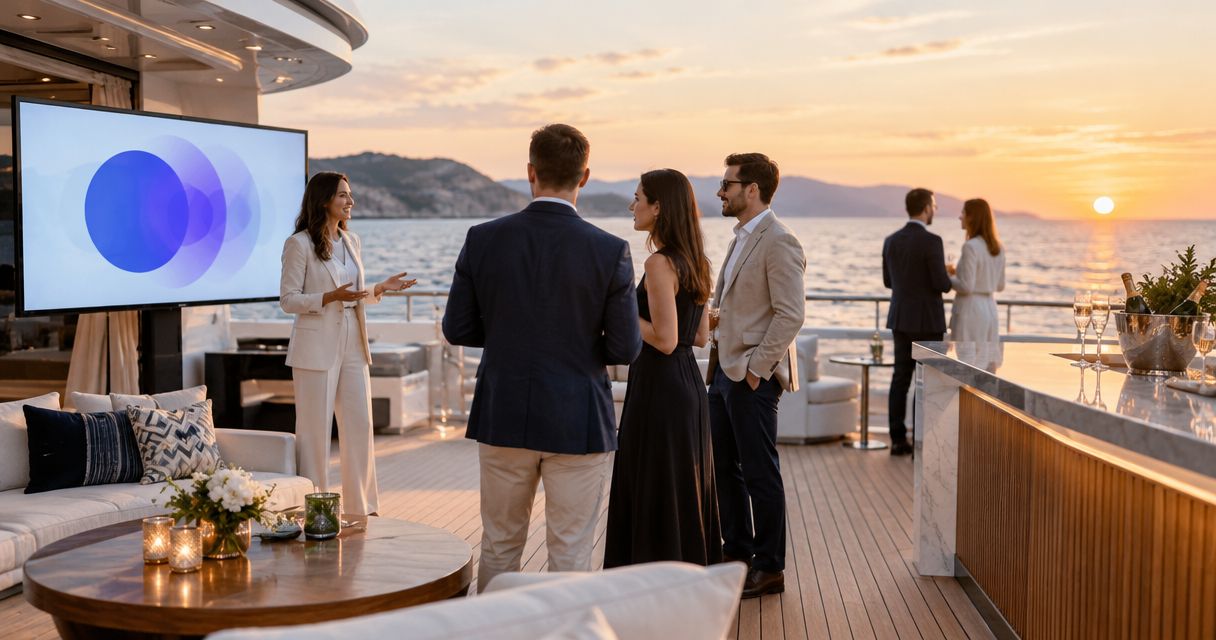
- Product reveal: deliver the central message and demonstrate the product.
- Hosted conversation: connect guests with the right brand representative.
- Return: explain the next step and coordinate departure ashore.
Confirm vendors and fallback arrangements
List the work you can handle internally before hiring additional suppliers. Your team can prepare guest lists, briefing documents, and follow-up materials. Catering, sound, photography, and installations need separate scope checks and operator approval.
For a Yachthampton yacht charter, ask which activities and supplier arrangements are permitted on the proposed vessel. Keep the operating terms separate from the creative brief. Read the agreement for weather decisions, changes, and cancellation terms; do not promise guests a substitute arrangement that has not been agreed.
- Name the person authorized to approve event changes.
- Confirm supplier delivery, loading, setup, and removal arrangements.
- Ask about catering, beverages, waste, and equipment restrictions.
- Document the weather decision process and guest notification owner.
- Agree on an alternative communication plan if the event changes.
- Check permissions for signage, filming, music, and product sampling.
Measure outcomes and follow up
Start with a shared tracking sheet rather than adding software before the process is clear. Record invited guests, attendance, substantive conversations, and requested next steps. Assign each follow-up to a named person so the event does not end with an unworked contact list.
Agree on photography permissions and intended uses before the event. A guest's attendance is not a substitute for permission to feature that guest in promotional material. Keep your commercial follow-up relevant to what each person discussed rather than sending everyone the same sales message.
- Record meeting requests separately from general expressions of interest.
- Tag content by product, intended channel, and permission status.
- Send promised materials through the guest's agreed contact method.
- Compare the event's outcomes with the original brief.
- Document operational lessons before planning another launch.
Compare launch formats before choosing a charter
The best format is the one that supports your launch interaction without creating an access problem. Compare the options using the actual guest journey, not the venue photograph. For each format, request a written scope covering responsibilities, restrictions, and supplier arrangements.
| Option | Best for | Main advantage | Key limitation |
|---|---|---|---|
| Captained yacht launch | Focused buyer, partner, or press conversations | Combines a hosted gathering with time on the water | Boarding and departure constrain late arrivals and early exits |
| Dockside yacht reception, if permitted | A waterfront presentation without a sailing itinerary | Keeps the event centered on a vessel without requiring a cruise | Marina permission, access, and vessel restrictions still apply |
| Shoreside private venue | Drop-in attendance, substantial displays, or access-led planning | Lets you select a space around production and guest requirements | Does not provide the on-water charter experience |
| Shoreside reveal followed by a charter | A formal demonstration followed by hosted relationship time | Separates presentation requirements from the cruise | Requires separate coordination for both settings |
A captained charter gives your host a defined gathering to work with, but it also creates a departure deadline. A shoreside venue separates attendance from a sailing schedule, but requires its own venue assessment. Neither choice removes the need to check access, safety, and production fit.
Plan Your Brand Launch Charter
Bring your guest profile, preferred location, and event requirements to the charter conversation.
Common mistakes brand launch teams make
Choosing the backdrop before the demonstration
A dramatic deck photograph tells you little about presentation sightlines. Decide how guests will see, hear, and handle the product before selecting the setting. If the demonstration requires a controlled environment, put that portion ashore.
Counting only invited guests
Photographers, brand representatives, and other working attendees affect the onboard plan. Give the operator the complete attendance breakdown and ask how it applies to the proposed charter. Do not build invitations around a capacity figure without confirming its scope.
Promising an unconfirmed route
A landmark or sunset scene should not become a guaranteed campaign deliverable without operating approval. Agree on essential shots and alternative compositions with the photographer. Write invitations around the confirmed experience rather than an assumed stop.
Treating the charter as event production
A vessel booking does not establish who supplies microphones, catering, signage, or content rights. Put each responsibility beside a named owner in the production document. For Yachthampton, confirm those requirements directly instead of assuming they are included.
Planning the reveal but not the return
The launch still needs a clear ending. Tell guests what happens after disembarkation, who handles transport questions, and how to request further information. Include that departure message in the host's notes, not just the invitation.
FAQ
Is a yacht charter a good choice for a brand launch event?
A yacht charter suits a brand launch built around hosted conversation, a manageable demonstration, and guests who can follow a shared departure schedule. Choose a shoreside format when unrestricted arrivals, substantial installations, or access requirements determine the event design.
How many guests can I invite to a yacht launch?
Use the passenger limit confirmed by the operator for the specific vessel and charter arrangement. Provide a complete breakdown of guests, brand hosts, photographers, and other attendees before finalizing invitations.
Can I put branding and product displays on a charter yacht?
Only use branding and displays approved by the charter operator. Describe their dimensions, materials, installation method, and proposed location so the operator can assess access and vessel protection.
Can a yacht launch include a presentation or product demonstration?
A yacht launch can include a presentation when the operator approves the setup and the vessel supports the activity. Confirm sound, power, sightlines, equipment handling, and an offline presentation plan before committing to the format.
Should I hold the launch while docked or while cruising?
Choose a dockside format when the agreed event plan does not require sailing, and a cruise when time on the water supports the guest experience. Both require permission and a confirmed boarding plan; neither guarantees unrestricted access.
What should I ask Yachthampton about a brand launch charter?
Ask Yachthampton about vessel fit, passenger limits, boarding arrangements, and permitted event activities in the Hamptons or Palm Beaches. Confirm production suppliers, presentation equipment, catering arrangements, and weather terms separately.
What should happen if weather changes the launch plan?
Follow the decision process and terms agreed with the charter operator. Assign a guest communications owner and only announce alternative arrangements that have been confirmed.
One last thing
Test the reveal without the yacht. Ask someone unfamiliar with the product to watch the demonstration ashore and explain the message back to you. If the explanation is unclear there, the setting will not fix it.
For your 2026 launch, approve the message before approving decorative details. The strongest planning decision is often removing an activity that competes with the product conversation.