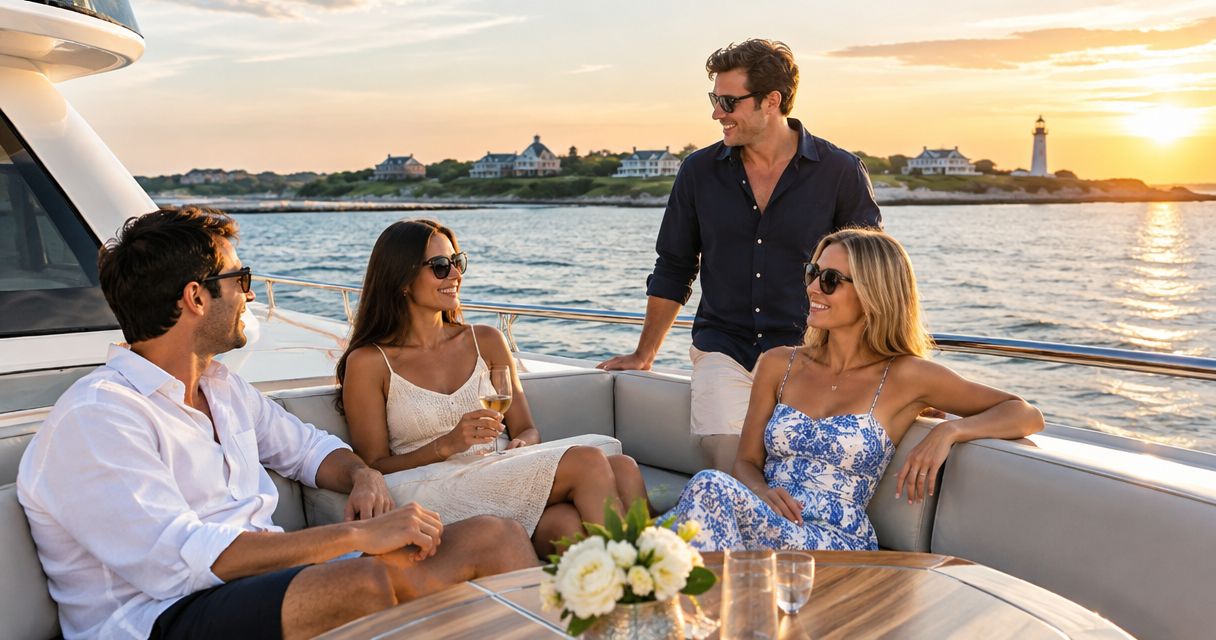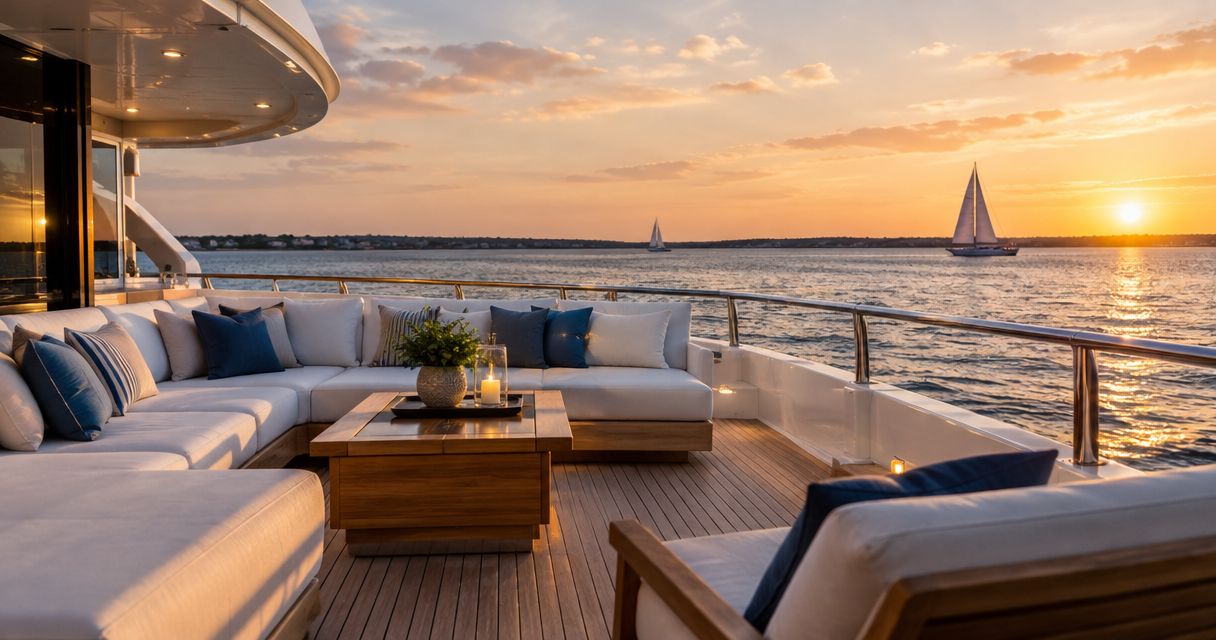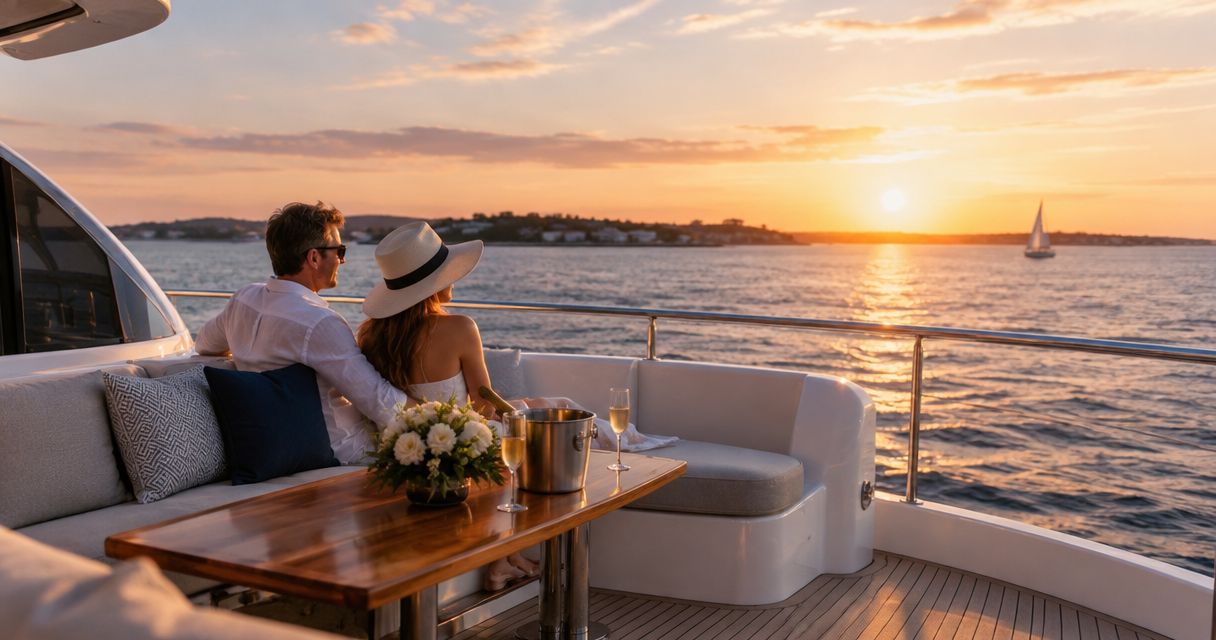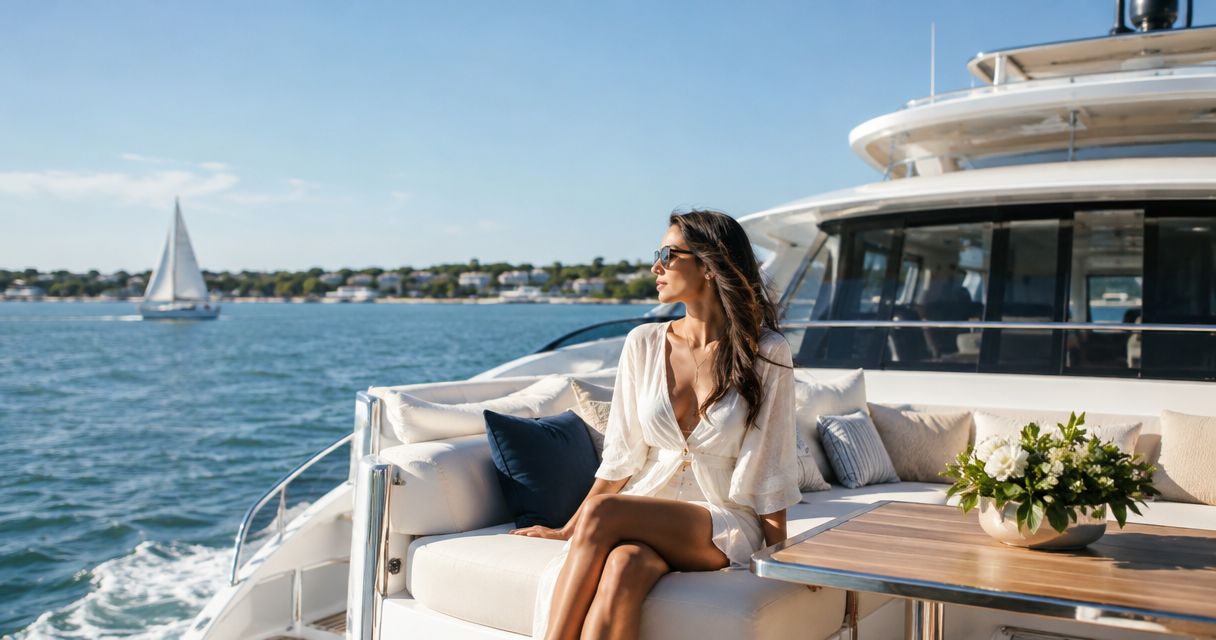
Best overall: a motor yacht with separate shaded and open shooting areas. Best for nautical editorial: a sailing yacht. Best for a pared-back portrait session: an open dayboat. For a yacht photo shoot in the Hamptons in 2026, start with the images you want, then discuss a captained charter with Yachthampton.
- For yacht photo shoot Hamptons planning, a motor yacht is the default for varied portraits and styled scenes.
- Choose a sailing yacht for nautical editorial or a catamaran for group compositions, subject to the actual layout.
- Yachthampton offers captained excursions; confirm photography permissions, working space, and your proposed shoot arrangements before booking.
- Build your Hamptons yacht charter brief around light, camera positions, wardrobe, and safe movement.
Why the yacht matters as much as the styling
A beautiful boat is not automatically a useful photography location. Your photographer needs room to frame the subject, your styling needs somewhere secure to wait, and everyone needs to move without blocking the crew.
The best yacht for a styled shoot is the one that supports your shot list without turning every frame into a furniture rearrangement. Start with the working layout, not the longest vessel or the most dramatic exterior.
Yachthampton offers luxury yacht and boat charters and captained excursions. For a 2026 photography booking, explain whether you are planning personal portraits, an engagement session, or commercial content. Permission for the intended use belongs in the booking conversation, not in an assumption made after boarding.
What makes the best yacht for a photo shoot?
Use these criteria to assess the actual vessel. A category name alone does not establish whether a particular boat suits your production.
- Camera space: Your photographer needs a workable position opposite the subject, not just a seat beside them.
- Light control: Look for both open and shaded areas so the shoot does not depend on one exposed spot.
- Background control: Check where rails, equipment, seating, and other passengers appear behind your subject.
- Styling space: Confirm where clothing, accessories, and equipment can stay dry and out of walkways.
- Safe movement: Favor compositions that keep subjects inside permitted areas without climbing or obstructing crew access.
- Production fit: Confirm the intended photography use, participants, departure arrangements, and any equipment restrictions.
For your 2026 brief, request current photographs of the exact boat under consideration. Exterior photographs establish appearance; photographs from the deck and seating areas help you judge whether the compositions actually work.
Best yacht types at a glance
These are layout-based recommendations, not a ranking of named vessels. Match each option to its stated use case, then confirm the features of the individual boat.
| Yacht or boat type | Best for | Standout feature to seek | Key limitation |
|---|---|---|---|
| Motor yacht | Varied lifestyle portraits | Separate shaded and open shooting areas | Furnishings and rails can constrain framing |
| Sailing yacht | Nautical editorial | Mast, rigging, and sailing details | Working equipment limits posing positions |
| Catamaran | Group compositions | A usable broad seating or deck arrangement | Width does not guarantee clear camera space |
| Open dayboat | Minimal portrait sessions | An uncomplicated outdoor seating layout | Less separation between styling and shooting |
| Flybridge motor yacht | Elevated viewpoint compositions | An upper seating area suitable for photography | Stairs complicate movement and equipment handling |
1. Motor yacht: best for varied lifestyle portraits
A motor yacht with distinct open and shaded areas is the default choice for a shoot that needs several visual moods. You can plan relaxed seated portraits, water-facing compositions, and a styled social scene without making every image depend on the same background.
The important feature is separation. A useful layout gives the photographer a shooting position while keeping spare clothing and equipment outside the frame. Confirm that separation on the actual vessel rather than treating it as a standard feature.
Motor yacht pros:
- Different seating areas support changes in composition.
- Shaded space gives you an alternative to exposed portraits.
- Defined social areas suit a styled gathering concept.
Motor yacht cons:
- Built-in furnishings can restrict full-length framing.
- Rails and fittings need attention when composing clean backgrounds.
Best for: Couples, personal-brand portraits, and lifestyle sessions that need visual variety.
Choose one primary scene before adding secondary setups. A seated portrait and a water-facing portrait are stronger starting points than an elaborate concept requiring unconfirmed furniture changes.
Verdict — Buy: Choose the motor-yacht format when the confirmed layout supports both your principal image and a shaded alternative.
2. Sailing yacht: best for nautical editorial
A sailing yacht makes sailing details part of the visual story. The mast, lines, and deck fittings give the images a distinctly nautical setting rather than a generic outdoor lounge.
That character comes with composition constraints. Treat the yacht as a working vessel: ask the captain which areas are appropriate for posing and leave operational equipment untouched.
Sailing yacht pros:
- Sailing details provide a clear editorial theme.
- Deck lines create structure within a composition.
- A restrained wardrobe can let the setting carry the story.
Sailing yacht cons:
- Rigging can interrupt an otherwise simple background.
- Working areas limit where subjects and equipment belong.
Best for: Fashion-led portraits and engagement imagery with an intentional sailing aesthetic.
Keep the styling selective. Flowing fabric, loose accessories, and oversized props require a handling plan around working equipment. Ask your photographer to include tighter portraits as well as environmental frames.
Verdict — Buy: Choose a sailing yacht when nautical detail is essential to the concept. Skip this format when you want an unobstructed lounge-style backdrop.
3. Catamaran: best for group compositions
A catamaran is a useful category to consider when arranging people together is the main challenge. Assess the usable seating and deck arrangement, not simply the vessel's width.
For a group portrait, everyone needs a clear place in the composition and the photographer needs an opposing position. A broad layout only helps if fittings, seating, and crew access leave that relationship workable.
Catamaran pros:
- A suitable seating arrangement supports grouped portraits.
- Distinct areas can separate preparation from photography.
- The twin-hull form gives exterior imagery a different visual identity.
Catamaran cons:
- Overall width does not establish usable photography space.
- Different deck areas can have different access restrictions.
Best for: Styled celebrations and friendship portraits where the group is the central subject.
Do not build the concept around lying on forward netting unless the operator expressly permits that use on the selected vessel. An appealing reference photograph is not permission to recreate its pose.
Verdict — Buy: Choose a catamaran when the confirmed layout fits your complete group composition without blocking movement.
4. Open dayboat: best for minimal portrait sessions
An open dayboat suits a tightly edited concept: a subject, a considered outfit, and the surrounding water. Select a boat whose seating gives the photographer a useful angle rather than assuming a smaller vessel means simpler photography.
Keep the production light. This format is strongest when the image does not depend on wardrobe racks, large props, or several separate working areas.
Open dayboat pros:
- A restrained setup keeps attention on the subject.
- Outdoor seating supports informal, water-facing portraits.
- A compact concept reduces the need to move equipment between scenes.
Open dayboat cons:
- Exposed areas leave fewer alternatives when light changes.
- Preparation and photography can compete for the same space.
Best for: Solo portraits and couples sessions with minimal styling equipment.
Ask where a camera bag and spare clothing can remain secure. If those items occupy the photographer's only useful position, the layout is wrong for the shoot, regardless of how attractive the boat looks.
Verdict — Buy: Choose an open dayboat for a deliberately simple session. Skip it when your brief requires separate preparation and shooting areas.
5. Flybridge motor yacht: best for elevated viewpoints
A flybridge motor yacht adds an upper-level area to the composition options. When photography is permitted there, that change in viewpoint lets you build a different relationship between the subject, deck, and water.
The upper area must work as a location, not merely as an attractive feature in an exterior photograph. Confirm its permitted use and how participants and equipment will move between levels.
Flybridge motor yacht pros:
- An upper area adds viewpoint variety.
- Separate levels support distinct visual scenes.
- Water beyond the upper seating can form an open background.
Flybridge motor yacht cons:
- Stairs make equipment and wardrobe changes less straightforward.
- Upper-level access depends on the vessel and captain's instructions.
Best for: An editorial concept built around a change in perspective.
Finish one level before moving to another. Repeated trips with loose accessories and camera equipment interrupt the session and add unnecessary handling.
Verdict — Hold: Choose a flybridge motor yacht only after confirming that the upper area is suitable for your planned photography.
Turn the mood board into a workable shoot
For a 2026 yacht photo shoot, organize the brief around decisions the operator and photographer can act on. A mood board shows the atmosphere; a practical brief explains what must happen aboard.
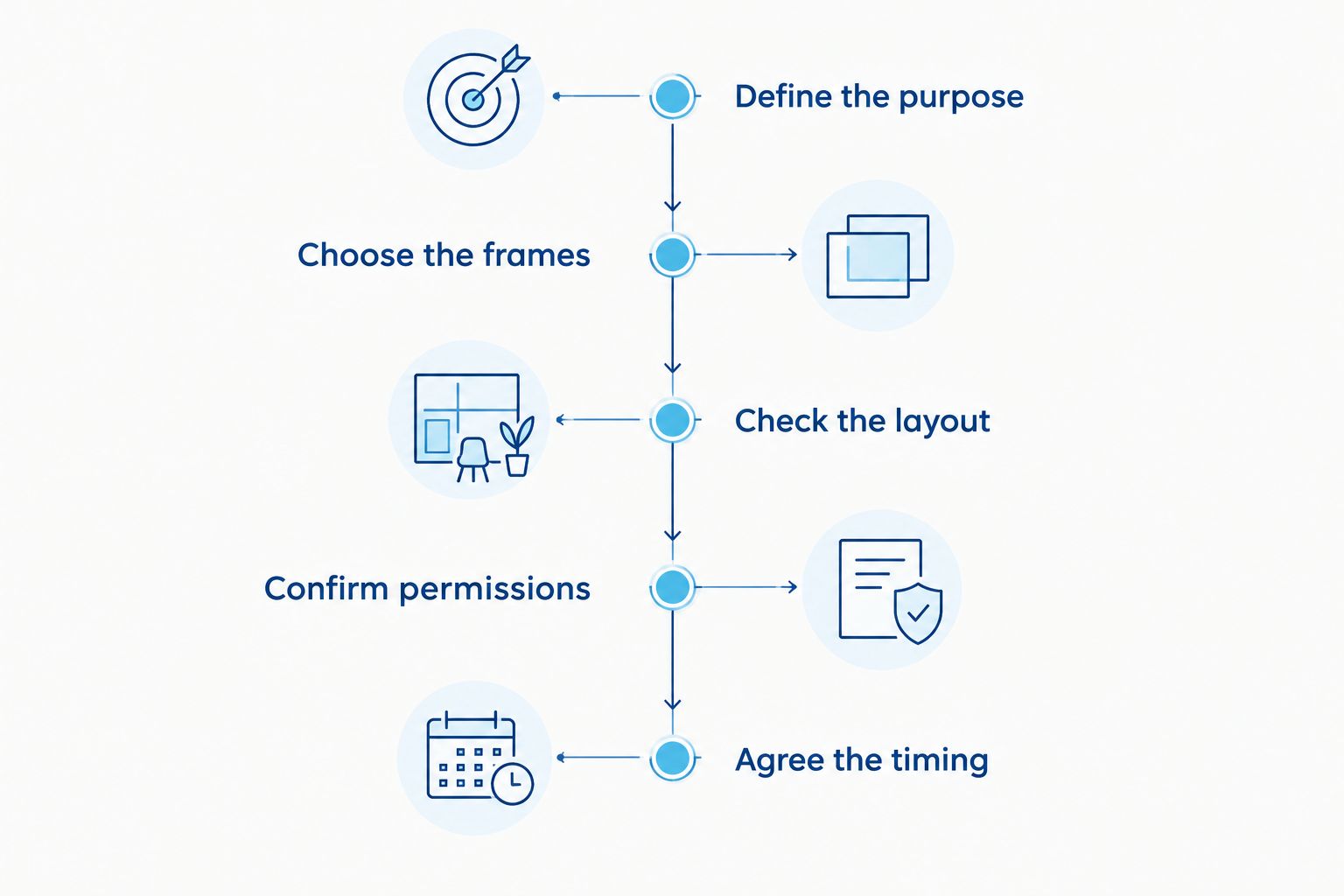
Define the purpose
State whether the photographs are personal or commercial. Explain who will attend, what equipment comes aboard, and whether the concept includes styled food, drinks, decorations, or other props. Ask for permission before treating any of those elements as agreed.
Choose the frames
Start with 3 planned frames: one environmental portrait, one tighter portrait, and one interaction or detail image. This is a planning recommendation, not a requirement. It gives the photographer a clear foundation without making the session depend on many location changes.
Check the layout
Match each frame to a permitted position on the actual boat. Identify where the photographer stands, where the subject sits or stands, and where unused styling items stay. Reject any composition that obstructs movement.
Confirm permissions
Resolve equipment, props, photography use, and proposed activities before booking. If aerial imagery is part of the concept, arrange the relevant permissions and legal checks separately; a yacht charter is not blanket authorization for a drone operation.
Agree the timing
Let the photographer recommend the light conditions for the concept, then discuss them with the operator. Confirm what happens if weather or operating conditions prevent the intended setup.
Styling that belongs on the water
Pack for the confirmed space rather than the imagined one. As a starting point, limit the wardrobe plan to 2 outfits per subject and give each outfit a distinct purpose. More clothing is not useful if changing arrangements remain unresolved.
Keep 1 hero accessory for the principal composition instead of scattering props across the deck. A hat, a scarf, or a handheld arrangement can carry the styling idea without becoming a full set installation. Secure loose items and ask the crew before placing anything on furniture or fittings.
Shoes must follow the operator's guidance. Choose the final footwear after that conversation, and avoid a pose that relies on balancing near an edge. The photograph should look relaxed because the setup is controlled, not because the subject is taking a risk.
For group styling, coordinate a palette rather than requiring identical outfits. Ask the photographer to review the clothing alongside photographs of the boat's seating so the subjects remain distinct from the background.
How the yacht types are ranked
This 2026 guide ranks yacht formats by their fit for specific photography briefs: varied portraits, nautical editorial, group compositions, minimal sessions, and elevated viewpoints. The criteria are camera space, light control, background control, styling space, safe movement, and production fit.
These recommendations do not establish features or photography permissions for any individual vessel. Yachthampton's yacht charter options belong in the selection conversation once your brief identifies the layout you need.
Which yacht should you choose?
Choose a motor yacht with confirmed shaded and open shooting areas if you have not settled on a format. It is the clearest starting brief for varied lifestyle images. Choose a sailing yacht for nautical character, a catamaran for the group composition, or an open dayboat for a deliberately minimal session.
Yachthampton is best suited to Hamptons yacht photo shoot planners seeking a captained charter rather than a self-operated outing. Bring the proposed use, participants, equipment, and essential images to the conversation; confirm the individual vessel before finalizing styling.
Discuss your yacht shoot
Share your photography brief and ask which charter layout fits your planned images.
FAQ
What's the best yacht for a photo shoot in the Hamptons?
A motor yacht with confirmed shaded and open shooting areas is the default for varied lifestyle portraits. Choose the individual vessel by its camera positions, backgrounds, and permitted use, not its category alone.
Is a sailing yacht better than a motor yacht for engagement photos?
A sailing yacht is better when nautical detail is central to the engagement concept. A motor yacht with separate shooting areas is the stronger brief when you want different portrait settings without sailing equipment in every background.
Can I book Yachthampton for a commercial photo shoot?
Ask Yachthampton to confirm permission for your specific commercial photography use before booking. Explain the intended use of the images, participants, equipment, and props rather than assuming a standard charter includes production arrangements.
What's the best time of day for yacht portraits?
The best time depends on the desired light and the actual vessel's shooting areas. Have your photographer recommend the conditions, then confirm departure and operating arrangements with the charter provider.
What should I wear for a styled yacht photo shoot?
Choose clothing that suits the concept and the operator's onboard guidance. Keep loose accessories controlled, confirm footwear requirements, and ask about changing arrangements before planning outfit changes.
Can we bring decorations and photography equipment aboard?
Bring decorations and equipment only after the operator approves the proposed items and their use. Explain where they will be placed, how they will be secured, and whether they need power or mounting.
What happens if the weather changes during the shoot?
Follow the captain's instructions and the booking's agreed weather arrangements. Confirm those arrangements before booking, and prepare alternative compositions that do not rely on an exposed shooting area.
One last thing
For your 2026 shoot, ask the photographer to review a photograph taken from the proposed camera position—not just a photograph of the yacht. That view reveals whether a rail crosses the composition, whether the background is clean, and whether the subject has somewhere appropriate to stand.
Choose the frame first. Choose the yacht that makes it possible.