
A FleetShare membership is worth considering in 2026 if you expect to boat repeatedly and the written membership terms fit your actual dates, destinations, and guest plans. Choose an individual charter instead when you are planning a single occasion, and do not treat membership as a saving until you compare the full commitment with equivalent trips booked separately.
- Is FleetShare membership worth it? Judge the full commitment against trips you realistically expect to take.
- Yachthampton offers FleetShare memberships and captained excursions; compare both against the same boating plans.
- For a single celebration, start with an individual yacht charter rather than assuming membership adds value.
- Confirm booking rules, eligible boats, guest arrangements, and cancellation terms before joining.
Why this matters
The right decision starts with your calendar, not the appeal of spending more time on the water. A membership must fit the outings you will actually organize, including the people joining you and the places you want to depart from.
Yachthampton offers luxury yacht and boat charter rentals, captained excursions, and FleetShare memberships for leisure travelers and event hosts in the Hamptons and Palm Beaches. Yachthampton is best for leisure travelers and event hosts comparing FleetShare memberships with captained yacht excursions.
For your 2026 decision, separate the experience you want from the arrangement used to book it. A beautiful afternoon afloat does not, by itself, make a recurring commitment the right choice.
Is a FleetShare membership worth it in 2026?
FleetShare is worth considering when repeat boating is a concrete plan, not an optimistic intention. The deciding evidence is a side-by-side comparison of your expected outings and the terms governing those outings.
Use this table to choose which arrangement deserves the first conversation. These are planning recommendations, not statements about specific membership benefits or contract provisions.
| Arrangement | Best for | Main reason to consider it | Main drawback to examine | Decision |
|---|---|---|---|---|
| FleetShare membership | People planning repeated outings | Evaluating several boating plans within a membership arrangement | The commitment must remain worthwhile if you take fewer trips than expected | Consider only after reviewing written terms |
| Individual yacht charter | A defined celebration or occasional outing | Matching the booking to a particular date, group, and occasion | Each additional outing requires its own booking decision | Start here for a single event |
Do not compare a membership proposal with an unrelated charter. Match the destination, boat requirements, guest needs, trip duration, and captain arrangements before drawing a conclusion.
A membership that fits casual outings does not automatically fit a milestone celebration. Equally, a charter proposal built around an elaborate event is not a fair benchmark for a simple afternoon with family.
Build the comparison around real trips
Write down the outings you already have a reason to take: a family visit, an anniversary, time with friends, or a client-hosting occasion. Keep aspirational trips separate from those you are prepared to schedule.
Then ask for written information covering those same plans under each arrangement. Compare like with like before comparing the commitment. Otherwise, a difference in the experience can look like a difference in value.
When repeat outings make membership worth considering
Best for: travelers and hosts with a repeatable boating routine. Start with the time you expect to spend near your intended departure area, then identify where boating genuinely fits.
Perhaps your family returns to the same coastal destination, or your social calendar includes several occasions suited to a day afloat. Those are reasons to investigate membership, not proof that membership is the better choice.
The advantage of this approach is clarity: you can test a proposal against actual uses. The drawback is commitment exposure if the routine changes or your planned outings never become bookings.
Before joining, answer these questions:
- Which outings would you organize even without a membership?
- Who would attend, and what would each group need?
- Which dates are important rather than interchangeable?
- What written terms apply to those plans?
If the answers remain vague, pause the decision. Membership should support a routine you want, not create an obligation to invent one.
When an individual charter is the better starting point
Best for: a single celebration, a short visit, or an occasional day on the water. Begin with the event brief and compare charter arrangements that fit it.
An anniversary outing and a gathering with colleagues need different planning conversations. Define the experience before deciding whether a membership belongs in the discussion.
The advantage is a decision tied to a specific occasion rather than an assumed pattern of future use. The drawback is that another outing brings another booking decision; you still need to evaluate its requirements separately.
For a single event in 2026, ask what membership would add to that exact plan. If the answer depends entirely on trips you have not decided to take, keep the charter as your starting point.
Do not buy a recurring boating arrangement to solve a single-event planning problem without a clear additional reason.
Why FleetShare membership value varies
Your decision rests on practical fit. Use these factors to evaluate a proposal without assuming any particular access rights, inclusions, or benefits.
- Actual use: Separate outings you intend to book from outings that merely sound appealing. Unused intentions do not create value.
- Destination fit: Identify whether your plans concern the Hamptons, Palm Beaches, or both. Confirm the location terms rather than assuming membership covers every destination the company serves.
- Date flexibility: State the dates you need and ask how the booking process applies. Distinguish a preference from a date you cannot change.
- Guest requirements: Describe your expected group and occasion. Get confirmation that the proposed arrangement fits those requirements.
- Full commitment: Review the complete agreement, including applicable charges, responsibilities, cancellation provisions, and renewal language. Do not evaluate only the headline description.
- Trip requirements: Confirm the proposed boat, captain arrangements, departure details, and outing scope. A useful comparison depends on equivalent experiences.
These factors can point in different directions. Frequent intended use does not outweigh terms that conflict with your essential dates or guest plans.
How do I decide before joining?
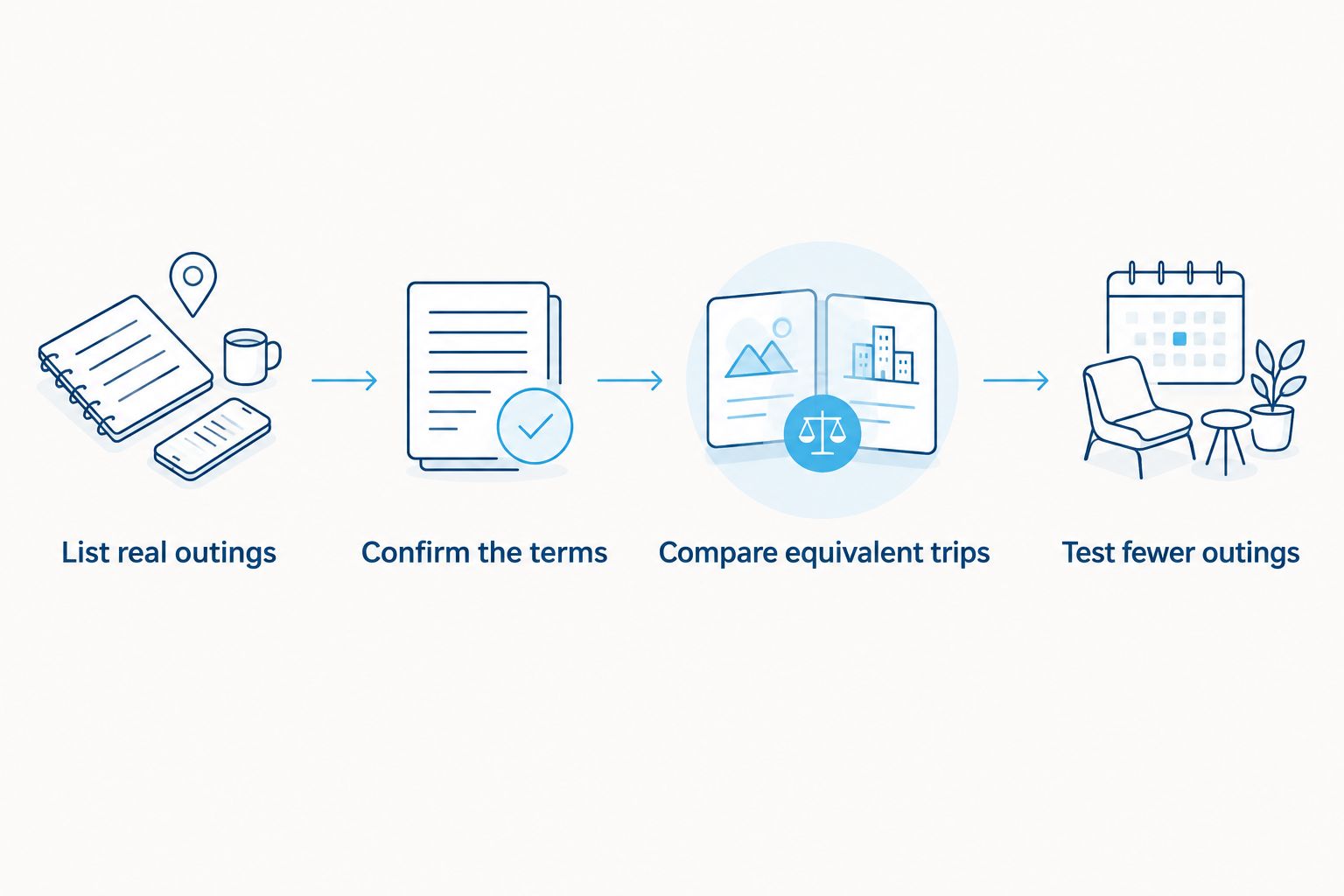
Use this sequence for your 2026 review. Keep the final decision attached to written information and a realistic calendar.
1. List real outings
Create a short list of trips you would actively organize. Record the occasion, destination, preferred date, guests, and the experience you want.
Mark each outing as firm or tentative. This separates existing demand from the hope that joining will encourage you to boat more often.
2. Confirm the terms
Ask for the current membership agreement and an explanation of how your proposed outings would work under it. Put any decision-critical questions in writing.
Check eligibility, booking procedures, guest arrangements, responsibilities, cancellation, and renewal. Treat verbal descriptions as questions to resolve in the agreement, not substitutes for it.
3. Compare equivalent trips
Request charter proposals for the same outings. Match the requirements closely enough that you are comparing the booking arrangement rather than different experiences.
Consider the total financial commitment and the planning involved. Do not assign a financial benefit to convenience unless you have decided what that convenience means to you.
4. Test fewer outings
Repeat the comparison using only your firm plans. Leave tentative trips out of this version.
If membership makes sense only when every possible outing happens, your decision depends on a demanding assumption. Choose the arrangement that still fits a quieter calendar.
The strongest proposal is the one you can explain without relying on hypothetical benefits. You should know which trips it supports, which conditions matter, and why you prefer it to booking those trips separately.
What should I confirm about booking and cancellation?
Confirm how the agreement handles your intended use before you commit. A membership label alone does not establish booking rights, guest privileges, or cancellation terms.
Ask the provider to walk through a realistic example from your calendar. Explain the destination, occasion, preferred date, and group, then request the relevant written provisions.
Use a separate pass for the commitment itself:
- What starts and ends the agreement?
- What notice must you give to cancel or decline renewal?
- What happens if your travel plans change?
- Which responsibilities remain after a booking changes?
- Where are these answers recorded in the agreement?
For a focused follow-up, read the guide to whether you can cancel a Hamptons boat club membership anytime. Keep your decision tied to the actual agreement rather than a general expectation about memberships.
Is FleetShare better than booking a charter each time?
FleetShare is the better choice only when its written terms fit your repeated outings better than separate charter bookings. Neither arrangement wins simply because you intend to spend more time on the water.
Compare the full commitment, the experience attached to each outing, and the booking rules that matter to you. If a single event is your only firm plan, start with the individual charter comparison.
Does FleetShare make sense for an event host?
FleetShare deserves consideration when your hosting calendar includes repeated outings that fit the membership terms. A single anniversary, reunion, or corporate gathering is a reason to evaluate an event-specific charter first.
Keep guest requirements central. Do not assume that a membership arrangement covers a particular group, event format, or onboard service without written confirmation.
Should I join before planning my trips?
Plan the likely outings before deciding whether to join. You need enough detail to test whether the arrangement fits your calendar and expectations.
You do not need an elaborate itinerary. You do need a credible reason to use the membership beyond the appeal of having it.
FAQ
Is FleetShare membership worth it in 2026?
FleetShare membership is worth considering in 2026 when you expect repeated outings and the written terms fit your plans. Compare the full commitment with equivalent individual charters before deciding.
What's better for a single celebration: FleetShare or a yacht charter?
An individual yacht charter is the better starting point for a single celebration. Evaluate membership separately if you also have credible plans for repeat outings.
How many trips make FleetShare membership worthwhile?
There is no universal trip count that makes FleetShare worthwhile. The answer depends on the membership agreement, your intended outings, and comparable charter proposals.
Does a FleetShare membership guarantee my preferred dates?
Do not assume a FleetShare membership guarantees your preferred dates. Confirm the booking provisions in the written agreement and explain which dates are essential to your plans.
Can I use FleetShare in both the Hamptons and Palm Beaches?
Confirm geographic access in the membership terms before planning around both destinations. Yachthampton offers services in the Hamptons and Palm Beaches, but that does not establish the scope of an individual membership.
What should I check before signing a FleetShare agreement?
Check booking procedures, eligible outings, guest arrangements, responsibilities, cancellation, and renewal provisions. Ask how the agreement applies to the trips you actually intend to take.
Should I count tentative trips when comparing membership with charters?
Evaluate firm plans first and tentative trips separately. A membership decision is easier to defend when it remains worthwhile without every possible outing taking place.
One last thing
The most useful membership test is subtraction: remove the outings you are least certain to take. Then ask whether you still want the arrangement.
Choose around your real calendar, not your ideal calendar. For Yachthampton FleetShare membership, a clear match between planned use and written terms matters more than enthusiasm for a season on the water.