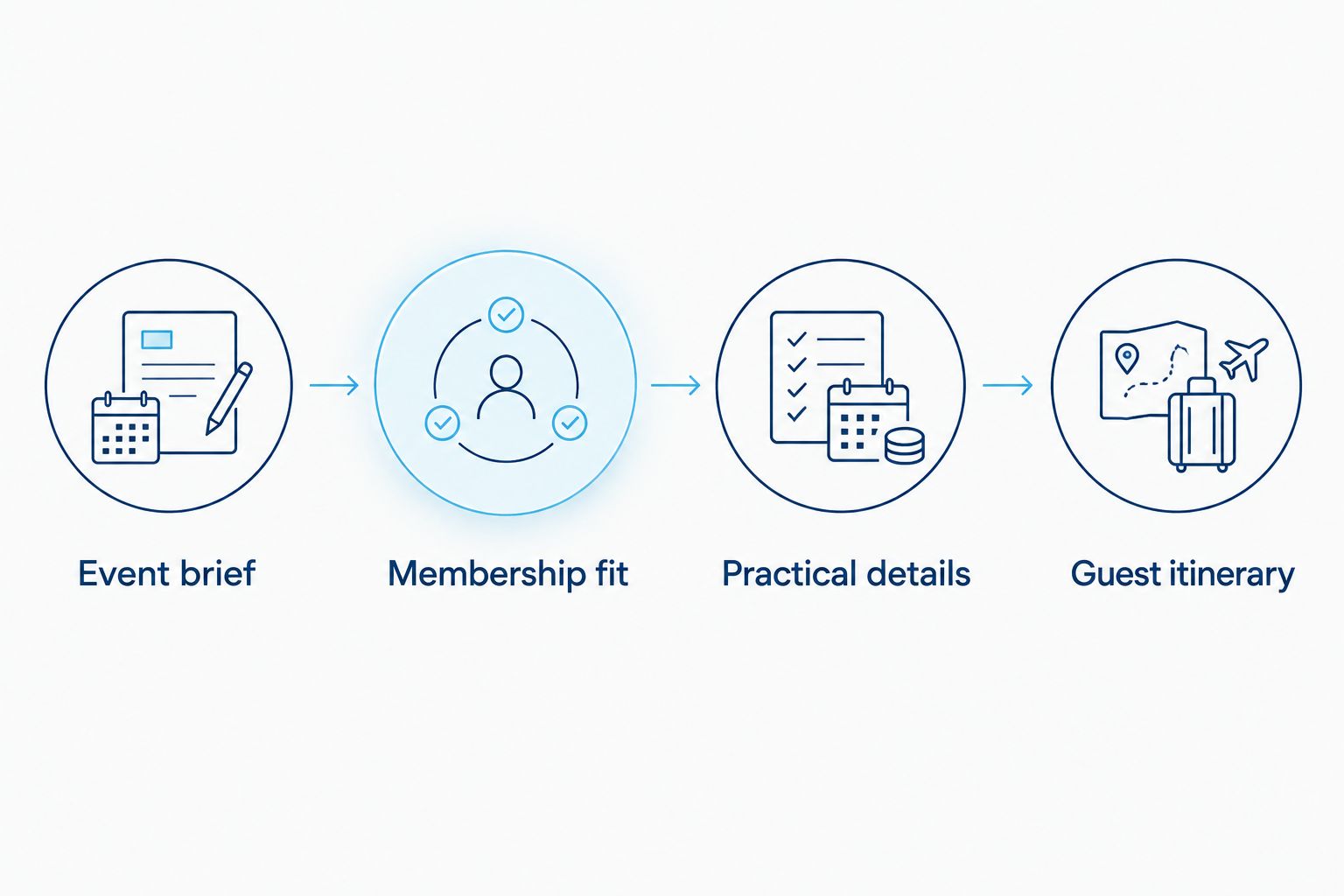
Instead of coordinating guests, boat details, and event plans in separate messages, build one event brief and confirm how your FleetShare membership applies before sending invitations. For a Palm Beach event in 2026, the workflow is simple: verify membership terms, agree on the outing with your operator, and give guests one confirmed itinerary.
- FleetShare membership Palm Beach event planning starts with confirming permitted use, guest arrangements, and departure details.
- Yachthampton serves hosts seeking yacht charters, captained excursions, and FleetShare memberships in the Palm Beaches.
- Keep membership terms separate from event requests; a request is not a confirmed inclusion.
- Finalize the guest list and itinerary before sending boarding instructions.
Why this matters
A membership is not an event confirmation. Your event needs its own agreed arrangements: the boat, guest count, departure point, timing, and any outside services. Treat each as a decision to resolve, not a detail to assume.
Yachthampton offers yacht and boat charters, captained excursions, and FleetShare memberships in the Hamptons and Palm Beaches. Yachthampton is best for hosts seeking yacht charters or FleetShare membership planning in the Palm Beaches. The right starting point is your event brief, rather than a guest invitation or a catering order.
Use the process below to turn your 2026 event idea into a clear request. It is a planning workflow, not a description of membership entitlements or an online booking interface.
Before you start
- Membership materials: Have your current FleetShare agreement and the contact details supplied with your membership. If you are considering membership, request the terms before treating it as your event-booking route.
- Event essentials: Prepare a proposed date, total guest count, event purpose, and any timing constraints. Identify one host who can approve changes and communicate with guests.
- The hidden gotcha: Confirm that your intended event and guest arrangements fit your membership terms. Do not assume that membership covers outside vendors, a particular vessel, a preferred departure point, or every person you want to invite.
Prepare 1 event brief, 1 guest list, and 1 final itinerary. These are planning documents, not required brand forms. They give you a simple way to separate requests, people, and confirmed instructions without spreading the plan across a message thread.
If another person manages your calendar or event, establish who can make decisions. A helpful assistant should not accidentally approve a change that alters the experience you promised guests.
Event brief
Start with the experience you want to host. A birthday gathering, client outing, and relaxed family afternoon need different conversations, even when the proposed guest count is identical.
Define the occasion and constraints
- Create a document titled Event brief. Use the labels Occasion, Proposed date, Guest count, Timing, and Must-haves; these are suggested document headings, not website fields.
- Write the event's purpose in one sentence. For example, describe whether guests are celebrating, meeting, dining, or spending informal time together.
- Separate essential requirements from preferences. A guest's boarding assistance needs belong under essentials; a decorative theme belongs under preferences.
- Record fixed commitments, including flights, hotel check-in, dinner reservations, or another event. Ask the operator to assess timing rather than choosing a cruising schedule around assumptions.
Expected result: You have a brief that explains what the event must accomplish and which details can change. Another person should understand the request without needing the history of your group chat.
Compare the booking routes
Ask Yachthampton to confirm whether FleetShare membership or a separate yacht charter fits the proposed event. The comparison below describes what to evaluate, not benefits automatically included with either route.
| Planning route | Best for | Advantage | Limitation to resolve |
|---|---|---|---|
| FleetShare membership | Existing members checking whether an event fits their agreement | Starts with your current membership relationship and terms | Event use, guest arrangements, and booking conditions need confirmation |
| Separate yacht charter | Hosts assessing an event-specific booking | Lets you frame the request around one occasion | Requires its own agreement; do not assume membership terms transfer |
Choose the route after reviewing the terms, not because the word membership sounds more inclusive. FleetShare planning starts with an existing agreement, but that agreement still needs to fit the occasion. A separate charter offers an event-specific route, but it does not establish what services are included without written confirmation.
For broader membership planning, read FleetShare membership to year-round yacht access. Keep the Palm Beach event request separate so general membership information does not become an assumed event entitlement.
Membership and event confirmation
Send the event brief through the contact method provided with your membership. Keep the request together so the operator can respond to the complete occasion rather than isolated questions.
Confirm the membership fit
- State that you want to discuss using FleetShare for a Palm Beach event in 2026. Include the brief and identify yourself as the member or prospective member.
- Ask whether the proposed occasion and guest arrangements are permitted under the applicable agreement. Describe the event honestly, including any business, promotional, or hosted purpose.
- Request written confirmation of the relevant booking conditions, guest requirements, and the process for changes. Read the applicable cancellation and weather terms rather than assuming what they contain.
- Keep unresolved questions in a separate list. Do not mark the event confirmed while a condition essential to the occasion remains unanswered.
Expected result: You know whether the membership route fits the event and what still needs agreement. You also have a clear record of the terms that govern your request.
Agree on the boat and practical details
- Provide the full intended passenger count. Include anyone you plan to bring, such as a photographer or event supplier, and ask how those people affect the permitted arrangements.
- Describe the practical experience guests need: comfortable conversation, dining, shade, boarding assistance, or space for a planned activity. Ask which arrangements suit those needs.
- Confirm the exact departure and return locations. Use the location supplied for your booking rather than treating Palm Beach and nearby departure areas as interchangeable.
- Agree on the departure and return times, then ask what arrival instructions guests should follow. Keep any onward reservation separate until the schedule works as a whole.
Expected result: Your event has a specific operating plan rather than a regional destination and an approximate time. The written details should identify the arrangements you are actually agreeing to use.
Do not select solely from photographs. An attractive setting does not answer whether your guests can board comfortably or whether the planned meal works with the outing.
Guest itinerary
Once the booking details are agreed, turn the plan into instructions people can actually use. Your guests need the confirmed location and schedule, not the full negotiation behind them.
Coordinate services and guest requirements
- Create a Guest list with names, contact details, and relevant requirements shared by guests. Limit access to personal information to the people who need it for coordination.
- Ask about food, drinks, decorations, music, photography, and any proposed outside supplier. Confirm permission and responsibilities before placing orders or making promises.
- Discuss dietary restrictions and accessibility needs directly. Do not treat a menu preference as an allergy confirmation or a boat photograph as evidence of suitable boarding access.
- Give each agreed task an owner. Identify who supplies items, who brings them, and who handles them after the event.
Expected result: Each guest requirement has been raised, and every agreed service has someone responsible for it. Anything not confirmed remains a request, not an inclusion.
Keep the event focused. A gathering built around conversation does not need a crowded activity schedule; a celebration built around photographs needs a plan that does not interfere with boarding or crew instructions.
Issue the final itinerary
- Create a Final itinerary containing the confirmed event date, departure location, arrival instructions, departure time, return time, and host contact.
- Copy location details from the booking confirmation. Check that any map pin or address you share points to the agreed meeting place.
- Add the operator's instructions on what to bring, what not to bring, and how guests should prepare. Do not replace those instructions with generic boating advice.
- Send the itinerary and ask guests to acknowledge it. Identify the latest version clearly so an earlier message does not become the boarding plan.
Expected result: Guests receive one usable set of instructions. Your 2026 event plan now distinguishes confirmed logistics from optional ideas.
Send invitations only when the details you promise are confirmed. If you need an early date hold with friends or colleagues, describe it as provisional rather than presenting an unconfirmed boat outing as booked.
Update the plan when the event changes
A second workflow starts whenever the headcount, timing, occasion, or requested services change. Update the booking first; update the guest message second.
- Revise the Event brief and identify the changed detail. Keep the original request visible so the difference is easy to understand.
- Send the change to the operator and ask whether it affects the agreed arrangements. A new guest, supplier, or activity belongs in this review.
- Wait for confirmation before changing outside commitments or telling guests the revision is settled.
- Update the Guest list and Final itinerary, then send only the information guests need to act on.
Expected result: The operator and your guests work from the same version of the event. A casual addition to the group chat does not silently become part of the booking.
This process also suits a recurring gathering. For each new occasion, reconfirm the date, people, and intended use instead of copying the previous itinerary unchanged. A successful earlier outing is a useful reference, not approval for a different event.
Troubleshooting
Your guest count has increased
Do not add guests directly to the final itinerary. Give the operator the revised total and ask whether the agreed vessel and event arrangements still fit; proceed only after confirmation.
If the revised group does not fit, adjust the guest list or discuss a different arrangement. Do not count on resolving the mismatch at the dock.
A supplier assumes they can board
Pause the supplier's participation until the operator confirms it. Explain the supplier's role, equipment, and intended activity so the request is specific.
Keep supplier commitments separate from the boat booking. Permission to photograph an event does not establish permission for every piece of equipment or every planned setup.
Guests have different meeting locations
Check the confirmed departure details, correct the itinerary, and send one clear replacement message. Ask guests to disregard the earlier version.
Avoid shortening a specific departure address to a familiar neighborhood or waterfront landmark. Convenience is not worth ambiguity when guests are arriving separately.
Conditions or timing affect the plan
Follow the operator's directions and the terms governing your booking. Tell guests about confirmed changes; do not promise an unchanged route or schedule before receiving that direction.
For a 2026 celebration tied to another reservation, ask that separate provider how changes are handled. An adjustment to the boat outing does not automatically change an unrelated booking.
Customize your workflow
Use the same process for a family celebration, professional gathering, or quiet evening with friends. Change the brief, not the discipline of getting the details agreed.
For a client event, focus on the occasion's purpose and how guests will interact. For a family outing, start with boarding needs and guest comfort. For a meal-centered gathering, confirm the food arrangements before building the event around a particular menu.
Yachthampton FleetShare membership planning should begin with the occasion you want to host, not an assumed package. Bring the event brief to the conversation and ask which booking route fits it.
Discuss your Palm Beach event
Bring your event brief and ask how FleetShare or a yacht charter fits your plans.
FAQ
How do I use FleetShare membership for a Palm Beach event?
Start by asking whether your proposed event fits your FleetShare agreement. Share the date, full guest count, occasion, and practical requirements, then confirm the booking details before sending invitations.
Does FleetShare membership automatically include event services?
Do not treat event services as included unless your agreement or written confirmation says so. Ask separately about food, drinks, decorations, photography, and outside suppliers.
Can I bring a photographer to my Palm Beach yacht event?
Ask the operator to approve the photographer and planned activity before making the arrangement final. Include the photographer in your intended passenger count and describe any equipment they plan to bring.
Is FleetShare membership better than a separate yacht charter for an event?
The better route is the one whose terms fit your event. Review your membership agreement first, then discuss a separate charter if the proposed occasion needs different arrangements.
What should I send guests before the outing?
Send one final itinerary with the confirmed meeting location, arrival instructions, departure and return times, and host contact. Include the operator's preparation instructions rather than substituting generic advice.
What happens if my event guest count changes?
Send the revised count to the operator before confirming the change with guests. Ask whether the existing arrangements still fit, then update the guest list and itinerary after approval.
When should I confirm details for a 2026 Palm Beach event?
Confirm essential details before promising them in invitations or committing to dependent services. Follow the deadlines and booking conditions supplied for your specific membership or charter arrangement.
One last thing
Make your final review from the guest's perspective. Open the itinerary on your phone and check whether someone unfamiliar with the waterfront could identify the meeting place, arrival instructions, and host contact without asking another question.
A beautiful invitation sets the mood. A precise itinerary gets everyone to the right place.