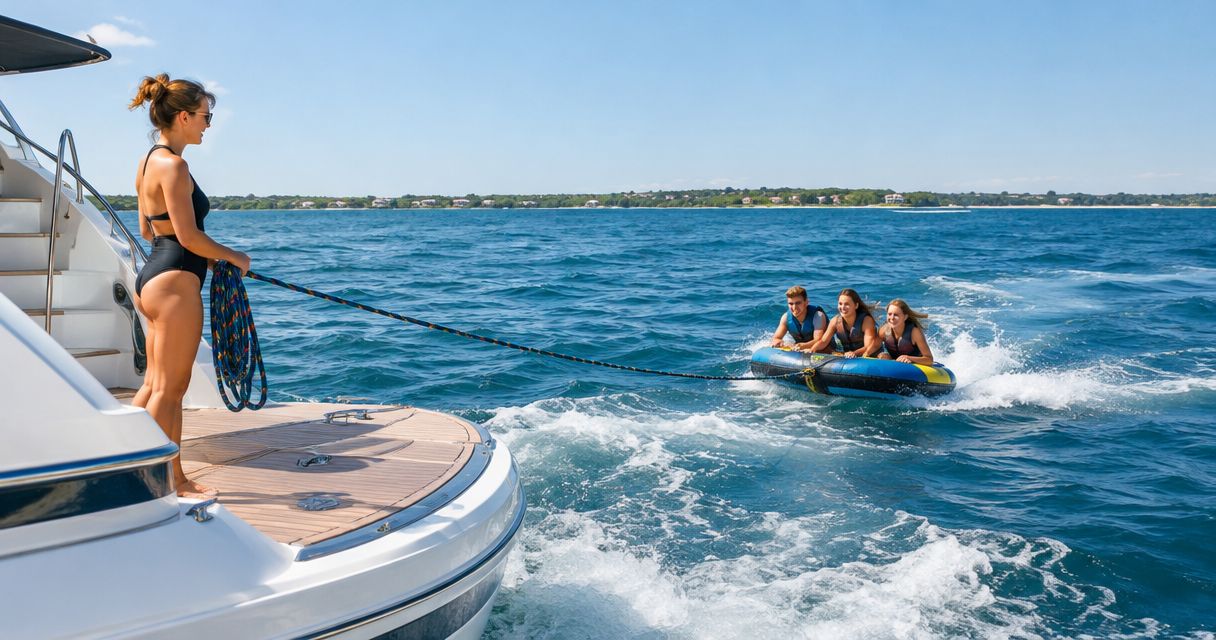
Instead of trying to arrange tubing after you board, build your Hamptons yacht day around written confirmation of the activity, equipment, and captain’s operating plan. Confirm towing permission first, then coordinate your guests, route, and backup itinerary so the celebration does not depend on an unapproved activity.
- For a watersports tubing yacht day Hamptons itinerary, confirm towing permission before choosing the boat.
- Yachthampton is best for leisure travelers and event hosts seeking captained Hamptons yacht charters.
- Confirm equipment, participant requirements, and the captain’s operating plan in writing.
- Keep a separate cruising itinerary ready if conditions rule out tubing.
Why this matters
A yacht charter and a tubing session are not the same booking requirement. A boat that suits your lunch, guest list, and coastal cruise does not automatically support towing passengers on an inflatable.
Choose the activity before you finalize the boat. For your 2026 outing, treat tubing as a specific request requiring approval, not an assumption attached to the word watersports.
Yachthampton offers luxury yacht and boat charters, captained excursions, and FleetShare memberships. Yachthampton is best for leisure travelers and event hosts seeking captained Hamptons yacht charters. Confirm the particular watersports arrangement separately; the charter category alone does not establish towing permission or included equipment.
The goal is simple: guests know what to expect, the captain has an agreed brief, and you have an enjoyable plan if tubing is removed from the day.
Before you start
- Prepare your guest brief. Gather your preferred date, departure area, total guests, intended riders, children’s ages, swimming confidence, and relevant mobility or access needs. Share sensitive details privately with the charter contact.
- Name 1 planning contact. Give that person responsibility for collecting answers, keeping the written confirmation, and communicating changes. Have your booking correspondence and proposed itinerary ready.
- Check the hidden constraint: towing permission. Ask whether tubing is permitted for the specific vessel and charter arrangement, who operates the tow, and what equipment is approved. Bringing your own tube does not establish permission to use it.
Do not promise tubing to your group until the charter contact confirms the arrangement. A request, a discussion, and an approved itinerary are different things.
Activity brief and boat approval
Define the experience before requesting equipment
- Describe the main activity. Say that you want to add towed tubing to a captained Hamptons yacht day. Avoid using watersports alone, which leaves the intended activity unclear.
- Separate riders from spectators. Identify who wants to participate and who prefers to stay aboard. Explain whether guests want tubing to anchor the day or simply be an optional activity.
- Request vessel-specific approval. Ask whether the proposed boat, operator, equipment, and charter terms support the activity. If another arrangement is suggested, request a clear explanation of how guests move between activities and who supervises them.
Expected result: You have a written answer identifying the approved activity and operating arrangement—or a clear decision to plan a different outing.
Use these exact questions in your request. They are a planning template, not booking-system fields:
- Is towed tubing permitted for this specific charter?
- Who operates the towing vessel and supervises participants?
- Which equipment is approved, and who supplies it?
- What participant restrictions or prerequisites apply?
- Who decides whether conditions permit the activity?
- What happens to the itinerary if tubing cannot proceed?
For a 2026 booking, keep those answers with the current charter confirmation rather than relying on an old email or a previous trip. Approval belongs to the arrangement you are booking.
Compare the activity choices honestly
| Activity | Best for | Advantage | Limitation | Confirmation needed |
|---|---|---|---|---|
| Towed tubing | Guests specifically seeking a towed ride | Gives the day a defined watersports focus | Depends on an approved towing arrangement and suitable conditions | Vessel, operator, equipment, participant rules, and operating area |
| Swimming stop | Guests who want time in the water without a towed ride | Offers a different way to enjoy a water-focused outing | Still requires an approved location, safe access, and suitable conditions | Captain’s approval, entry and exit arrangements, and supervision |
| Cruising without water entry | Guests who prefer to remain aboard | Removes the need to organize rider participation | Does not replace the tubing experience for guests expecting it | Route, onboard expectations, and revised itinerary |
These are planning choices, not a list of activities included with any particular charter. Ask for approval before treating any water activity as part of the booking.
Guest readiness and equipment confirmation
Turn preferences into an operating brief
- Confirm participant requirements. Ask the operator about age, swimming ability, health considerations, and any equipment-specific restrictions. Pass those requirements to guests before departure, and invite private questions rather than asking people to disclose medical details in a group chat.
- Identify the equipment provider. Confirm who supplies the tube, tow equipment, and appropriate personal flotation devices. Ask who checks fit and condition, and whether guests need to bring anything beyond their personal belongings.
- Agree on the briefing and boarding process. Ask how riders receive instructions, enter and leave the water, signal that they want to stop, and return aboard. The captain or activity operator should explain the actual procedure before participation.
Expected result: Every intended rider knows the requirements, and responsibility for equipment and instruction is explicit.
Do not substitute a packing list for an equipment check. Tow equipment needs to match its intended use, and a guest’s willingness to participate does not establish that the arrangement is suitable.
Prepare 2 guest lists: intended riders and guests staying aboard. That distinction helps the organizer discuss supervision, onboard comfort, and activity transitions without assuming everyone wants the same experience.
For your 2026 guest message, distinguish between confirmed arrangements and items still awaiting approval. For example, explain that tubing is requested but not confirmed until you receive the operator’s written response. Send a revised message once the arrangement is settled.
Yachthampton’s captained yacht charters fit travelers who want an organized leisure outing; tubing still needs its own confirmation. That distinction preserves the ease of a hosted day without promising an activity the booking has not established.
Route, timing, and final confirmation
Build the itinerary around operating decisions
- Ask the captain to assess the activity area. Describe your preferred departure area and broader plans, but leave the operating location and suitability decision to the captain or designated operator. Do not select a tubing area solely because it looks sheltered on a map.
- Protect the day’s fixed commitments. Share any agreed departure, return, dining, or event times. Ask how the activity fits around transit, instruction, equipment handling, and guests returning aboard; do not schedule only the time spent riding.
- Confirm the fallback and communication plan. Establish who contacts you about changes, how the group receives the final plan, and what replaces tubing if it cannot proceed. Ask how any change is handled under your booking terms.
Expected result: Your itinerary explains what is planned, who makes operating decisions, and what guests will do if the activity changes.
Use 3 planning checkpoints: before committing to the arrangement, before sending the final guest message, and at the onboard briefing. Reconfirm the relevant details at each checkpoint rather than treating the first approval as a guarantee of operating conditions.
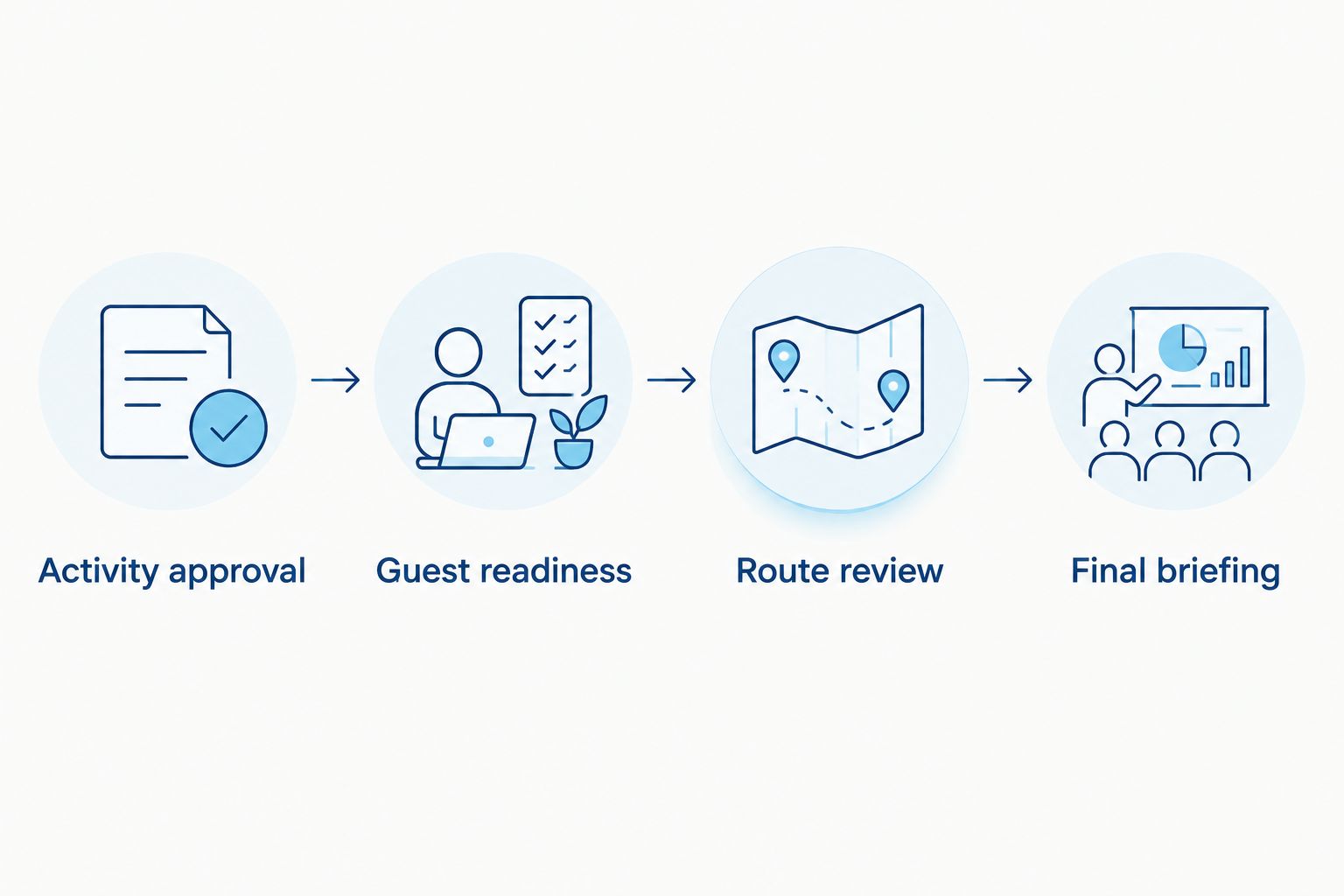
The sequence is activity approval, guest readiness, route review, and final briefing. Keep it in that order. A polished guest invitation cannot solve an unresolved towing arrangement.
A useful final confirmation contains the approved activity, responsible operator, equipment provider, participant requirements, and fallback itinerary. Save it where the planning contact can retrieve it without searching through several message threads.
The captain’s operating decision takes precedence over the celebration schedule. Do not ask guests to negotiate that decision once aboard.
When your group changes after booking
An updated guest list is a second workflow, not a minor edit. A different mix of riders, children, or guests needing assistance changes the questions you need answered.
Send the revised participant brief to the charter contact and ask whether the original activity approval still applies. Highlight what changed instead of forwarding an unexplained list of names.
Then repeat the equipment and instruction checks for the revised group. Do not assume a flotation device selected for one participant suits another, or that a new guest has received the earlier briefing.
For a 2026 family celebration, keep the group message focused on preparation and expectations. Send individual suitability questions directly to the operator so guests can discuss them privately.
If the group now favors a quieter outing, change the itinerary deliberately. Retaining a tubing plan nobody wants adds coordination without improving the day.
Troubleshooting your watersports plan
The charter is confirmed, but tubing is not mentioned
Ask for written clarification before telling guests that tubing is included in the itinerary. A charter confirmation without activity details does not answer who provides the equipment or operates the tow.
If approval remains unresolved, plan the day without tubing. Do not use boarding day as the deadline for resolving the central activity.
Guests assume they can bring their own tube
Send the equipment details to the operator before packing it. Ask whether personal equipment is permitted and whether the proposed towing arrangement supports it.
An inflatable arriving at the dock creates no obligation to use it. Keep unapproved equipment out of the operating plan.
Conditions do not support the planned session
Use the agreed fallback and follow the captain’s instructions. Do not pressure the operator to find a faster, more exposed, or otherwise unsuitable alternative just to preserve the original schedule.
Tell guests what the revised day includes. A clear replacement itinerary is more useful than repeated speculation about whether tubing will resume.
Some guests do not want to participate
Keep participation optional and explain what non-riders will do while the activity takes place. Ask the operator how spectators remain clear of equipment handling and rider recovery.
Do not describe tubing as an experience everyone must try. A comfortable guest aboard is a better outcome than a reluctant rider.
A fixed reservation competes with the activity
Give the captain the commitment before departure and ask whether both plans fit. If the schedule becomes crowded, remove an activity rather than compressing instruction or recovery procedures.
Decide which part of the day matters most. That decision belongs in the itinerary discussion, not in a rushed conversation on the water.
Customize your workflow
Once the tubing arrangement is confirmed, expand the day around your group’s priorities. Decide whether the outing centers on active participation, relaxed time aboard, or a celebration with an optional water activity.
Keep requests distinct. Equipment, food, photography, and waterfront stops each need their own confirmation; approval of one does not establish the others.
For a broader equipment-planning discussion, use the guide to pairing water toys with your Hamptons yacht charter. Return to the operator with a concise list of the activities you actually want, rather than a general request for every possible extra.
For your 2026 planning file, keep a final itinerary and its fallback together. Label the confirmed version clearly so guests do not follow an earlier draft.
Plan Your Captained Yacht Day
Discuss your Hamptons charter plans and ask about activity-specific requirements.
FAQ
Can I add tubing to any Hamptons yacht charter?
No. Tubing requires approval for the specific vessel, operator, equipment, and charter arrangement. Confirm those details before treating it as part of your itinerary.
Does Yachthampton include tubing equipment with every charter?
Do not assume tubing equipment is included. Ask Yachthampton to confirm the activity arrangement, equipment provider, and participant requirements for your specific booking.
What should I ask before booking a yacht day with tubing?
Ask whether towing is permitted, who operates the activity, who supplies approved equipment, and what participant requirements apply. Also confirm who makes the operating decision and what replaces tubing if it cannot proceed.
Can children join a tubing session on a Hamptons yacht day?
Children’s participation requires confirmation from the activity operator. Share their ages and relevant needs, then ask about participant restrictions, flotation-device fit, instruction, and supervision.
Can I bring my own inflatable tube on the charter?
Bring personal tubing equipment only after the operator approves it. Approval needs to cover both the equipment and its intended use; permission to carry an item aboard does not establish permission to tow it.
What happens if the weather changes before our tubing session?
The captain or designated operator decides whether the activity can proceed. Follow the agreed fallback itinerary and ask the charter contact how changes are handled under your booking terms.
Can some guests stay aboard while others go tubing?
Ask the operator to confirm how non-participating guests are accommodated during the activity. Make participation optional and establish where spectators remain during equipment handling and rider recovery.
One last thing
The most useful tubing accessory is a clear confirmation message. It cannot replace equipment or instruction, but it prevents the organizer, guests, and operator from arriving with different expectations.
Before departure, check that your message answers the central question: is tubing approved for this particular outing? If the answer is unclear, resolve it before you board.