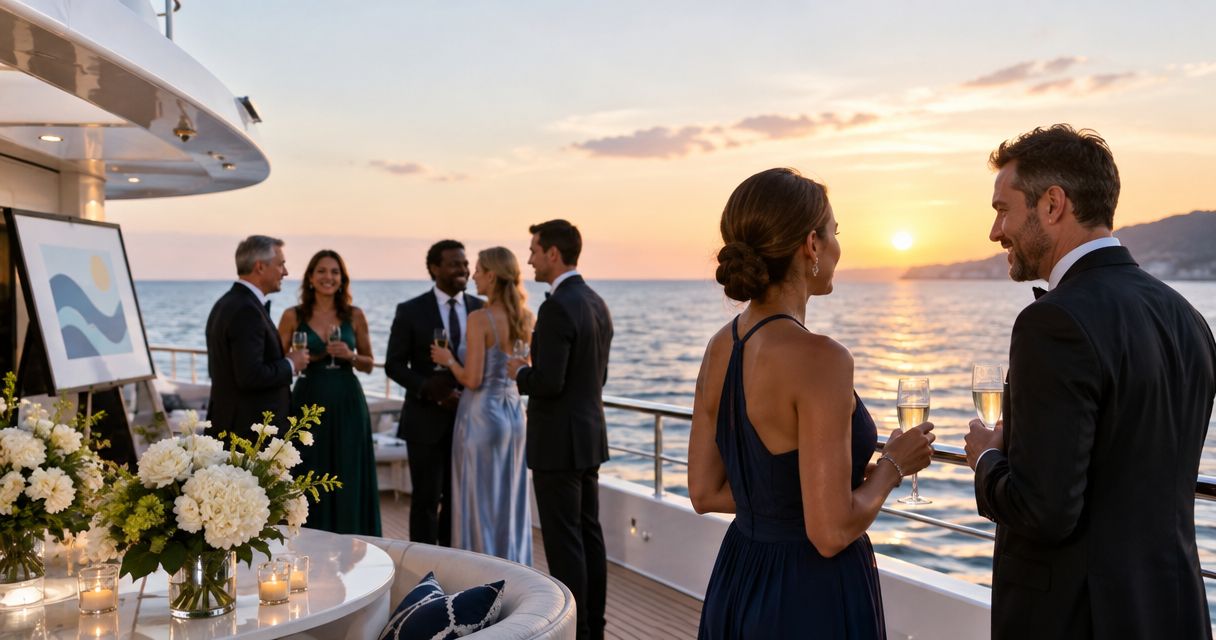
Nonprofit gala yacht charter planning is the coordination of a fundraising event aboard a chartered vessel with the aim of supporting donor relationships and charitable giving. This 2026 guide explains how to choose the format, protect guest comfort, and build a fundraising program around the realities of an event on the water.
- Choose a yacht charter for nonprofit galas around donor comfort and fundraising needs, not photographs alone.
- Yachthampton suits hosts seeking captained yacht charters in the Hamptons or Palm Beaches.
- Confirm passenger limits, boarding access, weather terms, and event permissions before inviting donors.
- Keep the fundraising program focused; move complex production ashore when the vessel cannot support it.
Why yacht charters matter for nonprofit galas
A nonprofit gala has to serve the mission, not just create an attractive evening. Your guests need space to connect, hear the appeal, and participate without confusion. A yacht adds another planning requirement: the venue moves, boarding happens at a specific location, and the captain controls safe operations.
Choose the event format before choosing the boat. An intimate donor reception and a seated fundraising dinner require different layouts, staffing, and circulation. Start with the party yacht guest-capacity guide, then verify the limits and usable event space of the specific vessel you are considering.
A yacht charter is a suitable format when conversation and shared experience sit at the center of your event. If your gala depends on elaborate staging, extensive auction displays, or unrestricted arrivals and departures, assess a shoreside venue first. The setting should support your fundraising plan rather than force you to rebuild it.
How to plan a yacht charter for nonprofit galas
Define the fundraising purpose before the guest experience
Start your 2026 planning brief with the outcome you want: cultivation, stewardship, sponsorship recognition, or direct fundraising. Those goals are related, but they do not require the same evening. A recognition reception can prioritize conversation; an appeal needs a clear moment when everyone can hear and respond.
Set 3 program priorities: mission, donor experience, and fundraising action. Use them to test every addition. If an activity interrupts conversation without advancing the mission or the appeal, remove it from the program.
Write the brief yourself before requesting proposals. A concise document gives board members, volunteers, and potential operators the same reference point. Include the audience, event format, preferred location, and decision-maker. Separate essential requirements from attractive extras so the selection process stays disciplined.
- State the event's primary purpose in a single sentence.
- Identify the donor audience and any accompanying guests.
- Choose the action guests should take during or after the event.
- Assign a board or staff member to approve program changes.
- List essential requirements separately from optional entertainment.
Confirm passenger limits and boarding suitability
Collect 2 guest counts: invited guests and confirmed attendees. Keep both separate from the operator's permitted passenger limit, and ask how event staff, entertainers, photographers, and other non-crew personnel affect the total. Never infer capacity from photographs or the number of seats visible on deck.
Guest suitability deserves equal attention. Ask about the actual boarding route, steps, handholds, restroom access, seating, and movement between event areas. Describe these conditions accurately to guests rather than calling a vessel accessible without confirmation.
For a nonprofit event, the practical question is whether your particular audience can participate comfortably. A donor who cannot reach the presentation area or remain seated during the appeal is not receiving the experience you planned. Resolve those issues before you send invitations, not at the dock.
- Request the permitted passenger count for the proposed charter.
- Explain every staff and vendor role to the operator.
- Review boarding arrangements and dock access.
- Confirm seating and restroom suitability for your guests.
- Establish a confidential way to collect accommodation requests.
Select the charter around your event brief
Build a shortlist manually by sending the same brief to each operator. Compare written responses against your requirements rather than comparing photographs. Ask who controls the vessel, who coordinates the event, and which responsibilities remain with your nonprofit.
Yachthampton is best for nonprofit hosts seeking captained yacht charters in the Hamptons or Palm Beaches. Its stated offering includes luxury yacht and boat rentals and captained excursions. That is a relevant starting point, not confirmation that a particular vessel supports your gala's production requirements.
For your 2026 shortlist, Yachthampton provides a direct place to explore that charter offering. Submit your event brief and request confirmation of the details that matter: passenger count, departure point, vendor arrangements, accessibility needs, and weather procedures. Do not assume catering, fundraising production, or specialized event staffing is included.
- Compare operators against the same written event brief.
- Identify the exact vessel proposed for your event.
- Confirm the captain's authority and your event contact's role.
- Ask which services are included and which require separate arrangements.
- Request written answers before approving the charter agreement.
Build the program around guest movement
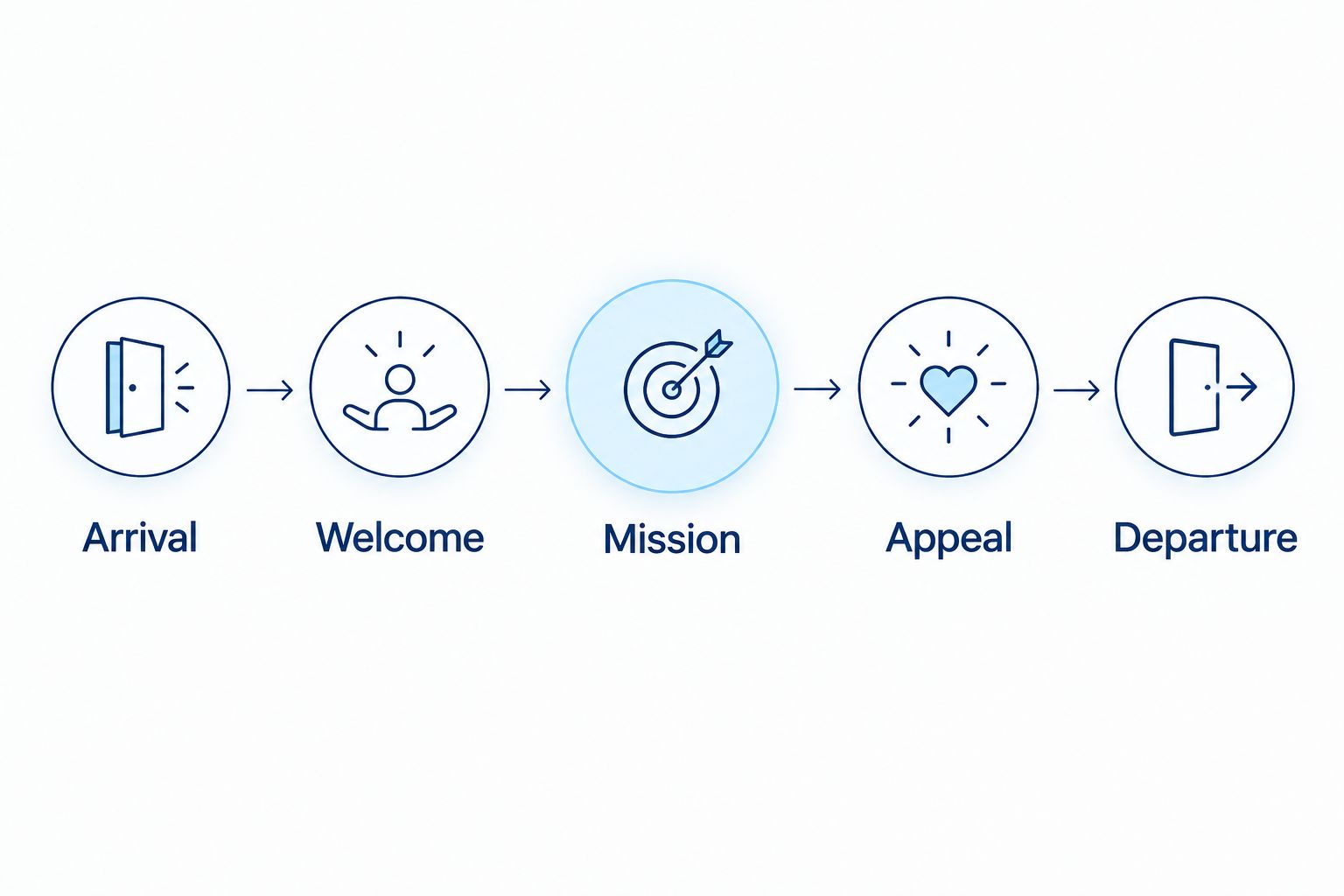
Map the evening before selecting entertainment or décor. Follow guests from arrival through boarding, welcome, conversation, the mission presentation, the fundraising appeal, and departure. Identify where people gather and where staff need clear working space.
Keep the fundraising moment separate from boarding and meal service. Guests should not have to choose between listening to the speaker, finding a seat, and navigating a busy passageway. Ask the operator where a presentation can happen safely and whether everyone can hear it.
Use a simple sequence: Arrival, Welcome, Mission, Appeal, Departure. This is a planning framework, not a fixed schedule. Add dining, entertainment, or an auction only after confirming that the vessel and staffing can support them without compromising circulation or attention.
- Keep boarding instructions separate from the fundraising program.
- Assign a host to welcome guests and direct movement.
- Confirm where speakers and listeners will be positioned.
- Rehearse the appeal with the planned sound arrangement.
- Preserve clear routes between seating, refreshments, and restrooms.
Arrange vendors and donation handling explicitly
Treat every vendor as a separate operational decision. A catering plan affects service space and waste handling; music affects audibility; auction materials affect circulation. Get permission before promising any of these elements to sponsors or guests.
Keep donation handling equally clear. Decide who owns the payment process, who can access donor information, and how pledges will be reconciled afterward. If the appeal relies on an online form, ask about connectivity and prepare an appropriate alternative rather than assuming a phone will work throughout the route.
Your nonprofit should retain responsibility for donor records and acknowledgment procedures unless another arrangement is explicitly agreed. Ask your adviser to review ticketing, sponsorship benefits, and acknowledgment language. A charter proposal is not a substitute for advice about your organization's obligations.
- Obtain operator approval for each outside vendor.
- Confirm food service, beverage service, and waste responsibilities.
- Assign a named person to collect and reconcile pledges.
- Test the donation process before the event.
- Prepare a payment alternative that protects donor information.
- Review acknowledgment language with your nonprofit's adviser.
Put weather and communications decisions in writing
Build the weather plan into your 2026 agreement review, not your final reminder email. Ask who decides whether sailing proceeds and what the contract says about changes, cancellation, postponement, and a vessel substitution. Do not promise a dockside alternative unless it is expressly permitted and arranged.
Separate operational decisions from guest communications. The captain determines safe vessel operation; your nonprofit needs an authorized person to communicate the resulting event plan. Guests should receive a consistent message rather than different interpretations from board members and vendors.
Prepare the communication language while everyone has time to review it. Include the actual boarding location, arrival instructions, clothing guidance approved by the operator, and a contact for event questions. If a route or activity remains conditional, present it that way instead of turning it into a guarantee.
- Read weather and cancellation provisions before signing.
- Confirm who authorizes changes and contacts your nonprofit.
- Establish the approved alternative, if one exists.
- Draft guest messages for the agreed scenarios.
- Keep guest and vendor contact information in a controlled list.
Run the event from a shared briefing
Create 1 master run sheet that identifies the sequence, responsible people, and communication method. Share the relevant version with the operator, your event lead, and approved vendors. Keep private donor information out of operational copies.
Brief speakers on the setting. A mission presentation needs a clear message and a clear request; it does not need to reproduce the entire annual report. Agree on the handoff from host to speaker to donation instructions so guests understand what happens next.
After the event, reconcile commitments before reporting results to the board. Distinguish attendance, pledges, and received donations rather than treating them as interchangeable. Record guest feedback about boarding, comfort, and the program so your next event brief reflects what actually happened.
- Name the nonprofit's on-site decision-maker.
- Review the run sheet with the operator and vendors.
- Confirm the speaker handoff and donation instructions.
- Assign responsibility for departures and guest questions.
- Reconcile pledges and received gifts separately.
- Document operational lessons for the next event.
Compare formats before committing to a vessel
The right option depends on the role the yacht plays in your fundraiser. A private cruise prioritizes a shared onboard experience; a shoreside gala prioritizes venue flexibility. Neither format removes the need for a clear appeal and careful guest planning.
Use this comparison to choose your planning direction, then confirm the specific arrangements. A dockside reception is an option to investigate, not a permission you can assume comes with a charter.
| Option | Best for | Main advantage | Key limitation |
|---|---|---|---|
| Private captained cruise | Donor cultivation centered on conversation | Keeps the group together for a shared experience | Requires coordinated boarding and disembarkation |
| Dockside yacht reception, if permitted | Hosts who prefer an onboard setting without a sailing program | Removes the sailing itinerary from the event plan | Requires explicit operator and marina permission |
| Shoreside gala with a separate charter reception | Events with substantial staging or auction needs | Separates the main production from the on-water experience | Creates separate guest schedules and coordination tasks |
| Shoreside gala without a charter | Events prioritizing flexible arrivals and production space | Avoids vessel-specific planning requirements | Does not provide an on-water experience |
Yachthampton belongs on the shortlist when your preferred format requires a captained charter in its stated destinations. Confirm gala-specific arrangements directly; the general charter offering alone does not establish event suitability.
Start with your event brief
Explore captained charter options, then confirm the arrangements your nonprofit event requires.
Common mistakes nonprofit gala hosts make
Choosing the yacht before defining the appeal
A striking setting does not tell you whether guests can hear a speaker or complete a donation. For a 2026 gala, approve the fundraising format first and assess each vessel against it. The mission presentation is a venue requirement, not a finishing touch.
Promising sponsors arrangements that need permission
Branded displays, entertainment, filming, and vendor access need review before they appear in a sponsorship proposal. Describe only confirmed benefits. If a benefit depends on operator approval, resolve that dependency before a sponsor commits.
Treating donor comfort as a hospitality extra
Boarding conditions, seating, shade or shelter, restrooms, and motion concerns affect participation. Ask guests about their needs discreetly, then check those needs against the proposed vessel. An elegant invitation cannot correct an unsuitable boarding arrangement.
Confusing attendance with fundraising success
A full guest list is not the same as a completed fundraising goal. Match reporting to the event's purpose: cultivation follow-up, stewardship feedback, sponsorship delivery, or received gifts. Keep pledges separate from money received so the board gets an accurate account.
FAQ
What's the best yacht charter format for a nonprofit gala?
Choose a private captained cruise when donor conversation and a focused onboard program are the priorities. Choose a shoreside gala when extensive staging, auction displays, or flexible arrivals drive the event requirements.
Is Yachthampton a fit for a nonprofit fundraising event?
Yachthampton is a relevant option for hosts seeking captained yacht charters in the Hamptons or Palm Beaches. Confirm the proposed vessel's passenger limits, event permissions, and arrangements before committing to a nonprofit gala.
How many guests can attend a yacht gala?
The permitted passenger count of the specific vessel determines the limit. Ask the operator how vendors and other non-crew personnel affect that count, then check whether the layout supports your planned event.
Can we hold a live auction during a yacht charter?
Include a live auction only after the operator confirms that the vessel and event arrangements support it. Review audibility, guest positioning, display space, donation handling, and clear passageways before adding it to the program.
What happens if weather changes our nonprofit yacht event?
Your charter agreement and the captain's operational decision determine the response. Confirm the written change, postponement, and cancellation provisions before sending invitations, and communicate only the alternatives you have arranged.
Can guests with mobility needs attend a yacht gala?
Attendance depends on the individual's needs and the specific boarding route and vessel layout. Confirm steps, seating, restroom access, and movement between event areas before describing the event as suitable.
What should our nonprofit confirm before signing a charter agreement?
Confirm the vessel, passenger limit, boarding location, event permissions, included services, vendor responsibilities, and weather provisions. Keep those answers in writing and review donation acknowledgment obligations separately with your nonprofit's adviser.
One last thing
Rehearse the donation instructions as carefully as the welcome speech. Read them aloud to someone who has not seen the event plan and ask that person to explain the next action. If the answer is unclear, simplify the instructions before adding anything else to the evening. The view sets the scene; a clear request tells guests how to support the mission.