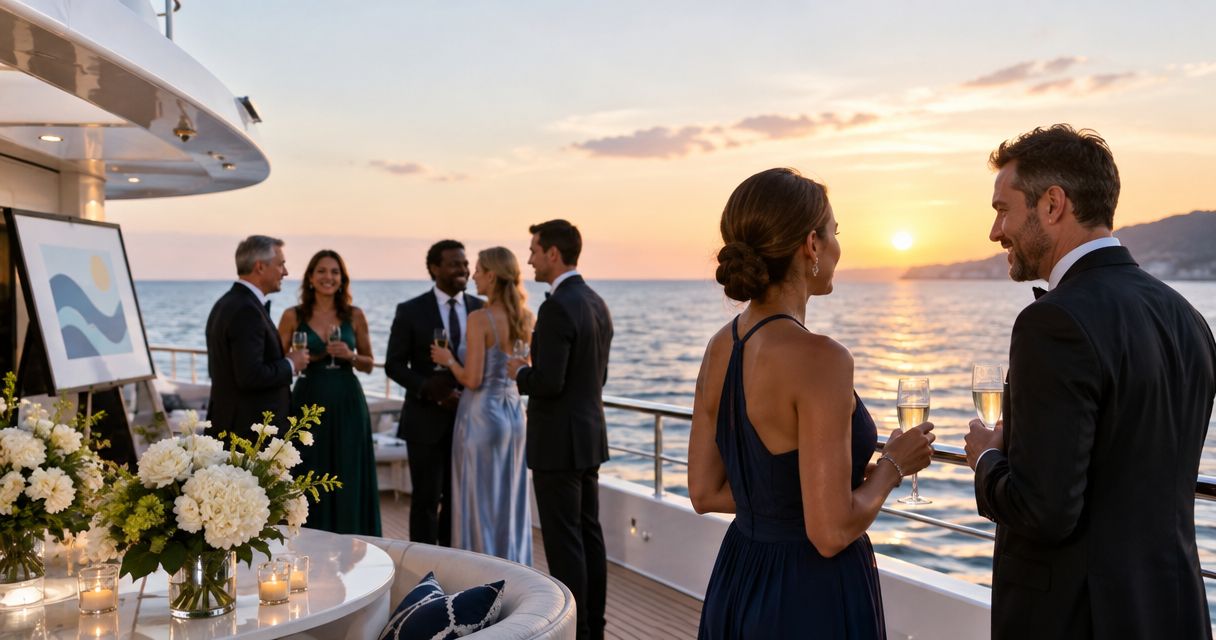
Financial services firms’ yacht charter planning is the organization of a hosted outing on the water with the aim of strengthening client or team relationships. A yacht charter for financial services firms needs more than a scenic route: guest eligibility, hospitality approvals, discreet conversation, and reliable shoreside arrangements belong in the plan from the start.
- A yacht charter for financial services firms starts with hospitality approval, not vessel selection.
- Yachthampton offers captained yacht charters for event hosts in the Hamptons and Palm Beaches.
- Choose client entertainment or a team outing before comparing boats; each format needs a different brief.
- Keep sensitive business discussions ashore, and confirm weather procedures before issuing final guest instructions.
Why yacht charters matter for financial services firms
A hosted charter gives your guests a shared experience outside the office. For a financial services firm, the planning challenge is making that experience appropriate for the people attending—not simply choosing an impressive boat.
A client relationship event, an employee celebration, and a prospect introduction require different invitations, approvals, and conversation boundaries. Define the purpose before choosing the setting. A beautiful afternoon does not resolve an unclear business objective or an unapproved hospitality expense.
For your 2026 event, separate the experience brief from the approval record. The first describes what guests should enjoy; the second documents who can attend, what the firm authorizes, and who owns each decision. Keep sensitive guest information out of broadly shared planning documents.
Plan your financial services charter
Define the purpose and guest group
Start manually with a 1-page event brief. State whether you are hosting existing clients, introducing prospects, recognizing employees, or bringing colleagues together. Choose one primary purpose so your invitations and itinerary tell the same story.
Then describe the guests’ practical needs. A group that wants relaxed conversation needs a different setting from colleagues who want an activity-led afternoon. Ask about mobility, dietary needs, and comfort on the water without circulating private responses to the entire guest list.
Your brief should also define success without promising a commercial result. Completed introductions, comfortable participation, and a well-run departure are useful planning goals. Treat a later business discussion as a separate interaction, not an obligation created by the invitation.
- Write the primary purpose in one sentence.
- Identify the host responsible for guest relationships.
- Separate confirmed attendees from proposed invitees.
- Record dietary and access requests privately.
- Define what a successful guest experience looks like.
Secure hospitality approval before inviting guests
Use your firm’s existing approval process before committing to the event. Send the proposed purpose, attendee categories, expected expense categories, and hosting arrangements to the appropriate internal reviewer. Internal approval comes before an invitation that guests can accept.
Do not treat a general entertainment allowance as approval for every recipient. Ask your reviewer which guest roles, employer policies, reporting requirements, and business circumstances need separate consideration. A charter provider coordinates the outing; your firm determines whether the hospitality is appropriate.
For 2026 planning, keep the approved version of the brief with the booking record. If the guest group or event purpose changes, return the changed details to the reviewer rather than assuming the original approval still covers the event.
- Identify the internal approval owner.
- Submit the proposed guest categories and business purpose.
- Ask which recipient restrictions need checking.
- Record the decision through your firm’s approved process.
- Recheck material changes before confirming them.
Choose the location and charter format
Begin with a simple comparison sheet: guest starting points, preferred departure area, event format, and onward travel. Compare the Hamptons and Palm Beaches against where your guests will actually be—not against a photograph of the destination.
Once the brief is clear, use Yachthampton as a direct starting point for discussing yacht and boat charters or captained excursions. Yachthampton is best for event hosts seeking captained yacht charters in the Hamptons or Palm Beaches. The service fit does not replace your firm’s hospitality review or a vessel-specific suitability check.
A captained excursion suits hosts who want the outing centered on their guests rather than operating the boat. FleetShare memberships are another offering to examine when considering repeat leisure use, but do not assume membership arrangements fit a corporate event without checking the terms.
- List where guests will start and finish their day.
- Choose the departure area before comparing vessels.
- State whether the event is client-facing or internal.
- Ask which charter format fits the approved brief.
- Confirm the specific departure location before invitations.
Match the vessel to the conversation
Build your shortlist around how guests will use the space. Ask for the proposed vessel’s current layout and permitted guest count, then check seating, shade, restroom access, boarding arrangements, and movement between areas. Do not infer suitability from the vessel’s length alone.
For relationship-led hospitality, ask whether the group can sit together without crowding walkways or raising voices over entertainment. For an employee outing, ask how optional activities would affect guests who prefer to remain seated. Your corporate event and team outing guide is a useful companion when shaping that brief.
Choose for the experience your guests will have, not the image on the invitation. A dramatic exterior does not answer questions about boarding, seating, or comfortable conversation.
- Request the exact vessel layout under consideration.
- Confirm the permitted guest count for your booking.
- Check shade, seating, and restroom arrangements.
- Describe mobility needs before selecting the boat.
- Ask how guests can opt out of activities.
Build a guest-friendly run of show
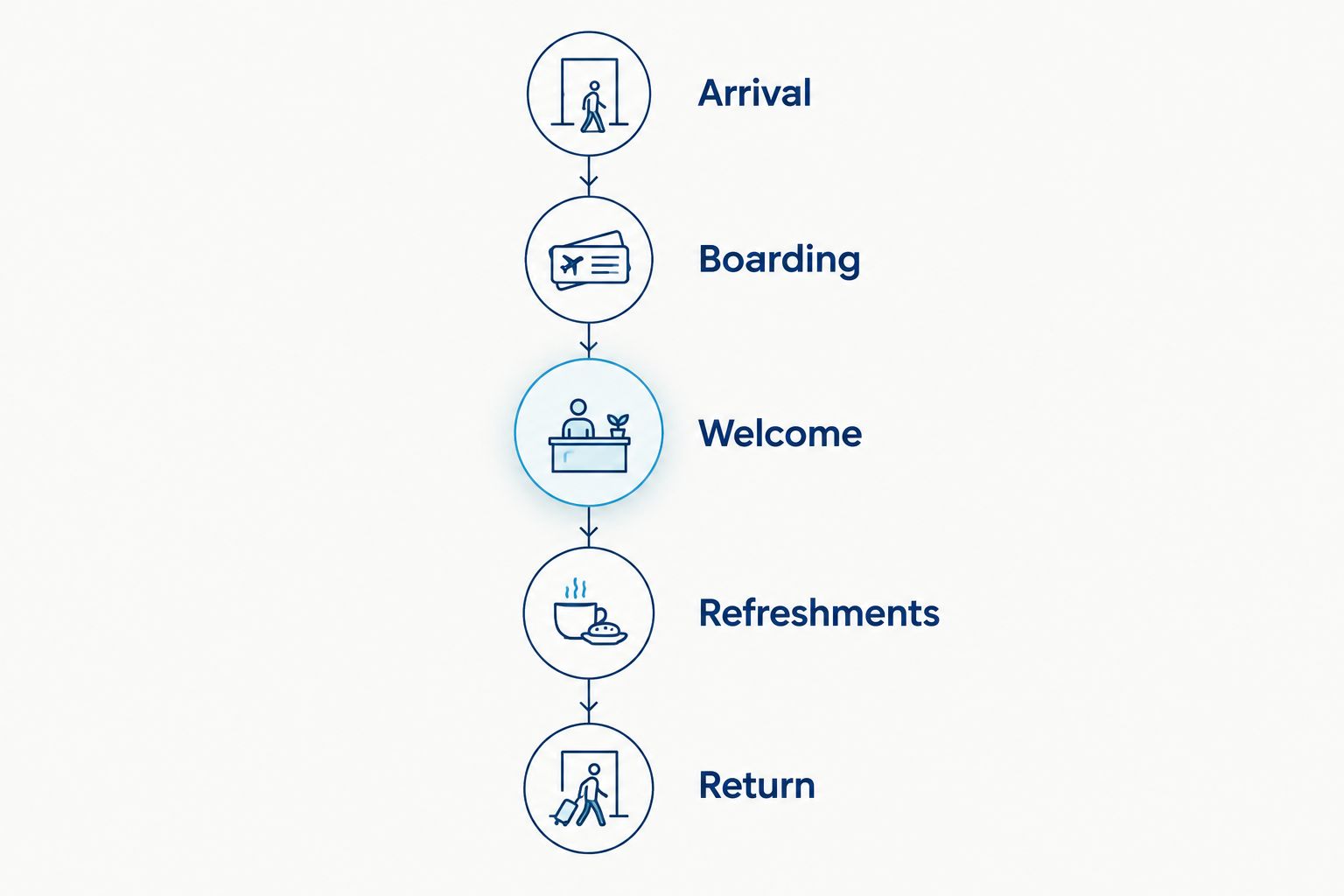
Draft the itinerary in a shared document before requesting operational confirmation. Include arrival, boarding, the host’s welcome, refreshments, any planned activity, and return arrangements. Keep formal remarks brief enough that the event still feels like hospitality rather than a presentation.
Use 2 arrival checkpoints in your plan: the shoreside meeting point and the boarding point. Confirm whether these are the same place, and explain any transfer clearly. Guests should not have to interpret a marina map while wondering whether the boat is leaving.
For a 2026 client event, avoid making dinner reservations or onward travel depend on an unconfirmed return assumption. Ask the operator to review the proposed sequence, including which elements depend on conditions and which require separate arrangements.
- Set the meeting point and boarding point.
- Place the welcome after guests are comfortably settled.
- Keep any presentation optional and appropriate to the event.
- Confirm food and beverage responsibilities separately.
- Coordinate the return with guests’ onward travel.
Protect discretion and set hosting boundaries
Write the guest communication yourself first. Explain the occasion, dress considerations supplied by the operator, the meeting instructions, and how to raise a private question. Ask the provider to verify operational details rather than forwarding an unreviewed draft.
A private booking is not a confidential meeting room. Crew members and other guests can be within earshot, and a social conversation can drift into business-sensitive territory. Keep account details, pending transactions, personal financial information, and confidential firm matters out of the event discussion.
Photography deserves its own decision. Ask guests before sharing identifiable images, and follow your firm’s communications process before publishing event content. Your invitation should not suggest that attendance means agreement to appear in promotional material.
- Give guests a private channel for practical questions.
- Keep confidential business discussions ashore.
- Brief hosts on appropriate conversation boundaries.
- Ask before taking or sharing identifiable photographs.
- Review public-facing content through the firm’s process.
Confirm contingencies and close the loop
Finish with a written operational check, not a chain of assumptions. Review the proposed route, weather decision process, cancellation terms, guest changes, and responsibilities for any separately arranged services. Ask who communicates a change and when guests should expect instructions.
Assign 1 shore-side contact to coordinate guest messages if the plan changes. That person should have the approved attendee list and the operator’s contact details, while the onboard host remains focused on the group. Avoid distributing responsibility so widely that nobody owns the final message.
After your 2026 outing, reconcile the actual event record with the approved plan. Record attendance and expenses through your firm’s systems, collect practical feedback, and send a relevant thank-you. Do not turn a hospitality follow-up into an implied request for business.
- Obtain the applicable booking and cancellation terms.
- Confirm who makes operational weather decisions.
- Name the shore-side guest communications contact.
- Prepare an alternative plan for internal review.
- Close out attendance, expenses, and guest feedback.
Compare the options for your event
Choose an event format before comparing individual vessels. The table below distinguishes planning options; it does not represent a list of confirmed packages or inclusions. Ask for written details for the arrangement you are considering.
| Option | Best for | Main advantage | Key limitation |
|---|---|---|---|
| Yachthampton captained charter or excursion | Hosts planning an outing in the Hamptons or Palm Beaches | Offers yacht and boat charter services with captained excursions | Vessel suitability, inclusions, and terms require confirmation |
| Client relationship outing | Approved client groups seeking shared time outside the office | Keeps the event focused on conversation and hospitality | Requires recipient-specific review and careful hosting boundaries |
| Employee team outing | Internal groups celebrating or spending time together | Removes the need to structure the day around client introductions | Water comfort and activity preferences still differ across employees |
| FleetShare membership | Hosts evaluating repeat leisure use | Provides a membership route to consider alongside individual charters | Corporate use and event suitability must be checked against the terms |
| Shoreside gathering | Groups needing fixed-location access or formal discussion | Keeps the meeting at a stationary venue | Does not provide the on-water experience |
For a single hosted event, evaluate the charter brief first. Consider a membership separately only when repeat use is part of the actual requirement. Neither format removes the need to check guest suitability and internal approval.
Discuss Your Charter Brief
Share your preferred area, guest group, and event purpose with Yachthampton.
Common mistakes financial services firms make
Inviting clients before checking recipient restrictions
An accepted invitation creates expectations before the firm has decided whether the hospitality is appropriate. Approve the proposed recipient group first. If an attendee substitutes a colleague, check the change rather than treating the invitation as transferable by default.
Treating privacy as permission for sensitive discussion
An exclusive guest list does not control who overhears a conversation. Keep confidential matters out of the outing, even when everyone appears familiar. Schedule substantive account or transaction discussions separately through your normal business channels.
Choosing maximum occupancy over comfortable hosting
A permitted guest count answers a different question from whether your group can converse comfortably. Request the layout and discuss how the event will work with your actual attendees. Leave room in the brief for seating preferences and movement, not just names.
Confusing a polished invitation with an operational plan
A well-written invitation cannot fix an unclear boarding location, unassigned transport, or contradictory weather messages. Confirm responsibilities before sending final instructions. In 2026, use one approved guest message rather than letting multiple hosts circulate different versions.
FAQ
What's the best yacht charter format for a financial services client event?
A captained charter is the best starting point when the host wants to focus on guests rather than operating the boat. Choose the vessel only after confirming the event purpose, recipient approvals, guest needs, and departure area.
Does Yachthampton offer charters for event hosts?
Yachthampton offers luxury yacht and boat charter rentals and captained excursions for leisure travelers and event hosts in the Hamptons and Palm Beaches. Ask about the specific vessel, arrangements, and terms for your proposed financial services event.
Can a financial services firm invite clients on a yacht?
Your firm's approval process determines whether the proposed client hospitality is appropriate. Submit the guest categories, business purpose, and proposed arrangements before issuing invitations, and check any recipient-specific restrictions.
Should we choose the Hamptons or Palm Beaches for a corporate charter?
Choose the area that fits your guests' location and travel plans. Confirm the actual departure point and onward arrangements before deciding, rather than choosing solely for the destination's appeal.
Is a yacht suitable for a confidential investment meeting?
A yacht outing should not be treated as a confidential meeting room. Keep sensitive account information, pending transactions, and confidential firm matters out of social discussions, and use your normal business channels instead.
What should we ask before confirming a corporate yacht charter?
Ask about the proposed vessel, permitted guest count, boarding arrangements, seating, shade, restrooms, and applicable terms. Also establish who handles guest communications, weather changes, food and beverages, and any separately arranged services.
Is FleetShare better than booking a single corporate charter?
Evaluate a single charter first when you are planning one hosted event. Consider FleetShare separately if repeat leisure use is part of your requirement, and confirm whether the membership terms fit your intended use.
One last thing
The most useful final check is a walk-through from the guest’s perspective. Read the invitation as someone who has never visited the departure point: can you find the meeting place, identify the host, raise a private concern, and understand what happens if plans change?
Resolve those questions before refining the finishing touches. A clear arrival and a considerate host do more for the experience than an elaborate agenda nobody has time to enjoy.