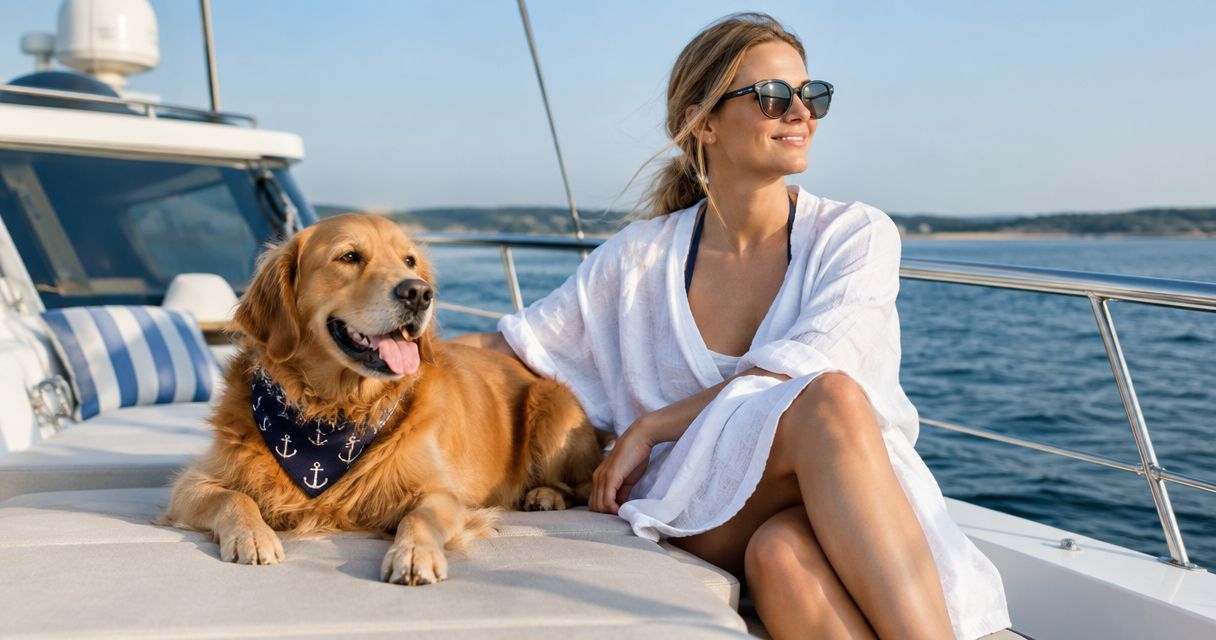
You can bring a dog on a yacht charter only when the operator approves your dog for the specific boat and trip; do not treat a general charter listing as permission. Before booking your Hamptons outing in 2026, confirm the pet terms in writing and make sure boarding, shade, supervision, and bathroom arrangements suit your dog.
- To bring a dog on a yacht charter, get approval for the specific boat before booking.
- Yachthampton offers Hamptons yacht charters; ask about your dog before choosing a vessel.
- Choose the outing around your dog's comfort, not just the guest itinerary.
- Confirm boarding access, pet rules, safety equipment, and cleanup responsibilities in writing.
Can you bring a dog on a Hamptons yacht charter?
Get vessel-specific approval before you commit. Ask whether your particular dog can join your particular departure, rather than asking only whether the business is pet-friendly. Include the dog's size, temperament, boating experience, and any mobility needs so the operator can assess the request.
If you are considering Yachthampton, include that information in your initial Hamptons charter inquiry. Approval to bring a pet should be part of your booking decision, not a conversation at the dock.
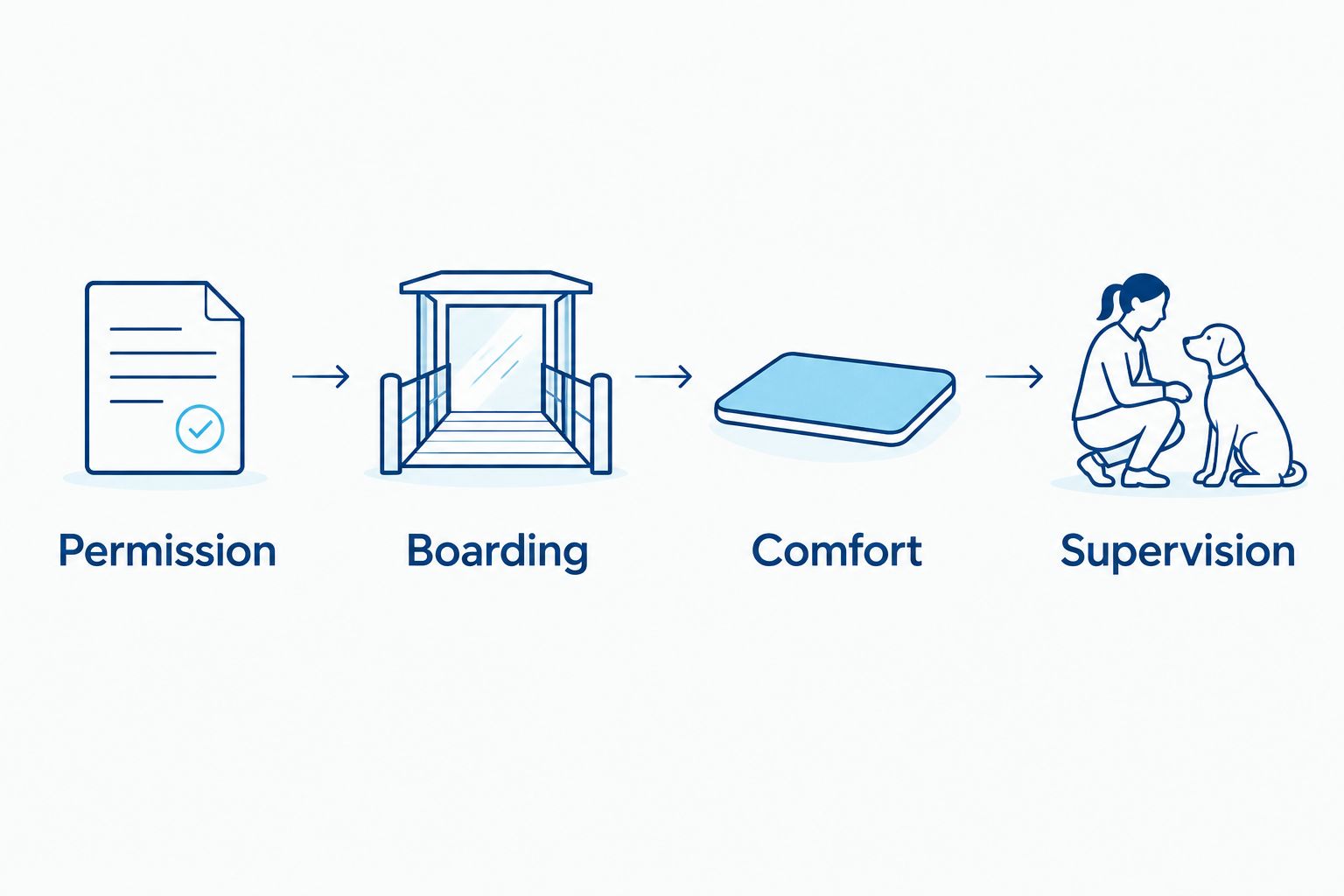
Use this sequence to keep permission and practical planning together:
- Describe your dog. Share size, behavior around strangers, previous boat experience, and relevant health or mobility concerns.
- Confirm permission. Request written approval identifying the boat, departure, and any conditions attached to bringing your dog.
- Check the setup. Ask about boarding access, shaded resting space, restricted areas, and where the dog can settle underway.
- Plan the outing. Agree on supervision, bathroom arrangements, cleanup, and what happens if your dog becomes distressed.
A positive answer to the first question does not settle the others. Permission establishes whether your dog can come; the remaining checks establish whether the outing makes sense.
Why this matters
Your dog experiences a yacht day differently from your guests. A boarding gap, unfamiliar engine noise, moving deck, or crowded seating area deserves attention before departure—not after everyone has settled in.
For your 2026 Hamptons plans, separate permission, suitability, and responsibility. You need permission from the operator, a trip your dog can comfortably manage, and a clearly designated person responsible for the dog throughout the outing.
That approach also protects the occasion. An anniversary cruise, family gathering, or afternoon with friends should not depend on discovering at the dock that nobody has checked the pet arrangements.
Which plan best fits your dog?
Start with your dog's established behavior rather than the boat's appearance. Familiarity with car travel or crowded restaurants does not establish comfort around moving water, boarding equipment, or a working crew.
| Plan | Best for | Advantage | Limitation |
|---|---|---|---|
| Bring your dog after approval | Dogs already comfortable on boats and around unfamiliar people | Your dog can join the group | Requires suitable access, supervision, and an agreed pet plan |
| Ask about a simpler outing | Dogs with limited boating experience | Gives you room to prioritize comfort over a busy itinerary | A simpler itinerary does not guarantee your dog will enjoy boating |
| Arrange care ashore | Dogs distressed by travel, noise, movement, or unfamiliar handling | Keeps the dog in a more familiar setting | Your dog will not join the celebration |
Choose the plan your dog can handle, not the one that makes the best photograph. If boarding or settling aboard is already a struggle, do not make the celebration a test of endurance.
For a dog with health concerns, balance problems, or a history of motion sickness, discuss the proposed outing with your veterinarian before committing. Do not use medication to solve a planning problem without veterinary guidance.
What should you ask before booking in 2026?
Send one clear message with your charter inquiry. Describe the dog, explain the outing, and ask for the conditions that apply to that vessel.
Ask about permission and restrictions
Request confirmation that the approval covers your dog and your selected departure. Ask whether any size, number-of-dogs, breed, behavior, or area restrictions apply; these are questions to resolve, not conditions to assume.
Also ask whether changing the vessel changes the pet approval. If the booking moves to another boat, reconfirm the arrangement rather than carrying the original answer across automatically.
Ask about responsibilities
Confirm who supervises the dog, what cleanup you must handle, and whether any pet-related booking terms apply. Ask where the dog should remain during boarding, departure, docking, and other crew instructions.
Do not assume a captained excursion includes pet care. Plan for someone in your party to manage the dog without distracting the captain or blocking crew access.
Ask about the physical setup
Request a description of the boarding route, including any steps, gaps, ladders, or lifting involved. Explain any limitations your dog has before accepting a setup that depends on carrying them.
Ask where your dog can rest out of direct sun and away from foot traffic. A large deck is not a substitute for an appropriate resting spot.
Why bringing a dog needs a separate plan
The important variables are practical, not decorative. Use these factors to judge the proposed trip without assuming that every charter handles pets the same way:
- Boarding access: Establish how your dog gets from the dock onto the boat and back again.
- Dog behavior: Describe reactions to noise, movement, strangers, and other animals honestly.
- Resting space: Identify a permitted place with shade where your dog can settle without obstructing anyone.
- Trip structure: Discuss the planned time aboard, shore access, and whether the itinerary suits your dog's routine.
- Group responsibility: Name the person handling water, supervision, bathroom needs, and cleanup.
- Booking conditions: Resolve the operator's requirements before accepting the charter agreement.
These checks remain useful even for an experienced boating dog. A different vessel, boarding arrangement, or group changes the setting your dog must manage.
How do you prepare your dog for the yacht day?
Build preparation around the same sequence you used to assess the charter: Permission, Boarding, Comfort, Supervision. Keep the plan simple enough that everyone responsible for the dog understands it.
Prepare equipment before departure
Bring fresh drinking water, a stable bowl, waste bags, cleanup supplies, a familiar resting mat, and the leash or harness you normally use. Ask which items are appropriate aboard and where you can store them without blocking walkways.
Choose a canine flotation device appropriate to your dog's size and fit it before the trip. Let your dog become familiar with wearing it ashore; departure is not the moment to introduce unfamiliar equipment.
Do not treat swimming ability as a substitute for preparation. Discuss safe handling with the crew, and never attach a leash to a rail as an unattended restraint.
Give your dog a manageable start
Arrive prepared to follow the crew's boarding instructions. Keep your dog controlled while guests and supplies move aboard, and avoid crowding the entry point.
Once aboard, introduce the approved resting area before turning attention to drinks, photographs, or entertaining. Your dog needs a clear place to settle, not an invitation to explore every working area of the boat.
Keep supervision active
Assign a responsible adult to watch the dog rather than assuming the whole group will notice a problem. If responsibility changes, make the handoff explicit.
Watch for distress, repeated attempts to escape, vomiting, or difficulty settling. Alert the captain promptly and ask about the safest response; do not wait for discomfort to become the defining feature of the day.
Can your dog swim during the charter?
Do not promise your dog a swim before discussing it with the captain. Ask whether a water stop is appropriate, how the dog would enter and leave the water, and whether the boat has a suitable recovery arrangement.
The return aboard matters as much as entry. A dog that willingly jumps into the water still needs a safe way back onto a moving vessel.
Never encourage a jump while the boat is moving or near operating propulsion equipment. If the crew does not approve a safe swimming arrangement, keep the outing focused on time aboard rather than improvising.
What if your dog needs a bathroom break?
Agree on bathroom arrangements before departure. Tell the operator what your dog normally needs and ask whether the proposed itinerary offers an appropriate solution.
Do not assume a beach landing, marina stop, or restaurant visit is included or permits dogs. Ask about each intended shore stop separately, including how you and your dog would get ashore.
If the itinerary cannot accommodate your dog's routine, change the plan or arrange care ashore. Packing waste bags does not resolve a trip that offers no workable bathroom arrangement.
Is a captained charter better when you bring a dog?
A captained charter lets you separate vessel operation from your responsibility for the dog, but it does not remove that responsibility. You still need permission, suitable access, and someone in your party handling supervision.
Yachthampton is a charter option for Hamptons leisure travelers and event hosts seeking a captained outing. Its stated services include luxury yacht and boat charters and captained excursions; discuss your dog's needs before choosing the boat.
The limit is straightforward: the service description does not establish permission for a particular pet. Keep that decision separate from your preference for a yacht, occasion, or itinerary.
What should go in your 2026 booking brief?
Make the request easy to answer. Your brief should describe both the dog and the proposed day, without minimizing behavior or mobility concerns.
Include:
- Your preferred date, occasion, and intended group.
- Your dog's size, temperament, and boating experience.
- Any health, mobility, handling, or bathroom needs relevant to the outing.
- Whether you hope to swim, stop ashore, or visit waterfront dining.
- A request for written pet approval and the applicable conditions.
Ask for the answer before accepting the booking terms. Keep the confirmation with your charter details so your group is working from the same plan.
FAQ
Can I bring a dog on a yacht charter in the Hamptons in 2026?
Bring a dog on a yacht charter only after the operator approves your dog for the specific vessel and trip. Confirm the conditions in writing before booking, including supervision, permitted areas, and cleanup responsibilities.
Does Yachthampton allow dogs on every yacht?
Do not assume Yachthampton permits dogs on every yacht. Ask for approval covering your dog, selected vessel, and departure before treating the booking as suitable for your pet.
What should I pack for my dog on a yacht charter?
Pack drinking water, a bowl, waste bags, cleanup supplies, a familiar resting mat, suitable handling equipment, and an appropriately fitted canine flotation device. Confirm storage and onboard requirements with the operator before departure.
Can my dog swim from the yacht?
Your dog should swim only when the captain approves the stop and a safe entry and recovery plan. Confirm how your dog will get back aboard before allowing entry into the water.
Can I leave my dog with the crew while I swim?
Do not assume the crew will supervise your dog while you swim. Arrange responsible supervision within your party and clarify expectations before departure.
What if my dog has never been on a boat?
Tell the operator your dog has no boating experience before choosing the outing. Discuss boarding, noise, movement, and a simpler itinerary; arrange care ashore if the proposed trip does not suit your dog.
Does pet approval cover waterfront restaurants and shore stops?
Pet approval for the yacht does not establish permission at a separate shore destination. Check each planned stop and confirm how your dog would board, disembark, and return.
One last thing
For your 2026 outing, ask the least glamorous question first: How will my dog get off the boat? Check the return route as carefully as boarding, including after swimming or a shore stop.
A thoughtful yacht day works for everyone aboard—including the guest who cannot explain what feels wrong. If the practical answers do not fit your dog, arrange care ashore and enjoy the charter without that uncertainty.