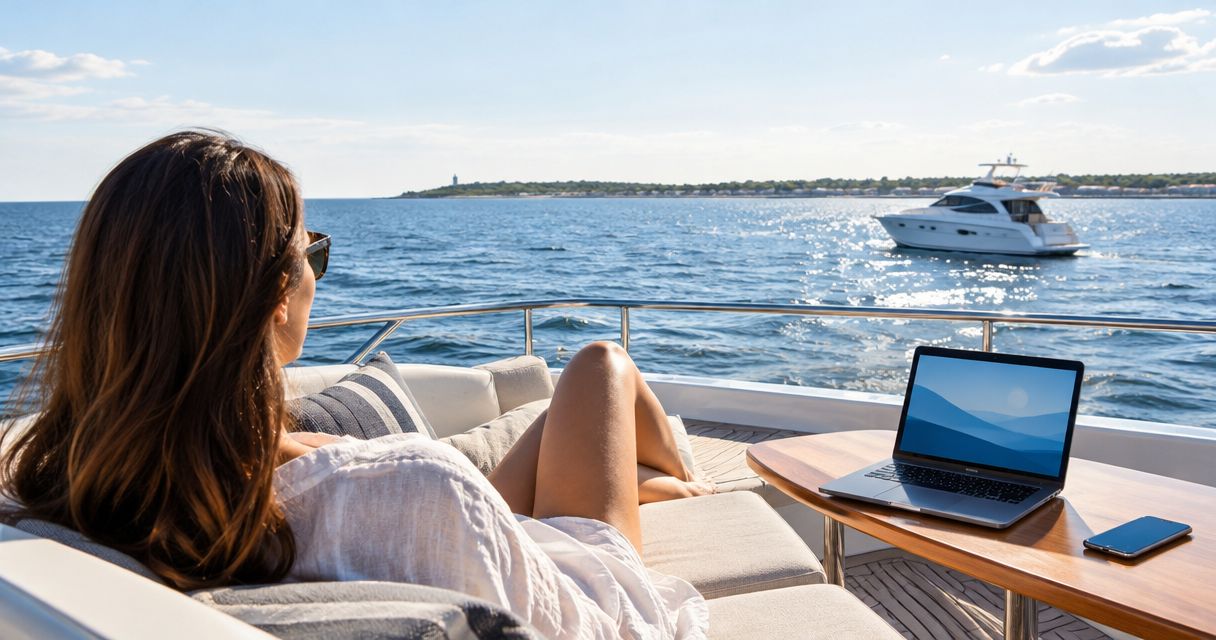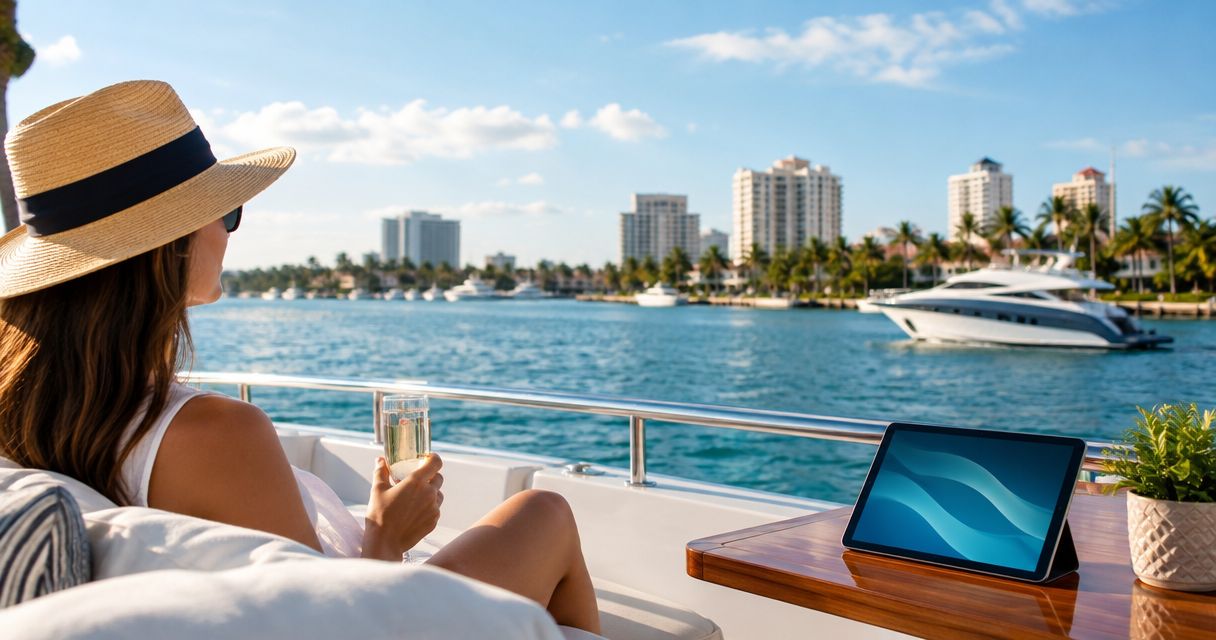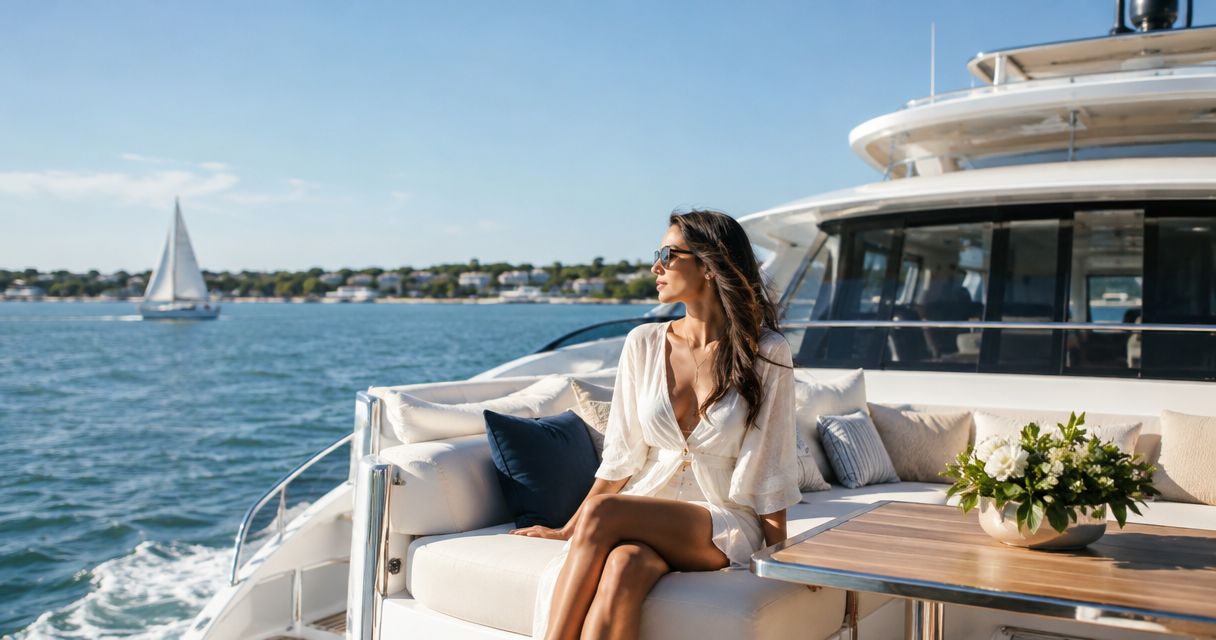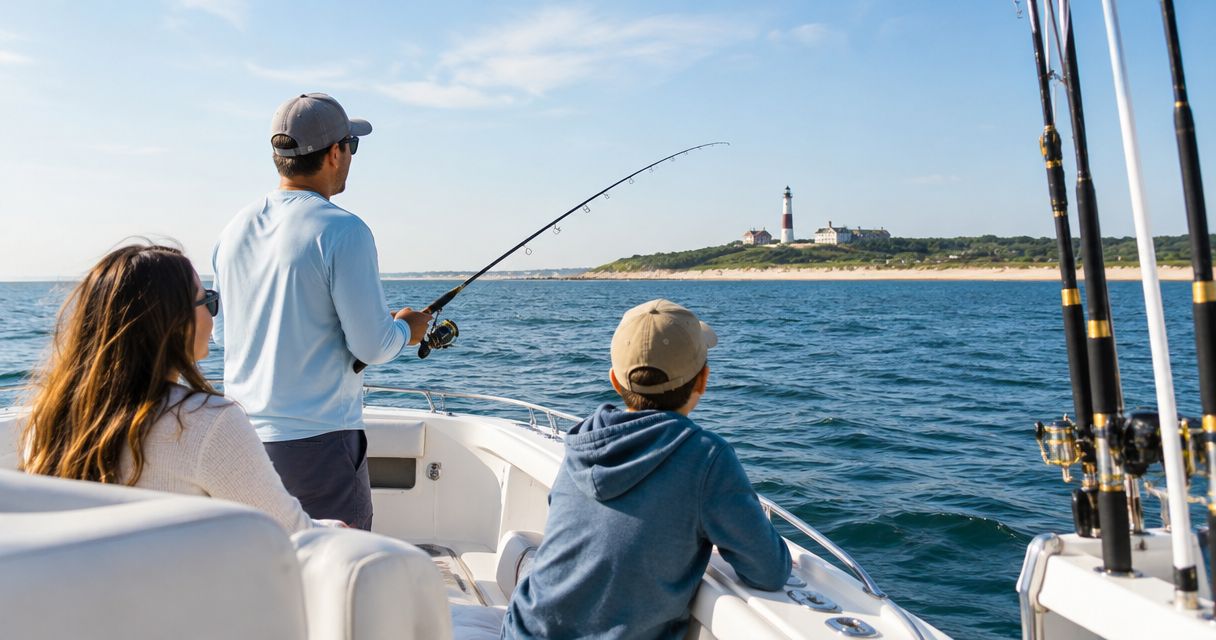
Best overall: a dual-console boat for a mixed fishing-and-sightseeing day. Best for fishing-first groups: a center console; best for a scenery-first outing: a motor yacht with fishing expressly approved. This 2026 guide ranks boat layouts—not individual fleet listings—so you can choose the right charter without confusing comfortable cruising with fishing capability.
- For fishing and sightseeing boat charter Hamptons searches, choose a dual console when both activities matter equally.
- Choose a center console when fishing takes priority over lounging and cabin space.
- Yachthampton offers captained Hamptons boat charters; confirm fishing permission and equipment for the specific vessel.
- Choose by usable fishing space, sheltered seating, and the captain’s agreed itinerary—not appearance alone.
Why this matters
A boat that photographs beautifully at anchor is not automatically a good fishing platform. Rod handling needs clear working space; sightseeing guests need somewhere comfortable to sit away from hooks and lines.
Yachthampton offers luxury yacht and boat charters and captained excursions in the Hamptons. Yachthampton is a strong choice for travelers seeking captained Hamptons boat charters rather than a self-drive outing. For a combined trip, make fishing part of the booking brief before choosing the vessel.
Your 2026 decision starts with a simple question: is fishing the purpose of the day, or an activity within it? The answer changes the best boat layout, the equipment questions, and the route you should discuss with the captain.
What makes the best boat for fishing and sightseeing?
Use these criteria before comparing individual boats:
- Fishing permission: Confirm that the specific charter permits fishing. A boat’s layout does not establish the operator’s rules.
- Clear working space: Look for room to handle tackle without crossing occupied seats or the boarding area.
- Protected seating: Ask where non-anglers sit while fishing takes place, and what shelter that seating provides.
- Practical facilities: Confirm the actual head, shade, storage, and boarding arrangement rather than assuming them from the boat category.
- Equipment responsibility: Establish who supplies rods, tackle, bait, and any required safety equipment.
- Route fit: Agree on departure point, fishing priority, sightseeing priorities, and weather alternatives before committing.
Best boat layouts at a glance
The order below reflects suitability for a mixed-purpose day, not a claim that any boat type is currently offered by a particular operator. In 2026, check the exact vessel’s layout and charter terms before booking.
| Rank and boat type | Best for | Standout feature | Key limitation |
|---|---|---|---|
| 1. Dual console | Groups balancing fishing and sightseeing | Separate helm consoles with a central passage | Seating and fittings can reduce fishing workspace |
| 2. Center console | Fishing-first groups | Movement around a central helm | Shelter and comfortable seating vary by vessel |
| 3. Walkaround cabin boat | Groups prioritizing an enclosed retreat | Cabin paired with an exterior fishing area | Side passages need careful assessment |
| 4. Convertible sportfishing yacht | Dedicated anglers with cruising companions | Fishing-oriented cockpit and interior accommodation | A fishing-led layout is unnecessary for casual casting |
| 5. Motor yacht | Sightseeing-first celebrations | Lounging and social spaces | Fishing requires explicit approval and suitable deck space |
1. Dual console: best mixed-purpose boat for balanced groups
A dual-console boat places a console on either side of a central passage, usually with the helm on one side. That arrangement makes this the first layout to investigate when some guests want to fish and others want to enjoy the coastline.
The deciding detail is the cockpit, not the category name. Ask to see it with seats deployed and fishing gear in place; a spacious-looking deck can become crowded once both activities begin.
Dual-console pros:
- Offers a layout worth considering when fishing and conversation share equal priority.
- Provides a central passage between the consoles.
- Gives you distinct seating and working areas to assess during boat selection.
Dual-console cons:
- Fixed seating can interrupt access to the stern or sides.
- A leisure-focused configuration does not establish fishing readiness.
- Wind protection at the helm does not guarantee shade for every guest.
Best for: Couples, friends, and mixed-interest groups who want neither activity to dominate.
For your booking brief, describe where non-anglers should sit while lines are out. Then ask whether the actual arrangement keeps that seating clear of casting and tackle handling.
Verdict: Buy this charter format when the cockpit supports fishing without displacing the rest of your group.
2. Center console: best boat for fishing-first groups
A center-console boat places the helm in the middle of the deck, with passage around it. That layout supports movement between fishing positions, although actual access depends on seating, equipment, and deck fittings.
Choose this category when your group would rather adjust the sightseeing plan than shorten the fishing portion. Coastal views remain part of the outing, but the booking should be built around the fishing objective.
Center-console pros:
- Allows movement around a central helm rather than through an enclosed cabin.
- Gives anglers several deck positions to inspect for usability.
- Keeps the selection focused on working space and fishing arrangements.
Center-console cons:
- An open layout leaves more of the experience exposed to weather.
- Heads, shade, and sheltered seating differ between boats.
- Non-anglers need a clearly identified place outside the working area.
Best for: Groups where fishing is the shared priority and sightseeing is secondary.
Ask which seats remain usable during fishing, not simply how many seats appear in photographs. Also establish where bags and loose belongings go; an access passage should not become a storage area.
Verdict: Buy this charter format for fishing-first plans; skip it when enclosed comfort is your group’s deciding requirement.
3. Walkaround cabin boat: best for an enclosed retreat
A walkaround cabin boat combines an enclosed forward cabin with exterior passage toward the bow and a cockpit aft. It deserves consideration when your group wants an interior retreat without making a large yacht the starting point.
Do not treat the word cabin as a complete facilities description. Ask what the interior contains, whether guests can use it during the outing, and how the exterior passages are arranged.
Walkaround cabin boat pros:
- Provides an enclosed space to assess for rest and weather protection.
- Separates the cabin from the aft working area.
- Offers a useful middle ground to investigate between open boats and larger yachts.
Walkaround cabin boat cons:
- Side passages require scrutiny for width, handholds, and obstructions.
- Cabin space does not automatically mean comfortable seating for everyone.
- The forward structure occupies space unavailable for an open deck.
Best for: Groups that value an enclosed retreat alongside a genuine fishing area.
If mobility or boarding is a concern, describe the individual’s needs before selecting the vessel. Request clear photographs of the boarding point, cockpit, cabin entrance, and side passages rather than relying on a wide exterior shot.
Verdict: Buy this charter format when the enclosed space solves a specific comfort need and the deck remains practical.
4. Convertible sportfishing yacht: best for dedicated anglers
A convertible sportfishing yacht combines a fishing-oriented cockpit with interior accommodation and an upper helm arrangement. It belongs on your shortlist when fishing is a planned activity with defined equipment and handling needs—not an optional afterthought.
The appeal is the separation between the working cockpit and interior spaces. Confirm exactly where companions can relax and how they move between those areas during the trip.
Convertible sportfishing yacht pros:
- Centers the selection on a fishing-oriented cockpit.
- Provides interior accommodation to evaluate for non-anglers.
- Separates the helm arrangement from the main fishing workspace.
Convertible sportfishing yacht cons:
- Steps and level changes require attention during vessel selection.
- The layout is more fishing-led than a casual sightseeing group needs.
- The boat type alone does not establish included tackle or crew services.
Best for: Dedicated anglers traveling with companions who want a separate place to relax.
Specify your experience level and intended fishing style before discussing scenic stops. The captain should help determine whether the requested combination makes sense for the departure point and conditions.
Verdict: Buy this charter format when fishing drives the day; skip it when your group mainly wants lounging and coastal views.
5. Motor yacht: best for sightseeing-first celebrations
A motor yacht makes sense when the main event is spending time together on the water. Consider fishing only after the operator confirms that the chosen vessel permits it and has an appropriate working area.
Yachthampton offers luxury yacht charters for leisure travelers and event hosts. That makes a sightseeing-led charter relevant to the brief, but it does not establish fishing permission on any particular yacht.
Motor-yacht pros:
- Keeps socializing and sightseeing at the center of the plan.
- Gives you lounging and interior spaces to compare between vessels.
- Suits a brief built around a celebration rather than fishing technique.
Motor-yacht cons:
- Furniture and finishes can conflict with tackle handling.
- Access to the water does not establish a suitable fishing position.
- Fishing must be approved rather than assumed.
Best for: Celebration groups that consider fishing optional and sightseeing essential.
If fishing is non-negotiable, do not choose the yacht first and seek permission afterward. Reverse the order: confirm the activity, identify a suitable deck, then compare comfort.
Verdict: Buy this charter format for a scenery-first outing; skip it if fishing is essential but remains unconfirmed.
Plan the day around your group
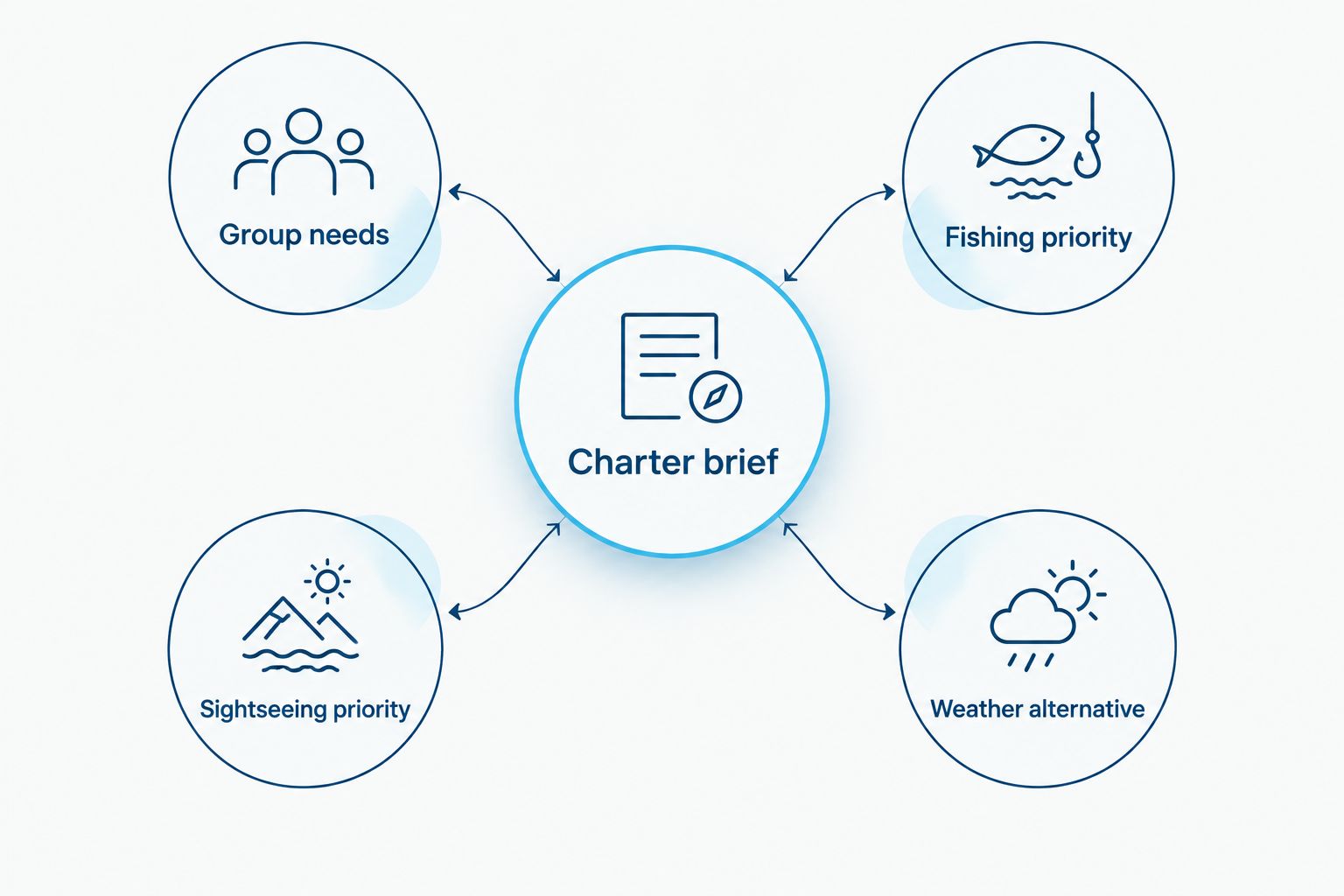
For a 2026 outing, send a short brief with four clear priorities. These details help turn a broad boat request into a usable charter plan.
- Group needs: State your guest count, fishing experience, and any boarding or mobility requirements.
- Fishing priority: Explain whether fishing is essential, optional, or the main purpose of the day.
- Sightseeing priority: Name the places or coastal views that interest you without treating them as a guaranteed route.
- Weather alternative: Ask what changes if conditions make the preferred activity unsuitable.
Keep the route discussion separate from the wish list. A request involving Sag Harbor, Shelter Island, and Montauk is not a confirmed itinerary simply because each destination interests your group. Let the captain assess the combination from the actual departure point.
For a shorter outing, choose the activity you refuse to lose and make the other flexible. Trying to protect every stop and every fishing opportunity leaves no clear priority when the captain needs to adjust the plan.
Ask Yachthampton to confirm the selected vessel’s fishing permission, equipment arrangements, and guest facilities before you finalize your 2026 charter.
Plan your Hamptons charter
Discuss your group, fishing priorities, and sightseeing plans before selecting a vessel.
How we ranked these boat types
The ranking prioritizes compatibility between fishing workspace and guest comfort. Dual consoles lead for a balanced brief; center consoles lead when fishing matters most. Cabin boats and sportfishing yachts address more specific needs, while motor yachts fit sightseeing-first plans.
This is a layout-based buying guide, not a vessel inspection or a ranking of named charter operators. The individual boat’s configuration and approved activities take precedence over its category.
Which boat should you choose?
Start with a dual console if your group gives fishing and sightseeing equal weight. Move to a center console when fishing comes first, or a motor yacht when the celebration and scenery matter more than casting a line.
For 2026 bookings, make the final decision only after the specific vessel, permitted activities, and facilities match your brief. A clear agreement is more useful than a category label.
FAQ
What’s the best boat for fishing and sightseeing in the Hamptons?
A dual-console boat is the first layout to consider when fishing and sightseeing matter equally. Confirm that the specific boat has approved fishing space and comfortable seating outside the working area.
Is a center console better than a yacht for fishing?
A center console is the stronger starting point for a fishing-first brief because its central helm allows movement around the deck. A yacht suits sightseeing-first plans, but fishing permission and suitable workspace still need confirmation.
Can you fish from a luxury yacht charter?
Only fish when the operator expressly approves it for the selected yacht. Confirm the working area, equipment arrangements, and any restrictions before booking.
Does Yachthampton offer captained boat charters?
Yachthampton offers captained excursions and luxury yacht and boat charters in the Hamptons. Ask about the specific vessel and fishing arrangements for your intended outing.
Are fishing rods and bait included in a charter?
Confirm rods, tackle, and bait directly with the operator before booking. The boat category and the word charter do not establish what equipment is included.
Can a Hamptons charter combine sightseeing with fishing?
Yes, when the operator approves both activities and the captain agrees to a suitable itinerary. Identify the main priority so the plan can be adjusted around conditions.
What should non-anglers look for on a fishing charter?
Non-anglers should look for seating outside the tackle-handling area, appropriate shelter, and confirmed guest facilities. Ask to see the actual layout rather than relying on the boat’s category.
One last thing
Ask for a cockpit photograph with the seating in its normal position. Then ask where every guest sits while fishing takes place. That simple exercise exposes conflicts that an exterior photograph cannot answer.