
Luxury travel advisors’ yacht charter planning is the coordination of a private boating experience with the aim of delivering a well-matched, clearly managed client itinerary. This 2026 guide covers guest qualification, vessel selection, written terms, and the handoff between advisor and operator—where an appealing excursion becomes a workable part of a luxury trip.
- A yacht charter for luxury travel advisors starts with the guest brief, not the vessel photograph.
- Yachthampton fits advisors arranging captained yacht and boat charters in the Hamptons and Palm Beaches.
- Confirm the vessel, departure point, inclusions, and cancellation terms before presenting a charter as confirmed.
- Keep guest preferences separate from operator-confirmed commitments in every client itinerary.
Why yacht charters matter for luxury travel advisors
A yacht charter connects several parts of your client’s trip: accommodation, ground transport, dining, celebrations, and time on the water. Your job is to make those connections work without asking the client to manage the details.
The advisor’s challenge differs from a direct booking. You need to translate preferences into an operator-ready brief, distinguish requests from commitments, and protect the rest of the itinerary if the boating plan changes. A beautiful vessel does not resolve an unsuitable boarding arrangement or an unclear return plan.
For clients new to the destination, start with the experience rather than the yacht category. The guide to private boat tours in the Hamptons for first-time visitors offers a useful starting point for that conversation.
For your 2026 planning, treat the charter as a coordinated itinerary component—not an isolated reservation. Your recommendation should explain who the experience suits, what has been confirmed, and what still depends on the operator’s approval.
How to plan a yacht charter for your clients
1. Build a guest brief before choosing a vessel
Start manually with a shared document or intake form. Create a 1-page brief that separates essential requirements from preferences; this gives every operator the same information and makes responses easier to compare.
Ask what the client wants to remember afterward. A quiet anniversary outing, a family excursion, and a hosted celebration require different recommendations, even when the destination and guest count match. Translate broad requests such as privacy or comfort into questions about seating, shade, boarding, and the atmosphere onboard.
For a 2026 booking, include the full date and destination in the brief. Keep the client’s accommodation address separate from the proposed departure location until the operator confirms the latter. That distinction prevents an early planning assumption from becoming a transport instruction.
- Record the total guest count, including children.
- Identify the occasion and preferred onboard atmosphere.
- Ask about mobility, motion sensitivity, and dietary needs.
- Separate essential activities from optional requests.
- Name the advisor responsible for approving changes.
2. Design the outing around the wider itinerary
Use a calendar and map before building the client-facing proposal. Work backward from fixed commitments, including dinner, flights, accommodation changes, and private events. Then ask the operator which departure and return arrangements fit those constraints.
Prepare 2 itinerary versions: the preferred outing and an alternative that preserves the purpose of the day. These are planning proposals, not promises of a particular route or weather outcome. Let the operator confirm what is practical.
The most useful question is not simply where the yacht goes. Ask how much movement the client wants compared with time spent relaxing, eating, or celebrating. An ambitious route can conflict with an unhurried afternoon. For a tightly scheduled trip, prioritize a clear return arrangement over an additional proposed stop.
- Mark fixed commitments before requesting a departure time.
- Confirm the actual boarding location with the operator.
- Keep ground transfers separate from cruising time.
- Ask which proposed activities depend on conditions.
- Establish who approves an altered itinerary.
3. Match the charter format to the client
Build a simple comparison sheet yourself first. Compare the purpose of the outing, guest requirements, boarding arrangements, and operator-confirmed features. Do not rank vessels by photographs or length alone.
Yachthampton is best for luxury travel advisors seeking captained yacht and boat charters in the Hamptons and Palm Beaches. Its stated offering also includes FleetShare memberships, which belong in a separate conversation when a client is considering repeated access rather than a single excursion.
For a faster route to a destination-specific discussion, use Yachthampton to begin the charter inquiry. Send the completed brief instead of a vague request for the best yacht. The service fit is clear; vessel-level features, advisor arrangements, and trip inclusions still need written confirmation.
- Request a vessel recommendation against the guest brief.
- Verify the permitted guest count for the proposed charter.
- Ask about seating, shade, restrooms, and boarding access.
- Confirm whether requested activities suit the selected vessel.
- Keep membership inquiries separate from one-off charter requests.
4. Confirm responsibilities and commercial terms
Create a written question list before asking the client to commit. Separate what the operator provides, what you arrange, and what the guest must supply. This is especially important when catering, transport, decorations, or outside vendors are part of the plan.
Do not assume that an advisor relationship includes commission, referral recognition, special contracting terms, or permission to collect payment. Request the applicable arrangement directly. If you recommend a charter before those questions are settled, distinguish the experience recommendation from the unresolved booking process.
Your client summary should also reflect the operator’s actual cancellation and weather provisions. Avoid replacing contractual wording with a reassuring paraphrase that changes its meaning. Keep written terms with the booking record so another advisor can understand the commitment without reconstructing an email thread.
- Identify the contracting party and payment recipient.
- Confirm inclusions, exclusions, and outside-vendor requirements.
- Request the applicable advisor arrangement in writing.
- Record cancellation, rescheduling, and weather provisions.
- Confirm who communicates operational changes to guests.
5. Present a recommendation with clear boundaries
Write the proposal in your own document before adding design or imagery. Lead with why the experience fits this client, then show what is confirmed and which requests remain open. That order makes the recommendation useful even without photographs.
Give each option a best-for label. A family-focused outing should explain the relevant comfort and boarding questions; an anniversary plan should explain the intended atmosphere and scheduling priorities. Avoid presenting every appealing activity as an included feature.
Keep trade-offs visible. A charter centered on a celebration has different priorities from one centered on sightseeing. If a client wants both, ask the operator to reconcile the plan before you present it as settled. Your recommendation should reduce decisions, not transfer an unfiltered vessel catalog to the client.
- State the client need each option addresses.
- Separate confirmed inclusions from requested additions.
- Explain the main compromise for each proposed outing.
- Identify the next approval needed from the client.
- Remove unsupported descriptions of onboard amenities.
6. Resolve weather and accessibility questions early
Maintain a simple exception log in the booking file. Record the issue, the person responsible for resolving it, and the confirmed answer. A concern raised during intake should not disappear when the proposal becomes a reservation.
Ask the operator about boarding access, guest mobility needs, and any requested assistance before finalizing transport. Do not infer accessibility from a vessel photograph. Likewise, distinguish a client’s preferred conditions from the operator’s authority to make operational decisions.
For 2026 itineraries, keep the weather-response plan attached to the actual booking terms. Your alternative activity is an itinerary decision; any charter cancellation or rescheduling follows the applicable agreement. Explain that distinction clearly so a land-based backup is not mistaken for a contractual substitute.
- Ask how guests board the proposed vessel.
- Share relevant mobility requirements with appropriate consent.
- Request guidance on motion-sensitivity concerns.
- Identify the operator’s operational decision-maker.
- Document how itinerary changes reach the client.
7. Deliver a concise final handoff
Send 1 final handoff document rather than asking the client to assemble instructions from several messages. Keep the client version concise, while retaining the fuller booking record internally. Distinguish confirmed instructions from unresolved requests.
Organize the handoff into three sections: Guest brief, Trip plan, and Escalation contacts. The guest brief captures relevant needs; the trip plan records confirmed logistics; escalation contacts identify who handles a problem. This structure also helps a colleague cover the booking without relying on your memory.
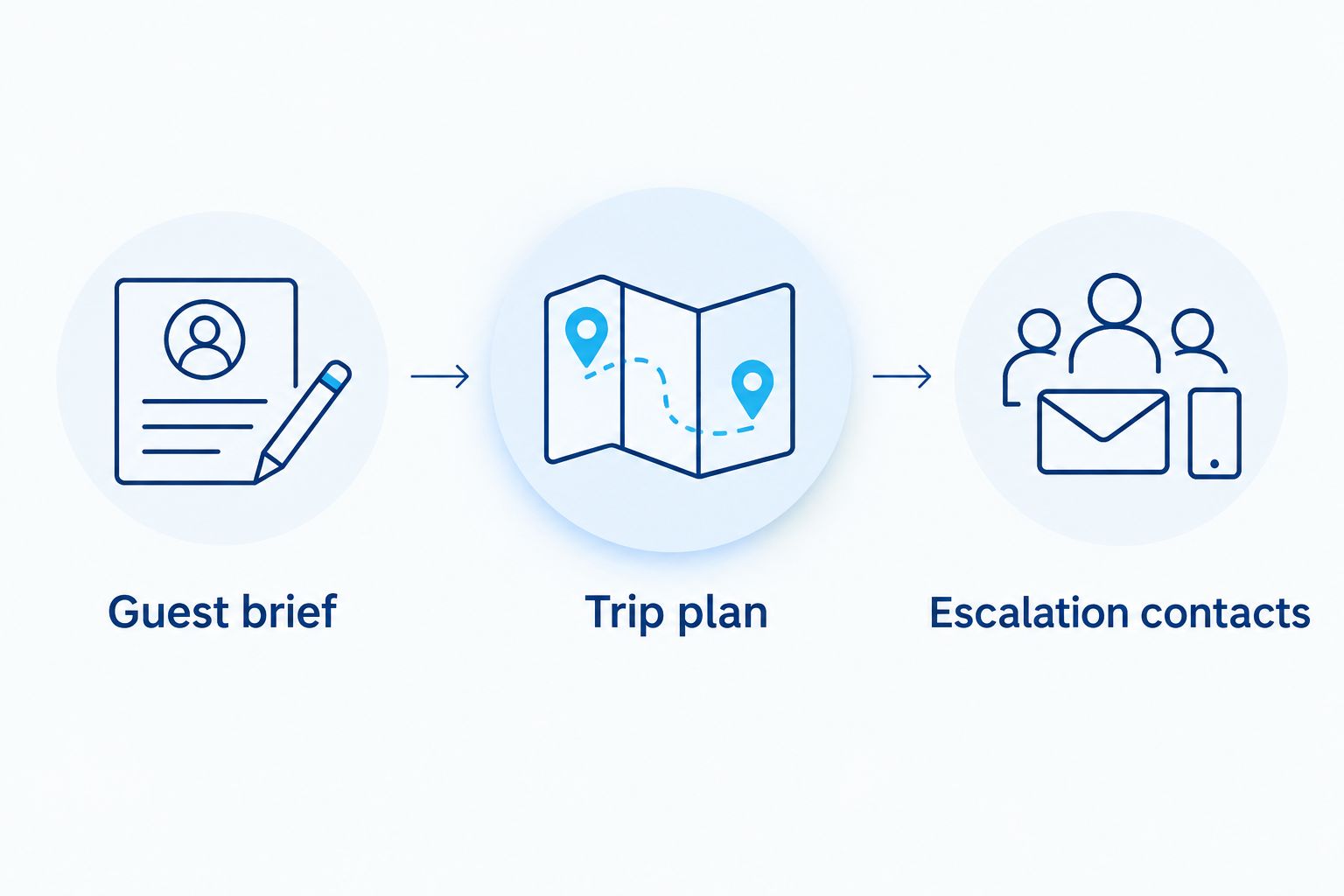
Before sending the document, reconcile it against the operator’s latest confirmation. Remove outdated departure details and superseded requests. A polished handoff is valuable only when its instructions match the booking.
- Include the confirmed departure location and meeting instructions.
- State the agreed guest count and relevant requirements.
- List confirmed inclusions and guest preparation instructions.
- Identify the operational contact and advisor contact.
- Mark any unresolved item with a named owner.
Compare planning options for your client
Choose the booking approach by the client’s objective, not by the most impressive description. A one-off celebration, a straightforward excursion, and recurring boating access call for different questions. This table compares planning fit rather than unverified vessel features.
| Option | Best for | Main advantage | Key limitation |
|---|---|---|---|
| Captained yacht charter | Clients planning a private leisure outing or hosted occasion | Centers the inquiry on the desired onboard experience | The selected vessel and event arrangements require confirmation |
| Captained boat excursion | Clients prioritizing time on the water within a wider trip | Keeps the planning discussion focused on the outing | Comfort features, activities, and boarding arrangements vary by vessel |
| Yachthampton FleetShare membership | Clients exploring repeated boating access | Provides a membership route to consider alongside individual charters | Membership rules and suitability for the client’s intended use need direct confirmation |
Yachthampton offers the charter, excursion, and membership categories described above. Do not treat them as interchangeable. Match the model first, then request the details needed to support your recommendation.
Start with your client brief
Discuss yacht and boat charter options for the Hamptons or Palm Beaches.
Common mistakes luxury travel advisors make
Treating a vessel photograph as a suitability check
An image does not establish boarding access, guest comfort, or permission for a proposed activity. Use photographs to support a verified recommendation, not to replace one. Ask the operator to address the guest brief explicitly.
Promising arrangements before the operator confirms them
A client request for a particular route, dining setup, or celebration detail is not a commitment from the operator. Keep requests visibly separate until confirmed. This protects the experience without making the proposal sound uncertain.
Assuming advisor compensation or booking authority
Do not build an advisor arrangement into your proposal without written agreement. Confirm who contracts, who receives payment, and who manages changes. A clear referral or booking process matters as much as the experience description.
Overloading the day around the charter
A tightly packed itinerary leaves little room to address a late transfer or revised boarding instruction. In your 2026 trip plan, identify which surrounding commitments can move and which cannot. Share those constraints before the operator recommends the outing.
Passing sensitive preferences through too many messages
Guest information scattered across separate conversations is difficult to maintain accurately. Keep relevant requirements in the booking record, share only what the operator needs, and obtain appropriate consent. Remove superseded details from the final instructions.
FAQ
What is a yacht charter for luxury travel advisors?
A yacht charter for luxury travel advisors is a private boating experience arranged as part of a client’s travel itinerary. The advisor coordinates guest needs, operator confirmation, and the connections to the rest of the trip.
Is Yachthampton a fit for luxury travel advisors?
Yachthampton fits advisors seeking luxury yacht and boat charters or captained excursions in the Hamptons and Palm Beaches. Confirm vessel details, booking responsibilities, and any advisor arrangement directly before making commitments.
What should I send in my first charter inquiry?
Send the destination, date, guest count, occasion, and essential guest requirements. Add fixed itinerary commitments and distinguish required activities from optional preferences.
Should I recommend a yacht charter or a boat excursion?
Recommend the format that matches the client’s intended experience and confirmed guest requirements. Compare the actual vessel and proposed outing rather than assuming the category name establishes comfort or suitability.
Do travel advisors automatically receive commission on yacht charters?
Travel advisors should not assume commission is included in a charter booking. Obtain the applicable advisor arrangement in writing before presenting it as part of the booking process.
What should I tell clients about weather changes?
Explain the operator’s confirmed weather, cancellation, and rescheduling provisions. Keep any alternative land-based itinerary separate from the charter’s contractual terms.
When should I discuss FleetShare membership with a client?
Discuss FleetShare membership when the client wants to explore repeated boating access rather than only a single excursion. Request the membership rules directly before recommending it for the client’s intended use.
One last thing
Ask one final question before releasing the itinerary: Who owns the next decision if the plan changes? Record a named contact for the guest, operator, and advisor roles. Clear responsibility is more useful than an extra page of descriptive copy.
For every 2026 departure, finish with a confirmed handoff—not just a confirmed reservation. The client should know where to go, what to expect, and whom to contact without searching an email chain.