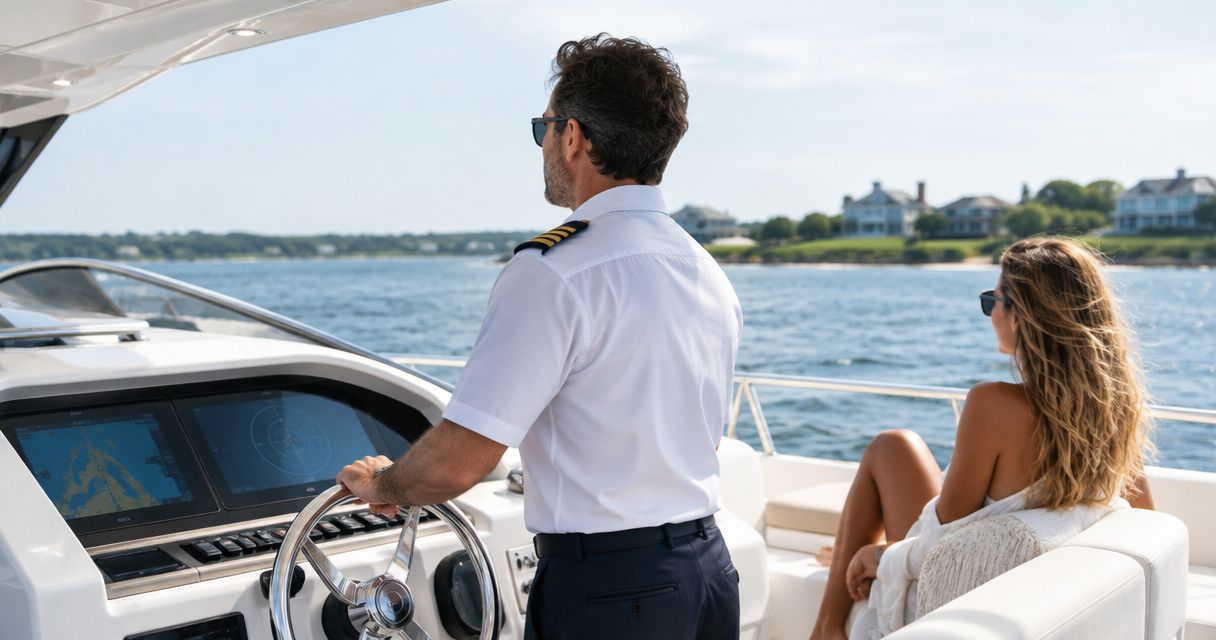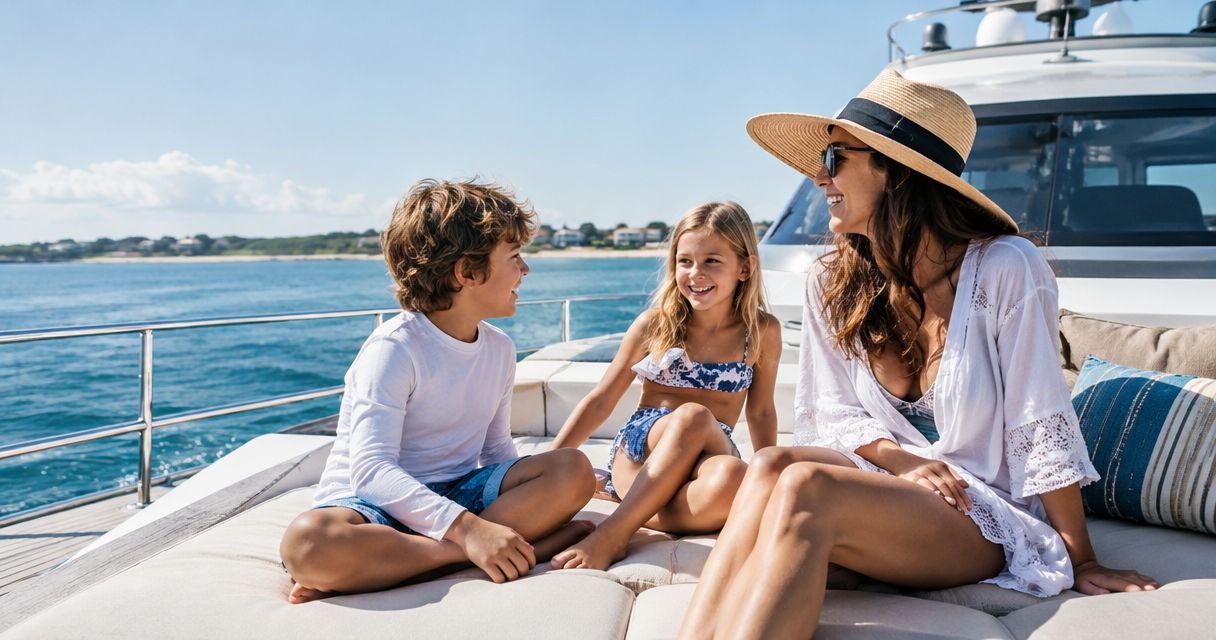
Yes, kids can go on a yacht charter in the Hamptons when the operator accepts their ages and the selected boat has suitable safety equipment and passenger capacity. Before booking, confirm child-size life jackets, boarding arrangements, and adult supervision; a captained charter does not replace a parent or caregiver.
- Can kids go on a yacht charter? Yes, subject to the operator’s age rules and the selected boat’s suitability.
- Yachthampton offers captained Hamptons excursions; confirm child acceptance and safety arrangements before booking.
- Count every child in your passenger total, including infants.
- Choose the itinerary around your youngest guest, not the longest route.
Can kids go on a yacht charter in the Hamptons?
Children can join a Hamptons yacht charter, but permission and suitability are separate questions. An operator accepting children does not establish whether a particular boat works for your infant, active toddler, or nervous first-time passenger.
Yachthampton offers yacht and boat charters and captained excursions in the Hamptons. For a family booking in 2026, explain who is coming before discussing the itinerary. Give each child’s age, swimming ability, and any mobility or sensory needs that affect the outing.
Use this sequence before committing:
- Confirm child acceptance. Ask whether the specific charter accepts every child in your group, including infants.
- Confirm the passenger count. Include children and babies rather than counting only adults.
- Confirm life-jacket fit. Provide each child’s weight and ask which approved wearable devices are suitable.
- Check the layout. Ask about boarding, seating, shade, bathrooms, and access between deck areas.
- Agree on supervision. Name the adult responsible for each child and ask how the captain conducts the safety briefing.
- Discuss the route. Explain whether your priority is sightseeing, a relaxed family gathering, or time at anchor.
Why this matters
A family charter should feel like time together, not an afternoon spent correcting an unsuitable plan. Boarding steps, exposed seating, and an ambitious itinerary deserve attention before you arrive at the dock.
The useful question is not simply whether children are allowed. It is whether your particular group can board, sit comfortably, use the bathroom, and follow the captain’s instructions on that particular boat.
For your 2026 outing, put those practical details ahead of appearance. A beautiful yacht is not automatically the right family yacht, and a larger vessel does not remove the need for close supervision.
Which kind of outing suits your family?
Choose the experience before choosing the boat. The options below are planning approaches, not promises about a particular charter’s facilities or route.
| Outing | Best for | Main advantage | Main limitation |
|---|---|---|---|
| Sightseeing cruise | Children who enjoy looking at boats and the shoreline | Gives the outing a clear focus without requiring swimming | Moving water and prolonged sitting still require preparation |
| Cruise with an agreed anchoring stop | Families who want a change of pace | Creates an opportunity to pause if conditions and the captain permit | Anchoring does not guarantee swimming or access to shore |
| Family celebration | Mixed-age groups gathering for an occasion | Keeps the group together for a shared experience | Conversation, food, and hosting can distract adults from supervision |
For a first family charter, choose a simple itinerary with room to adjust. Do not build the day around a promised swim, a particular photo location, or an activity that depends on conditions.
If relatives are joining, agree on the purpose together. A grandparent expecting a quiet cruise and a teenager expecting watersports are planning different afternoons; resolve that difference before selecting the boat.
What should you check on the boat?
Boarding and movement
Ask how your family gets from the dock onto the boat. Describe any child who needs to be carried, any stroller you hope to bring, and any adult who needs assistance with steps or balance.
Do not assume a stroller can come aboard or serve as safe seating while underway. Ask where belongings are stored and keep passageways clear. Follow the crew’s instructions when transferring a child between the dock and vessel.
Once aboard, ask which areas children can use and which require an adult alongside them. A railing is not a substitute for supervision, and an open deck is not a play area while the boat is moving.
Seating, shade, and bathrooms
Ask where the whole family will sit during travel, not just where guests gather at anchor. Check whether the seating arrangement lets you stay beside the child you supervise.
Shade and bathroom access matter throughout the outing. Ask whether shade covers the seating you expect to use and how you reach the bathroom from that area. For a child who needs help, describe that need rather than asking only whether a bathroom exists.
Quiet space and access
A cabin is not automatically a suitable nap space. Ask about access, ventilation, and where an adult can remain with a resting child without obstructing the crew.
For a child who finds noise or unfamiliar environments difficult, explain the concern before choosing the vessel. Ask about engine noise near seating and the process for returning if the outing becomes uncomfortable. Do not treat a hoped-for accommodation as a confirmed arrangement.
What life-jacket rules apply to children?
Arrange properly fitted life jackets before departure, not after boarding. A child’s swimming ability does not replace a wearable flotation device or the captain’s safety instructions.
For 2026 planning, New York State Parks’ boating guidance states that children under 12 years old must wear an appropriate life jacket aboard a vessel under 26 feet while underway, except inside a fully enclosed cabin. That rule has a specific scope; it does not mean children on larger yachts need no protection.
Ask the operator which requirements apply to the selected vessel, waters, and charter operation. Follow any stricter onboard instructions. A minimum legal requirement is not the same as a complete family safety plan.
Before departure:
- Check the label. Confirm that the life jacket is approved for the intended use and appropriate for the child’s weight.
- Check the fit. Have the crew help verify the fit; an adult-size jacket is not an acceptable substitute.
- Check the fastening. Secure the device according to its instructions before the child enters an exposed boarding area.
- Check the routine. Explain that children keep their jackets on whenever required, even if another guest is not wearing one.
For an infant, raise flotation and boarding questions before selecting a boat. Do not assume that equipment suitable for an older child also fits a baby.
Who watches the children on a captained charter?
The captain operates the vessel; your designated adult supervises the child. Do not assume that crew members provide childcare, swimming instruction, or continuous observation of individual passengers.
Assign responsibility by name. An adult who is taking photographs, serving food, or joining a conversation should explicitly hand supervision to another responsible adult rather than assuming someone has noticed.
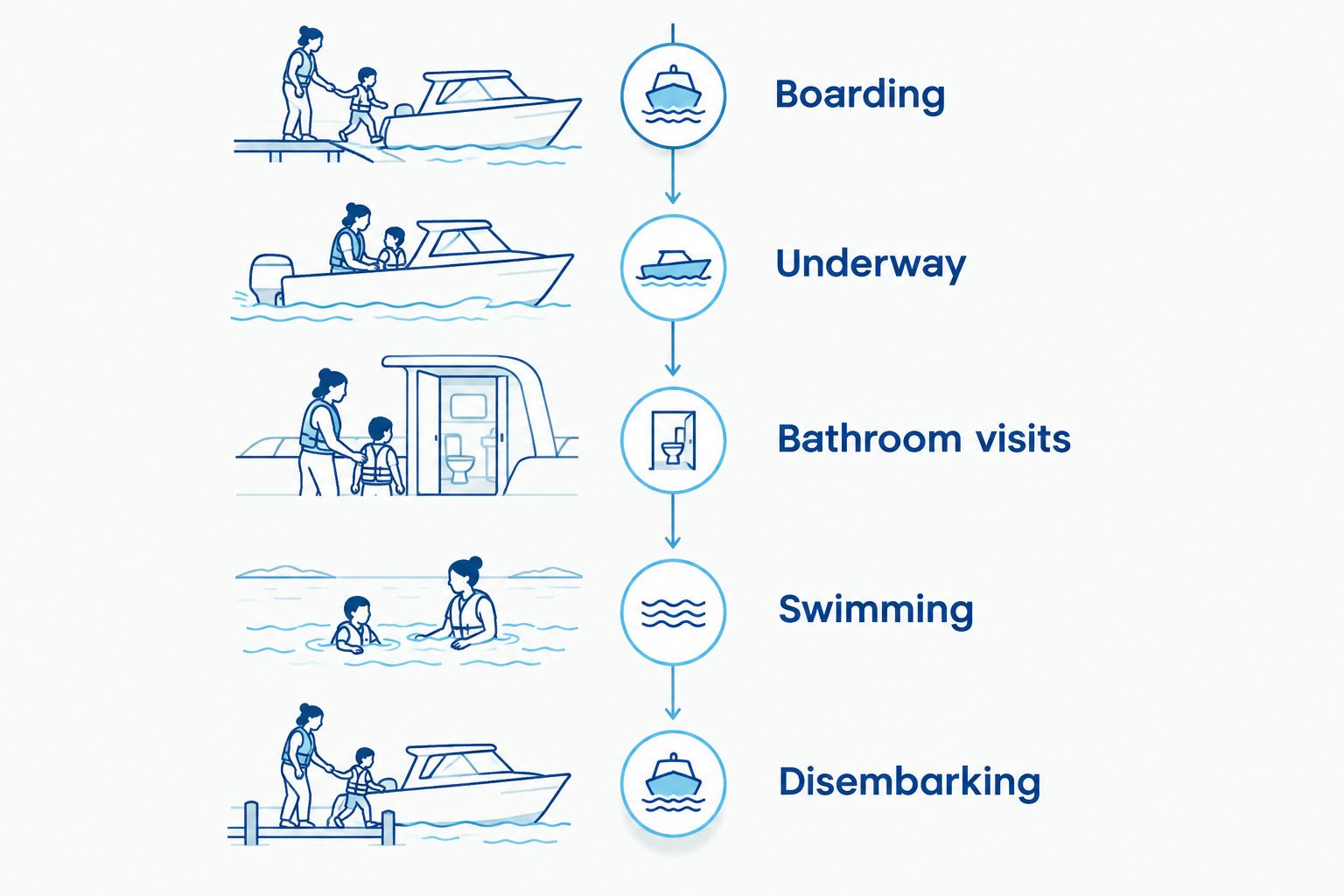
Use a simple arrangement throughout the outing:
- Boarding: The responsible adult follows the crew’s instructions and stays with the child.
- Underway: The adult keeps the child in the agreed seating area and reinforces the captain’s rules.
- Bathroom visits: The adult accompanies a child who needs help and arranges cover for any other children.
- Swimming: The adult follows the captain’s permission and instructions without treating flotation equipment as supervision.
- Disembarking: The adult waits for crew direction before moving the child toward the dock.
These are different responsibilities, but they need the same clarity. A vague agreement that everyone will watch the children leaves room for nobody to be watching.
Why family charter suitability varies
The same boat and route will not suit every family. Use these factors to narrow your 2026 charter request:
- Children’s ages and needs. An infant needing frequent care presents different requirements from an older child who follows instructions independently.
- Boat layout. Boarding steps, seating positions, deck access, and bathroom access shape how you supervise your group.
- Passenger mix. Include every guest and consider which adults are genuinely available to supervise rather than host the occasion.
- Weather and water conditions. Ask the captain how conditions affect the proposed route and activities; an itinerary is not a guarantee of conditions.
- Activity expectations. Sightseeing, swimming, and a celebration call for different preparation and levels of attention.
- Comfort needs. Shade, motion sensitivity, bathroom assistance, and somewhere to rest deserve specific questions before booking.
Choose the boat around the least flexible need in your family. If a child needs nearby bathroom access, that requirement matters more than an extra lounge area or a longer route.
What should you bring for children?
Pack for the conditions and your child’s routine, then check what the operator permits. Keep essential items accessible rather than placing everything in a bag that is difficult to reach underway.
Bring familiar snacks, drinking water, spare clothing, and any necessary personal care items. Discuss allergies and food arrangements before departure. Do not assume that onboard catering, refrigeration, or food preparation is included.
For sun protection, the American Academy of Dermatology recommends broad-spectrum, water-resistant sunscreen with SPF 30 or higher, alongside shade and protective clothing. Follow the product label and your pediatrician’s guidance for infants or children with particular skin needs.
Choose quiet, manageable entertainment: a familiar book, a simple spotting game, or a small activity that stays contained. Loose toys create unnecessary work on a moving boat. Ask before bringing equipment that takes up deck space.
If motion sickness is a concern, ask your child’s clinician or pharmacist about suitable prevention before the trip. Do not choose a medication or dose based on another passenger’s experience.
What should you send when requesting a family charter?
A useful inquiry explains the family, not just the date. For a 2026 request, provide your preferred date, the total passenger count, each child’s age and weight, and the experience you want.
Add the details that change the boat choice: assistance with boarding, a need for shade, bathroom access, motion sensitivity, or a preference to avoid swimming. Ask for confirmation of the arrangements that matter before committing.
Yachthampton is best for families seeking captained Hamptons outings rather than operating a boat themselves. Its stated offering includes captained excursions; child acceptance, equipment, and the suitability of a particular boat still require confirmation.
Use the contact page to describe those needs. The advantage of a captained outing is that you are not taking on vessel operation; the limitation is that a captain does not remove your responsibility for childcare or guarantee a particular activity.
Plan your family charter
Share your children’s ages, passenger count, and boarding needs before choosing a boat.
Can babies go on a yacht charter?
Babies can join only when the operator accepts infants and the boat, flotation equipment, and boarding arrangements are suitable. Confirm those points before booking, including where a caregiver can sit with the baby and handle essential care.
Can children swim during the charter?
Children can swim only when the captain permits it and the agreed supervision and safety arrangements are in place. Do not promise swimming beforehand: conditions, location, vessel operation, and the child’s ability all affect the decision.
Can children join if they cannot swim?
Children who cannot swim need explicit discussion with the operator before booking. Confirm acceptance, appropriate life jackets, and close adult supervision; do not make entering the water part of their expected itinerary.
FAQ
Can kids go on a yacht charter in the Hamptons?
Yes, kids can join when the operator accepts their ages and the selected boat is suitable. Confirm life jackets, passenger capacity, boarding arrangements, and adult supervision before booking.
Is there a minimum age for a child on a yacht charter?
Ask the operator for the minimum age on the specific charter. Do not assume that a boat accepting older children also accepts infants.
Do babies count toward the yacht’s passenger limit?
Include babies in the passenger total you give the operator. Ask the operator to confirm that the complete group fits the selected vessel’s permitted capacity.
Do children need life jackets on a yacht?
Arrange properly fitted life jackets and follow the rules applying to the vessel and waters. New York requires children under 12 years old to wear an appropriate life jacket on vessels under 26 feet while underway, except inside a fully enclosed cabin.
Will the yacht captain watch my children?
Do not assume the captain provides childcare. Assign a responsible adult to supervise each child and follow the crew’s safety instructions.
What should I ask Yachthampton before bringing children?
Ask Yachthampton to confirm child acceptance, suitable flotation equipment, passenger capacity, and boarding arrangements for the selected boat. Explain each child’s age, weight, and relevant comfort or access needs.
Should I promise my kids swimming on the charter?
No, treat swimming as conditional on the captain’s permission and safe arrangements. Prepare an enjoyable outing that does not depend on entering the water.
One last thing
Give children their briefing before the dock becomes exciting. Explain where they will sit, which adult they stay with, and why the captain decides when everyone moves.
For your 2026 family charter, make this the final booking test: Can you describe how your youngest guest will board, travel, use the bathroom, and leave the boat? If any part is unclear, resolve it before confirming the outing with Yachthampton.