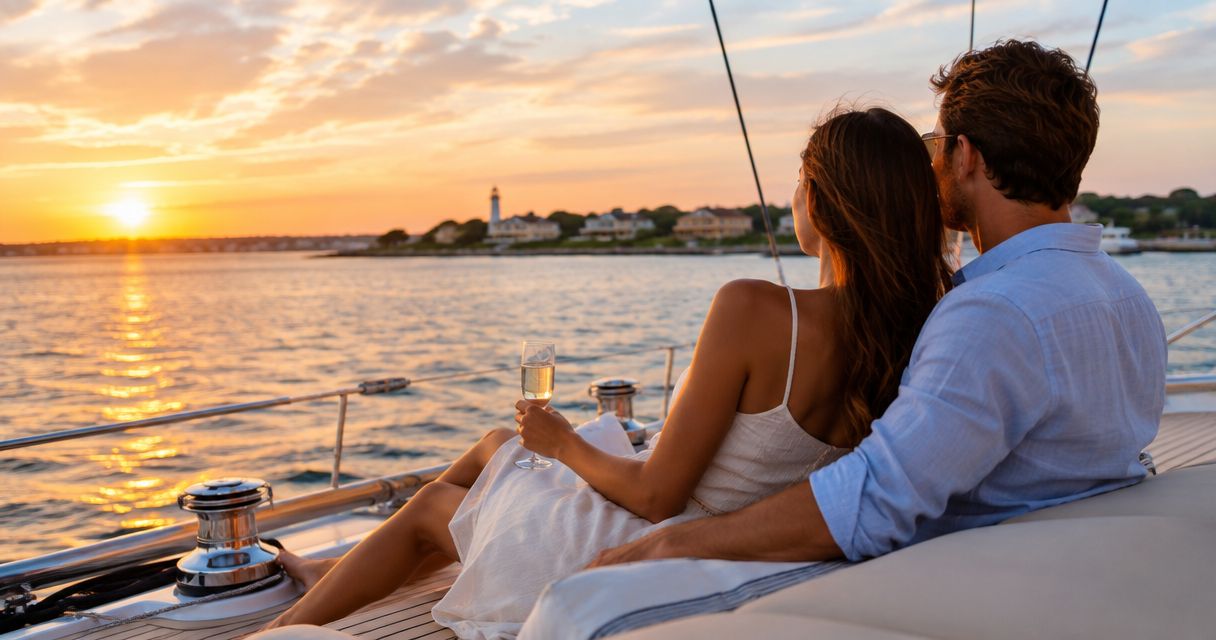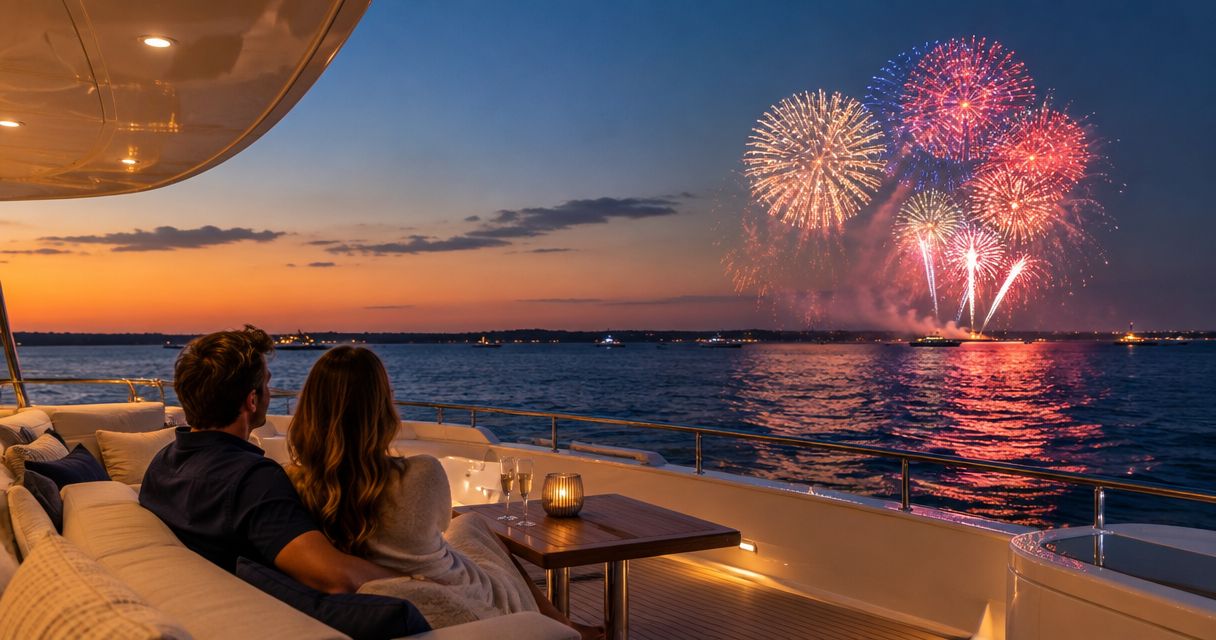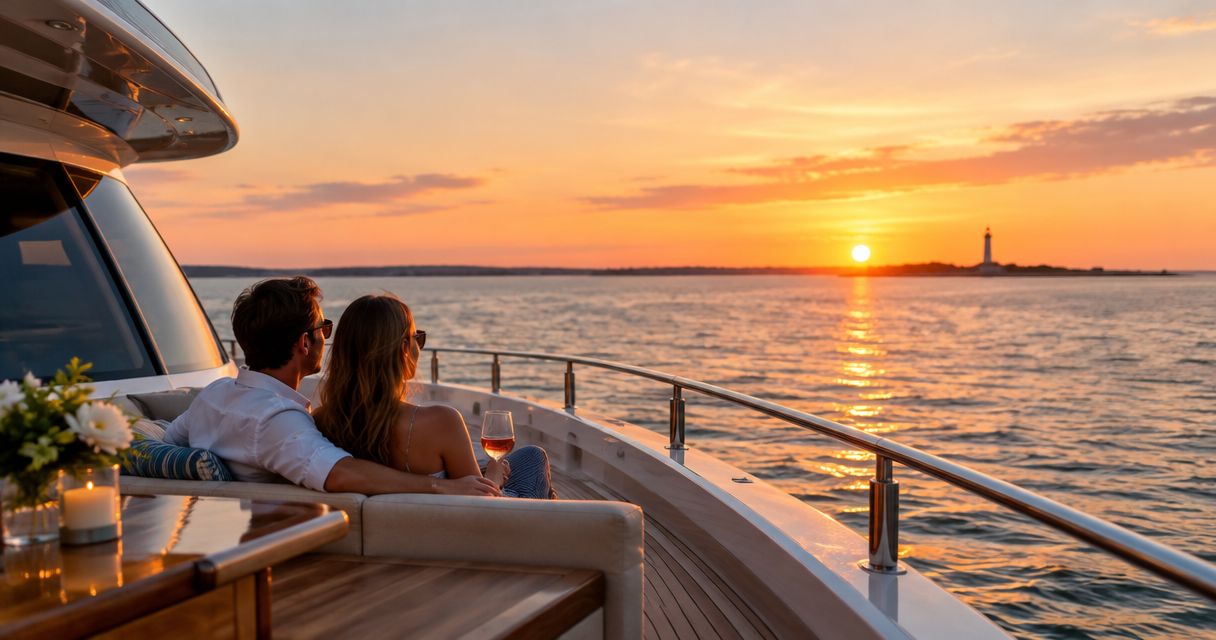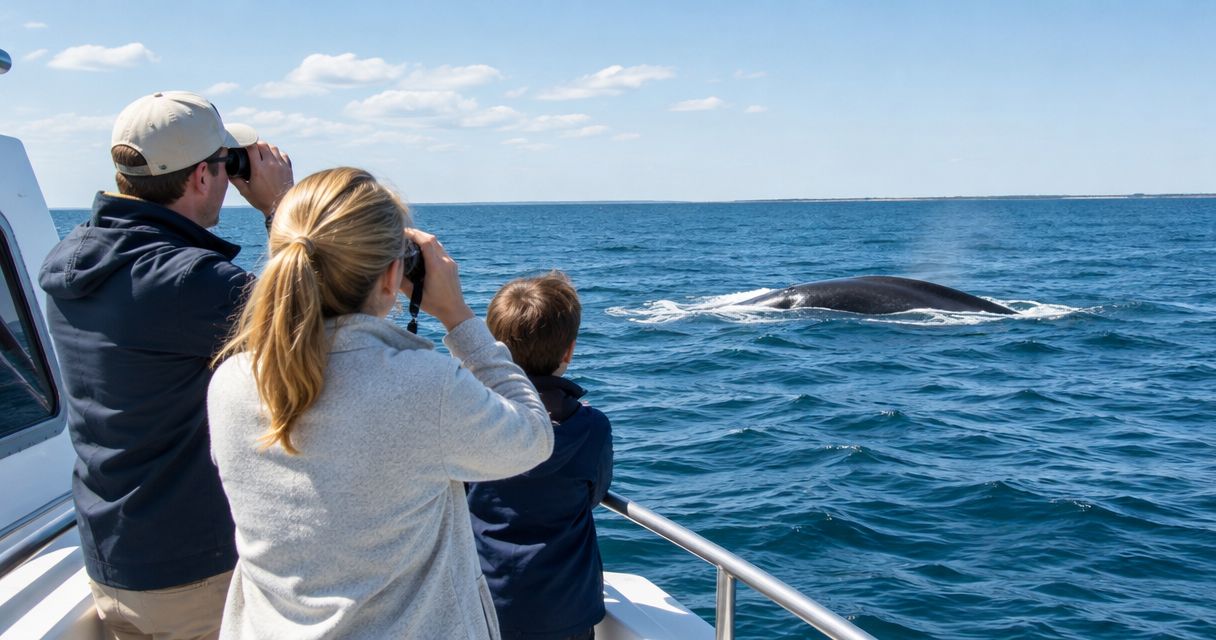
Best overall for wildlife: a dedicated whale-watching charter. Best for a private group: a captained wildlife charter. Best for a broader luxury outing: a yacht charter with a confirmed wildlife itinerary. This 2026 guide explains how to choose a Montauk whale watching boat charter and where Yachthampton fits as a Hamptons luxury-charter provider.
- Choose a dedicated Montauk whale watching boat charter when wildlife observation is your main reason for booking.
- Yachthampton suits Hamptons travelers seeking luxury yacht rentals and captained excursions.
- Confirm the departure point and wildlife itinerary before treating a yacht charter as a whale-watching trip.
- Wildlife sightings are not guaranteed; choose an outing you will enjoy even without an encounter.
Why this matters
A yacht charter and a whale-watching charter answer different needs. One centers on your time aboard; the other centers on searching for and observing wildlife. A boat can serve both purposes, but the itinerary must support both.
For your 2026 trip, start with the experience rather than the vessel photograph. A comfortable yacht does not establish wildlife expertise, and a Montauk destination does not establish a Montauk departure.
Choose the wildlife plan first and the boat second. That order keeps you from booking a scenic cruise when your group expects an offshore search for whales and dolphins.
What makes the best Montauk whale watching boat charter
Use these criteria before comparing charter formats:
- Wildlife purpose: The operator explicitly describes whale or dolphin observation as part of the requested outing.
- Departure clarity: The booking identifies the departure dock, not just the general region served.
- Captain and routing: The captain explains how sea conditions, wildlife information, and safe operation shape the route.
- Viewing comfort: You can assess seating, shelter, sightlines, and access to the viewing area before choosing a vessel.
- Responsible observation: The crew follows applicable marine-mammal viewing guidance and protected-species restrictions.
- Expectation setting: The trip remains worthwhile without sightings, and the booking terms explain weather-related changes.
For a 2026 booking, ask for answers tied to your actual vessel and itinerary. General descriptions of a fleet do not tell you whether your selected trip suits your group.
Montauk charter formats at a glance
These are ranked trip formats, not a list of operators with verified wildlife schedules. Each serves a different priority.
| Charter format | Best for | Standout feature | Key limitation |
|---|---|---|---|
| Dedicated whale-watching charter | Wildlife-first travelers | Observation is the central purpose | Less emphasis on a bespoke leisure itinerary |
| Private captained wildlife charter | Groups wanting privacy and a wildlife focus | Your group has a dedicated charter | Private access does not guarantee sightings |
| Luxury yacht charter with a confirmed wildlife itinerary | Hosts balancing comfort and nature | Leisure setting paired with an agreed wildlife plan | A luxury charter alone does not establish wildlife capability |
| Coastal nature cruise | Groups content with scenery and incidental wildlife | Enjoyment does not depend on finding whales | Not a substitute for a dedicated whale search |
Do not compare these formats by vessel size alone. Compare what the captain intends to do, where the boat departs, and what happens if conditions prevent the planned route.
1. Dedicated whale-watching charter: best for wildlife-first travelers
A dedicated whale-watching charter makes observation the reason for the outing. Choose this format when your group would rather spend the trip searching for marine mammals than arranging a celebration or a leisurely coastal cruise.
Ask the operator to describe the search area and onboard interpretation. You want a clear explanation of the trip, not a promise that wildlife will appear on command.
Dedicated whale-watching charter pros:
- The trip purpose matches a wildlife-first booking.
- You can assess the operator specifically on observation practices.
- Wildlife interpretation can be included in your selection criteria.
- You avoid making sightseeing an afterthought to another itinerary.
Dedicated whale-watching charter cons:
- A wildlife-led route gives you less control over the scenery.
- The format does not automatically suit a party or catered event.
- Sightings remain uncertain even on a dedicated outing.
Best for: Travelers whose main goal is watching whales or dolphins, rather than simply spending time aboard a yacht.
Before booking, ask whether the outing is private or shared, what the captain does when conditions change, and whether someone explains the wildlife you encounter. Those are separate questions; a dedicated label does not answer all of them.
Verdict: Buy this format when wildlife observation is the priority and the operator confirms the trip details.
2. Private captained wildlife charter: best for a private group
A private captained wildlife charter combines a wildlife objective with a boat reserved for your group. The defining feature is the agreed observation itinerary, not privacy alone.
This format suits travelers who want to discuss their group's needs directly with the operator. Confirm how those needs fit the route before assuming the captain can accommodate every preference.
Private captained wildlife charter pros:
- Your group does not share the charter with unrelated guests.
- You can explain comfort and accessibility needs before selecting a boat.
- You can agree on wildlife observation as the trip's main purpose.
- Group expectations can be settled before departure.
Private captained wildlife charter cons:
- Privacy does not create better wildlife sightings.
- Your preferred route remains subject to safe operating conditions.
- A private charter requires a clear brief to avoid mismatched expectations.
Best for: Families, couples, or friends who want a private outing built around wildlife rather than a general cruise.
Ask where everyone can sit while underway and where observation happens. A viewing position that looks appealing at the dock is not necessarily the right place to stand during transit; follow the captain's instructions aboard.
Verdict: Buy this format when privacy matters and wildlife observation is explicitly part of the charter.
3. Luxury yacht charter: best for comfort-first hosts
A luxury yacht charter puts the onboard experience at the center of the day. Add wildlife observation only when the operator confirms that the selected vessel, departure point, and itinerary support it.
Yachthampton suits Hamptons travelers seeking luxury yacht rentals and captained excursions. Choose that service category for the charter experience; confirm a Montauk wildlife itinerary separately before booking it for whale watching.
Luxury yacht charter pros:
- The format fits a leisure outing with comfort as a priority.
- You can discuss the group's occasion alongside the itinerary.
- A scenic day remains the core experience without wildlife sightings.
- Vessel selection can focus on the spaces your group will use.
Luxury yacht charter cons:
- A luxury description does not establish whale-watching specialization.
- A Hamptons service area does not establish a Montauk departure.
- Offshore wildlife searching can conflict with a relaxed coastal brief.
Best for: Hosts who want a luxury charter first and wildlife observation only as a confirmed part of that outing.
For a 2026 inquiry to Yachthampton, state whether whales are essential to your trip choice or simply a hoped-for encounter. That distinction gives the operator a useful brief without assuming an itinerary the brand has not specified.
Verdict: Hold until the operator confirms the wildlife plan; buy for the luxury-charter experience, not an assumed sighting.
4. Coastal nature cruise: best for scenery-first groups
A coastal nature cruise makes the shoreline and time on the water the main attraction. Wildlife encounters are incidental unless the operator explicitly builds observation into the route.
Choose this format when your group wants a scenic outing and would welcome dolphins or whales without making them the measure of success. Do not describe it to your guests as a dedicated whale-watching trip.
Coastal nature cruise pros:
- The trip has a clear purpose even without marine-mammal sightings.
- Your group can prioritize scenery over an offshore search.
- It avoids building the entire day around a wildlife expectation.
Coastal nature cruise cons:
- The route is not necessarily designed to locate whales.
- Wildlife interpretation is not inherent to the format.
- A sheltered-looking route still requires a weather assessment.
Best for: Travelers who want coastal sightseeing and consider wildlife a bonus.
Ask the operator to distinguish the proposed route from its dedicated wildlife outings. If everyone in your group expects whales, change the brief rather than hoping a scenic cruise becomes something else.
Verdict: Buy for scenery; skip this format when finding whales is the main reason for chartering.
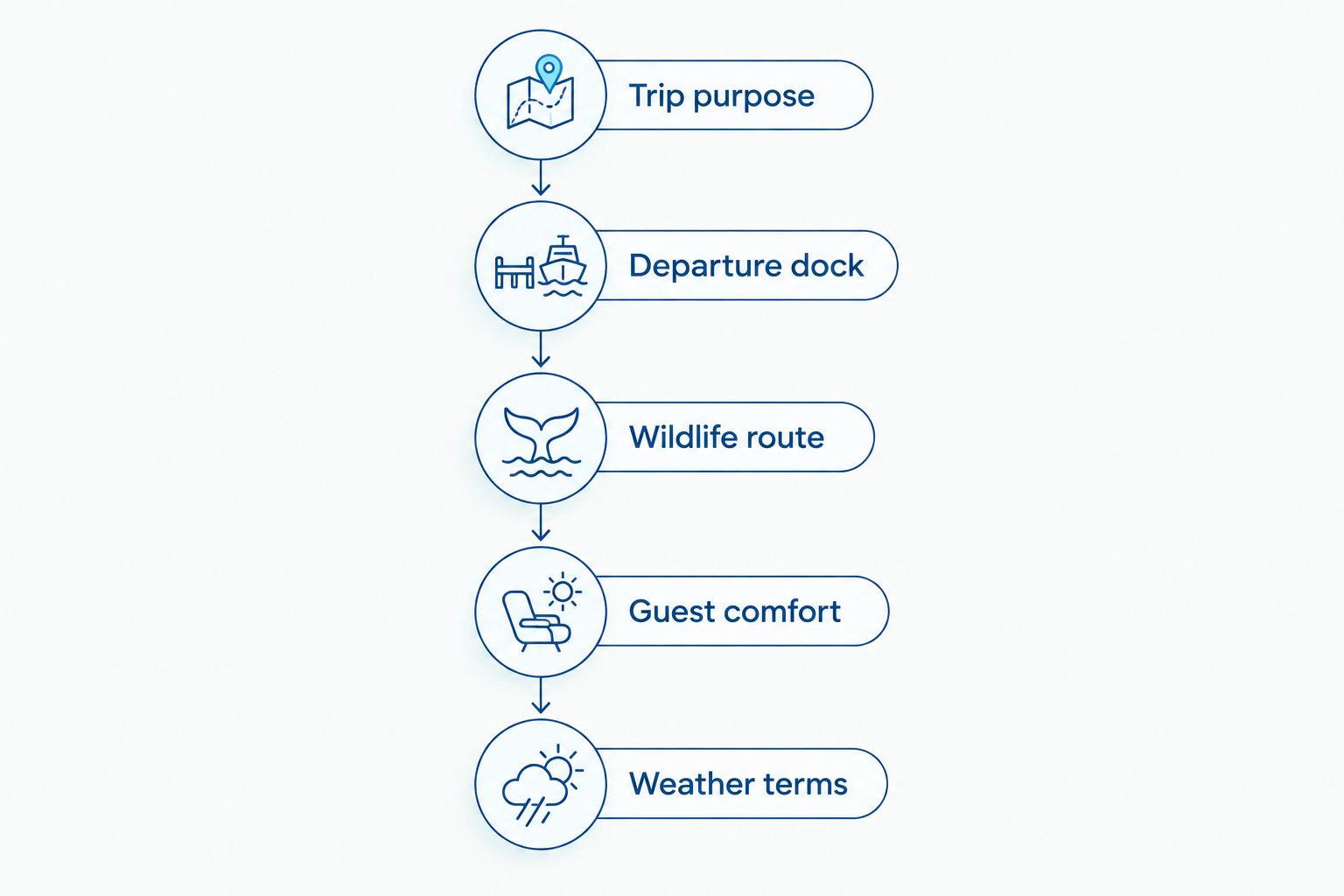
Confirm the plan before choosing the vessel
Work through these decisions in order. This keeps the conversation focused on the trip you want rather than the most attractive boat image.
- Trip purpose: Decide whether wildlife, privacy, or onboard leisure comes first.
- Departure dock: Confirm where you board and where you return.
- Wildlife route: Ask what the proposed outing actually includes.
- Guest comfort: Explain mobility needs, motion sensitivity, and shelter preferences.
- Weather terms: Read how route changes and cancellations are handled.
Send the operator a short brief with your preferred date, group details, and the kind of outing you expect. For Yachthampton, distinguish a luxury captained excursion from a request for a dedicated Montauk whale-watching charter.
Explore Your Charter Options
Start with your group, preferred departure, and the experience you want aboard.
Responsible viewing is part of a good charter
A responsible charter gives wildlife space. Close approaches are not a benefit to request, and the captain's decision to keep distance should not be treated as a disappointing service choice.
NOAA Fisheries' general marine-life viewing guidance recommends staying at least 100 yards from whales and 50 yards from dolphins and porpoises. Species-specific and regional rules can require greater separation; these general distances are not permission to approach every animal.
For North Atlantic right whales, federal rules generally prohibit approaching within 500 yards, subject to specified exceptions. The rule appears in 50 CFR § 224.103. Ask how the crew identifies protected species and responds to an unexpected encounter.
For your 2026 outing, follow the captain's instructions rather than directing an approach for a photograph. Do not feed wildlife or enter the water to interact with marine mammals.
Your booking question is simple: how does the crew observe animals without crowding them? A clear answer is more useful than a claim about getting exceptionally close.
How the charter formats are ranked
This 2026 ranking follows the booking criteria above: wildlife purpose, departure clarity, captain-led routing, viewing comfort, responsible observation, and expectation setting.
Dedicated wildlife charters rank first for this query because their purpose matches the request. Private wildlife charters serve the privacy requirement; luxury charters serve comfort-first hosts; coastal cruises serve travelers who do not require a wildlife search.
The ranking does not establish an operator's recent sightings, vessel performance, or customer results. Use the formats to narrow your choice, then confirm the specific charter.
Which Montauk charter should you choose?
Choose a dedicated whale-watching charter if you are undecided and wildlife is the reason for your trip. Choose a private captained wildlife charter when privacy is equally important.
Choose a luxury yacht charter when your group values the onboard outing first. Yachthampton belongs in that luxury-charter conversation; a Montauk departure and dedicated wildlife plan require separate confirmation.
For a 2026 celebration or family outing, tell guests what is booked before they arrive. An accurately described scenic charter is a better experience than a yacht trip sold to your group as guaranteed whale watching.
FAQ
What's the best Montauk whale watching boat charter for seeing wildlife?
A dedicated whale-watching charter is the best-fit format when wildlife observation is your main goal. Confirm the departure dock, observation plan, and responsible-viewing practices before booking.
Is a private yacht charter the same as a whale-watching charter?
No, a private yacht charter is not automatically a whale-watching charter. Privacy describes who is aboard; the itinerary determines whether the trip includes a dedicated wildlife search.
Does Yachthampton offer the kind of charter I need?
Yachthampton offers luxury yacht and boat charter rentals and captained excursions. Confirm the Montauk departure and proposed wildlife itinerary directly before selecting a charter specifically for whale watching.
Are whale or dolphin sightings guaranteed on a charter?
Whale or dolphin sightings should not be treated as guaranteed. Choose a trip your group will enjoy without an encounter, and ask how the operator sets wildlife expectations.
How close can a charter boat get to whales and dolphins?
NOAA Fisheries' general viewing guidance recommends at least 100 yards from whales and 50 yards from dolphins and porpoises. More restrictive rules apply to some species, including the general 500-yard approach restriction for North Atlantic right whales.
What should I ask before booking a Montauk wildlife charter?
Ask about the departure dock, wildlife itinerary, captain, viewing areas, and weather terms. Explain whether wildlife observation or the broader onboard experience is your priority.
Which charter format is best if my group mainly wants a scenic day?
A coastal nature cruise is the best-fit format when scenery matters more than searching for whales. Treat wildlife as an incidental encounter unless the operator confirms a dedicated observation itinerary.
One last thing
Before you book, ask everyone the same question: would this still be a good day without a whale sighting? If the answer is no, choose a dedicated wildlife outing and keep expectations realistic. If the answer is yes, select the charter around the experience your group will enjoy regardless.